





For most of the past three decades, the thing that made an Indian professional valuable was capability: the degree, the certification, the demonstrated ability to do the task in front of them. That layer is now being absorbed by machines. What is left to compete on, for firms and for individuals alike, is harder to automate and harder to fake. It is the reason a person does the work well, and the human capacity to keep doing it.
What made a professional valuable, and what has changed?
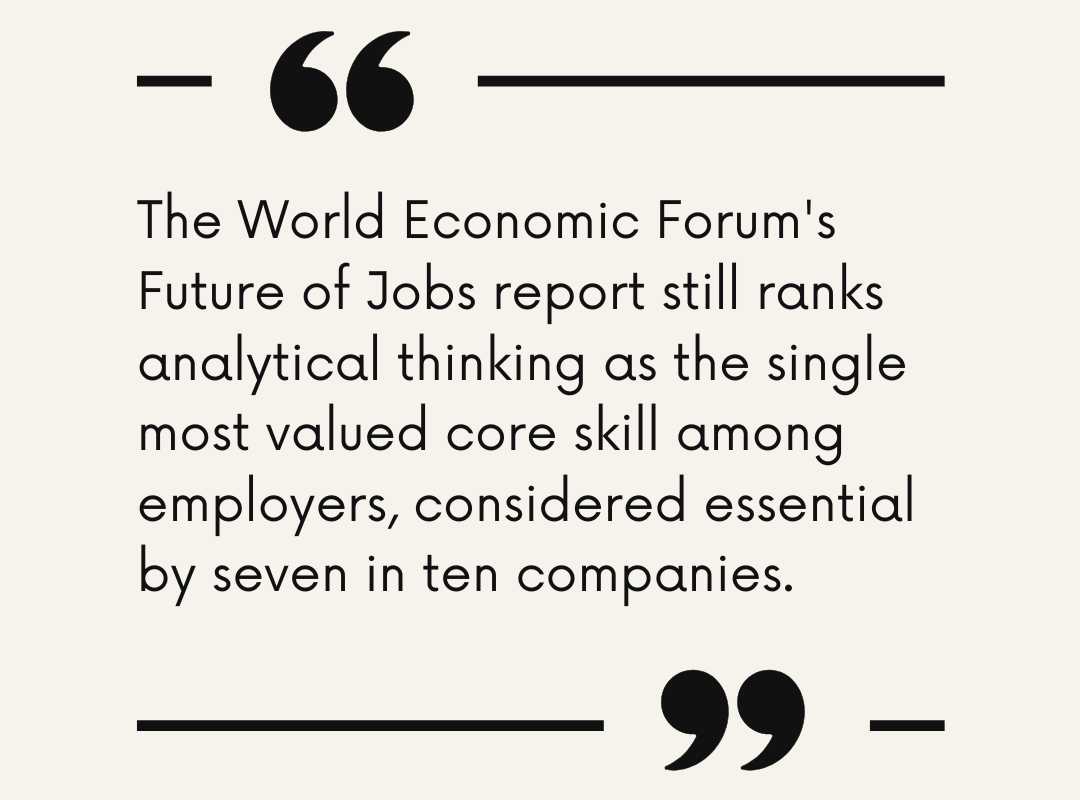
The old answer was capability. The new answer is that capability is ceasing to be scarce. For a long time the market paid a premium for the ability to produce a certain kind of output: the financial model, the legal memo, the working code, the clean deck. That ability was expensive to acquire, which is why the credential that signalled it, and the years of practice behind it, commanded a price. The World Economic Forum's Future of Jobs report still ranks analytical thinking as the single most valued core skill among employers, considered essential by seven in ten companies. The same report expects around 39 per cent of workers' core skills to change by 2030, with 77 per cent of employers planning to reskill their staff and 41 per cent planning to reduce headcount as tasks are automated.
The temptation is to read this as the beginning of mass white-collar unemployment. The measured evidence does not yet support that reading, and the distinction matters. A Stanford Digital Economy Lab study of payroll data found a decline of roughly 13 per cent in employment for workers aged 22 to 25 in the most AI-exposed occupations since late 2022, while older workers in the same roles held steady or grew. Anthropic's own analysis of how its systems are used at work found no aggregate rise in unemployment among highly exposed workers, but slower hiring of freshers or ones below five years of experience. The pressure shows up at the entry level, but the deeper shift is this: once a machine can produce a junior's work instantly, employers stop paying a premium for the skill to produce it. The capability that defined a career is becoming a commodity input. What was scarce is turning cheap now.
.jpg)
If capability is cheap, what becomes scarce?
Two things the machine cannot supply. The first is the reason a person does the work well rather than merely finishing it. The second is the judgement and care a person brings when they are well, and loses when they are not. Call them purpose and wellbeing.
Both have long been filed under soft concerns, the province of engagement surveys and wellness budgets, peripheral to the real business of getting output. That filing made sense when output itself was the scarce thing. It stops making sense the moment output becomes abundant. The Future of Jobs data shows the pattern distinctly : the technical skills rising fastest are in AI and data, but the human capacities rising alongside them are resilience, motivation and self-awareness, leadership and curiosity. The most prized cognitive skill is the one being automated. The durable ones are dispositional, and disposition is downstream of meaning and health.
.jpg)
Why does purpose stop being a slogan and start being an advantage?
Because when the task is commoditised, the gap between adequate and excellent work is human motivation, and motivation runs on meaning.
McKinsey finds that around 70 per cent of employees say their sense of purpose is defined by their work. Yet only 15 per cent of frontline managers and employees feel they are living that purpose day to day, against 85 per cent of senior executives, a gap that widens the further one sits from the top. The people doing the most automatable work, in other words, are the ones with the least meaning to draw on, which is exactly where the coming pressure will concentrate. A further 62 per cent say they draw some purpose from their work but want more. McKinsey has a related idea it calls the 'meaning quotient': when work feels meaningful, people report producing several times more than they usually do.
.jpg)
The commercial reading is direct. In a market where the floor of competence is now set by a machine, the advantage belongs to whoever can supply the reason to work above the floor. Purpose is no longer a poster in the lobby. It is the mechanism that produces discretionary effort, and discretionary effort is close to the whole of what a firm can still charge a premium for.
Why does wellbeing move from a cost line to a competitive line?
Because the thing now being priced higher is sustained human judgement, and burnout is the direct destruction of it. Gallup's 2026 State of the Global Workplace found that employee engagement fell to 20 per cent in 2025, its lowest level since 2020, at an estimated cost of around 10 trillion dollars, close to 9 per cent of global output. Manager engagement, the layer that carries most of a team's daily experience, fell from 27 per cent to 22 per cent in a single year. Gallup itself links part of the falling optimism among knowledge workers to the automation of their work.
The logic runs one way. Artificial intelligence raises the value of exactly the qualities a depleted workforce cannot provide: judgement, taste, reliability, the capacity to notice what the model got wrong.
.jpg)
A tired organisation cannot supply them. Wellbeing therefore stops being a benefit that human resources defends at budget time and becomes the precondition for producing the one kind of value that has not been automated away.
Why is India's version of this the sharpest?
Because India built its entire professional bargain on the capability layer, and is the least equipped on the human one. The exhaustion is already the deepest in the world. The McKinsey Health Institute found India reporting the highest rate of burnout symptoms of any country it studied, at around 59 per cent. Deloitte India has put the cost of poor employee mental health to Indian employers at roughly ₹1.1 lakh crore, about 14 billion dollars, a year. A Cigna survey found 89 per cent of Indian respondents describing themselves as stressed, against a global figure of 84 per cent.
.jpg)
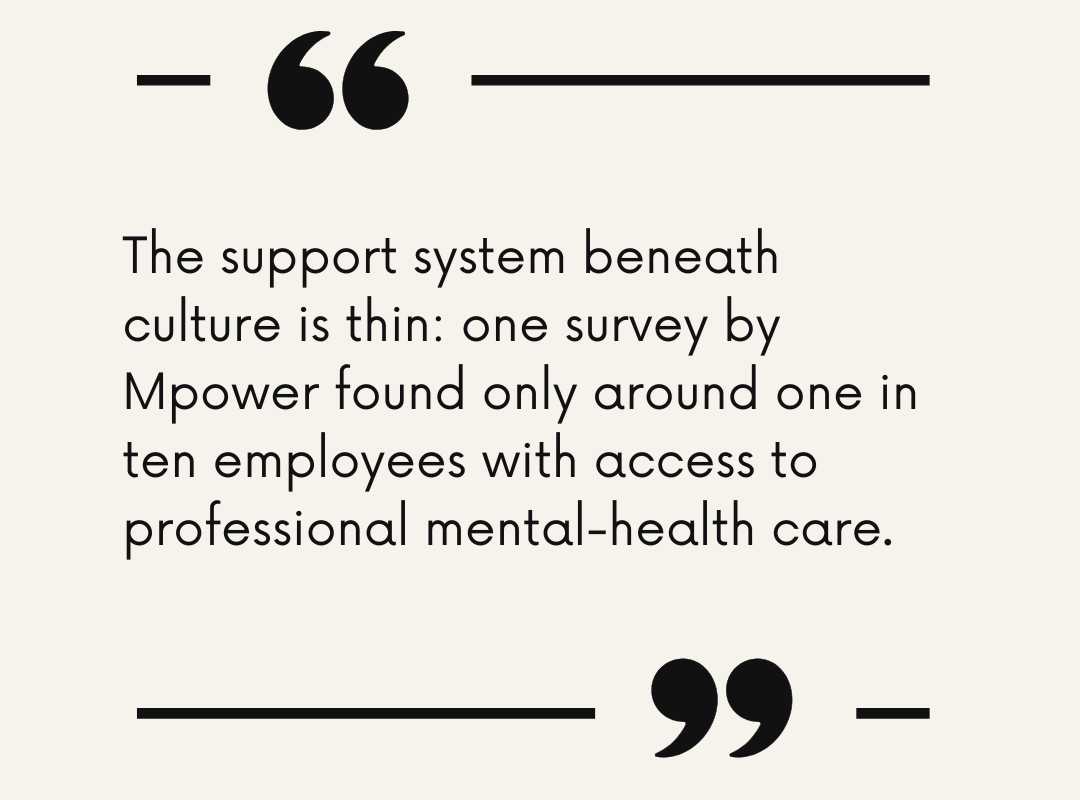
The culture compounds the numbers. The public celebration of 70 and 90 hour work weeks as a mark of devotion, the ranking of people by their package, the expectation of being reachable at all hours, all trained a generation to maximise the precise capability that is now being automated. The support system beneath that culture is thin: one survey by Mpower found only around one in ten employees with access to professional mental-health care.
Manager engagement across South Asia fell by about eight points in a year, tied to hiring slowdowns and mid-level cuts in the technology sector. India thus enters the shift with the most depleted white-collar workforce on record, the weakest infrastructure to repair it, and a work culture optimised to produce the very thing losing its value. The old promise, work hard, hold the credential, stay secure, was already fraying. Automation removes what remained of its logic.
What separates the firms and the workers who adapt?
The ones who build purpose and wellbeing into how the company actually runs, not into what it says.
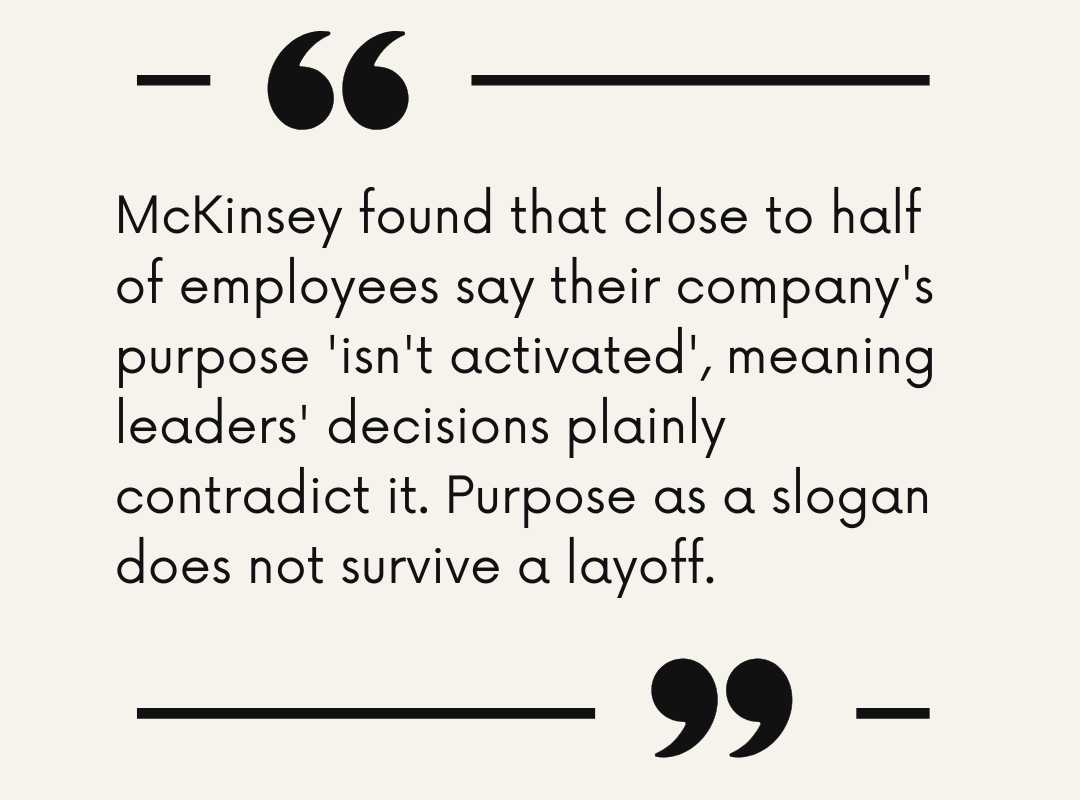
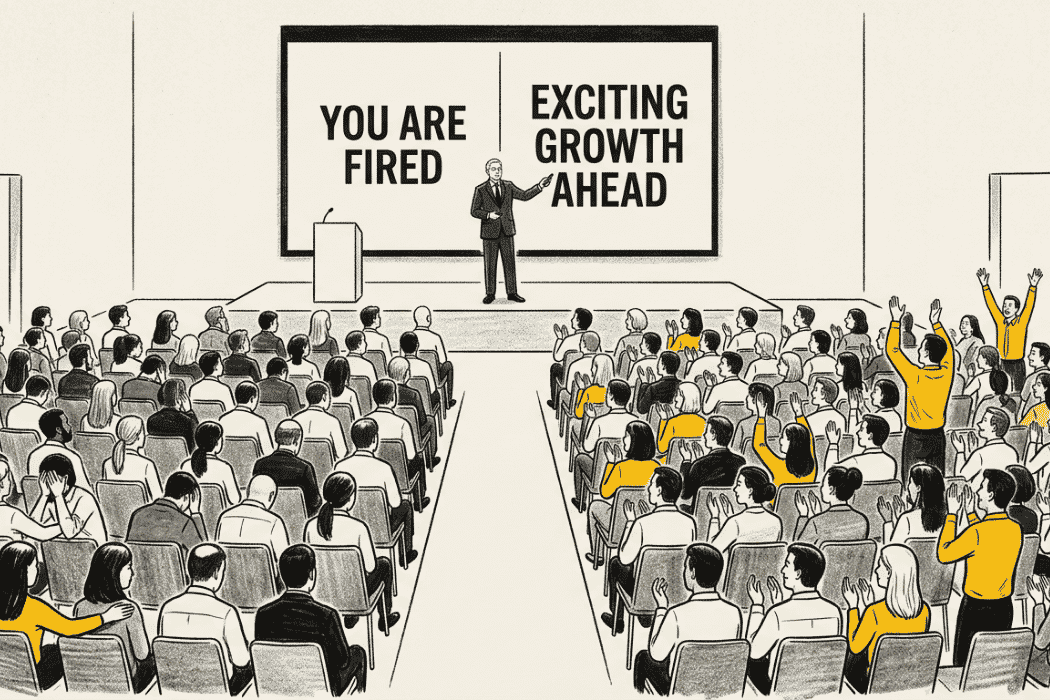
The failure is well documented. McKinsey found that close to half of employees say their company's purpose 'isn't activated', meaning leaders' decisions plainly contradict it. Purpose as a slogan does not survive a layoff. The firms most likely to keep their people are the ones the Future of Jobs report describes as moving staff out of AI-exposed roles into other parts of the business rather than simply cutting them. They treat the workforce as the durable asset it has become.
The same is true for individuals. The secure career is no longer the one with the most certificates, because certificates are exactly what the machine now copies. It is the one built on judgement, motivation and the health to keep both going. For a firm, the difference is between wellness as a budget line and wellbeing as what makes its work worth paying for. For a person, it is the difference between a credential and a reason to use it well.
For a long time the market paid for the ability to do the work. That ability is now the cheap part. What it has not yet learned to reward : the reasons a person does the work well and the judgement they hold only when they are well; is becoming the thing that separates one firm's work from another's.
Almost no workplace treats it that way yet. The move worth making first, ahead of competitors still automating tasks and calling it a strategy, is to make purpose and wellbeing the differentiator itself, the thing that draws people in and keeps them, not a line in the welfare budget. They are hard to buy, hard to fake and hard to scale, which is exactly what makes them defensible.
.jpg)
Sources
- World Economic Forum, Future of Jobs Report 2025. Analytical thinking as the top core skill (seven in ten employers); around 39 per cent of core skills expected to change by 2030; 77 per cent of employers planning to upskill and 41 per cent to reduce roles; rising human skills including resilience, motivation and self-awareness, leadership and curiosity.
- Stanford Digital Economy Lab (Erik Brynjolfsson, Bharat Chandar, Ruyu Chen), payroll study, 2026. Roughly 13 per cent relative employment decline for workers aged 22 to 25 in the most AI-exposed occupations since late 2022, with older workers holding steady. Reported via MIT Technology Review, 'A reality check on the AI jobs hysteria', 26 May 2026.
- Anthropic, Labor Market Impacts of AI (March 2026). No aggregate rise in unemployment among highly exposed workers; suggestive evidence of slower hiring of younger workers in exposed occupations.
- McKinsey & Company, purpose research. Around 70 per cent of employees say their sense of purpose is defined by their work; 85 per cent of executives versus 15 per cent of frontline managers and employees feel they are living their purpose; 62 per cent want more purpose from work; close to 44 per cent say their company's purpose 'isn't activated'; 'meaning quotient' and productivity.
- Gallup, State of the Global Workplace 2026. Global engagement fell to 20 per cent in 2025, the lowest since 2020, at an estimated cost of about $10 trillion (roughly 9 per cent of global GDP); manager engagement fell from 27 per cent to 22 per cent.
- McKinsey Health Institute (2023). India reported the highest rate of burnout symptoms of the countries studied, at around 59 per cent. Reported via The Print, 3 December 2025.
- Deloitte India, mental health and wellbeing in the workplace survey. Poor employee mental health costs Indian employers an estimated ₹1.1 lakh crore (about $14 billion) a year.
- Cigna 360 Well-Being Survey (India). 89 per cent of Indian respondents reported feeling stressed, against a global average of 84 per cent.
- Mpower Mental Health and Wellness survey (2023). Around one in ten employees reported access to professional mental-health care.
.jpg)

%20(1).png)

.png)