




WOCULT's research on the pressures wearing down working professionals ranks poor communication, misalignment and change fatigue at #10 above unfair performance reviews and PIPs. Here is the complete research piece .
We interviewed Anuj Gupta and here is the full conversation.
Q1.Organizations often say “communication is key,” yet employees still feel left in the dark during periods of change. In your experience, where does communication usually break down?
In my experience, communication rarely breaks down because people aren’t talking. It breaks at the translation layers , the points where a message has to pass between groups who each carry their own language, priorities, and assumptions. I spend most of my working life at one of those layers, sitting between a global headquarters that owns the strategy, an external partner that executes it, and internal business teams who have to live with the result.
Early in a major cross-border rollout I worked on, we hit exactly this. Headquarters and our regional entity were both talking about deploying “the system,” and both were completely clear in their own minds about what that meant. It took real effort, and involvement from senior management on both sides, before we realised we were describing two different things , one side assumed we would adopt the central system as is, the other assumed a regional instance shaped to local needs. Nobody had miscommunicated in the ordinary sense. Everyone had spoken clearly. The gap was in the unspoken assumptions sitting underneath the same words.
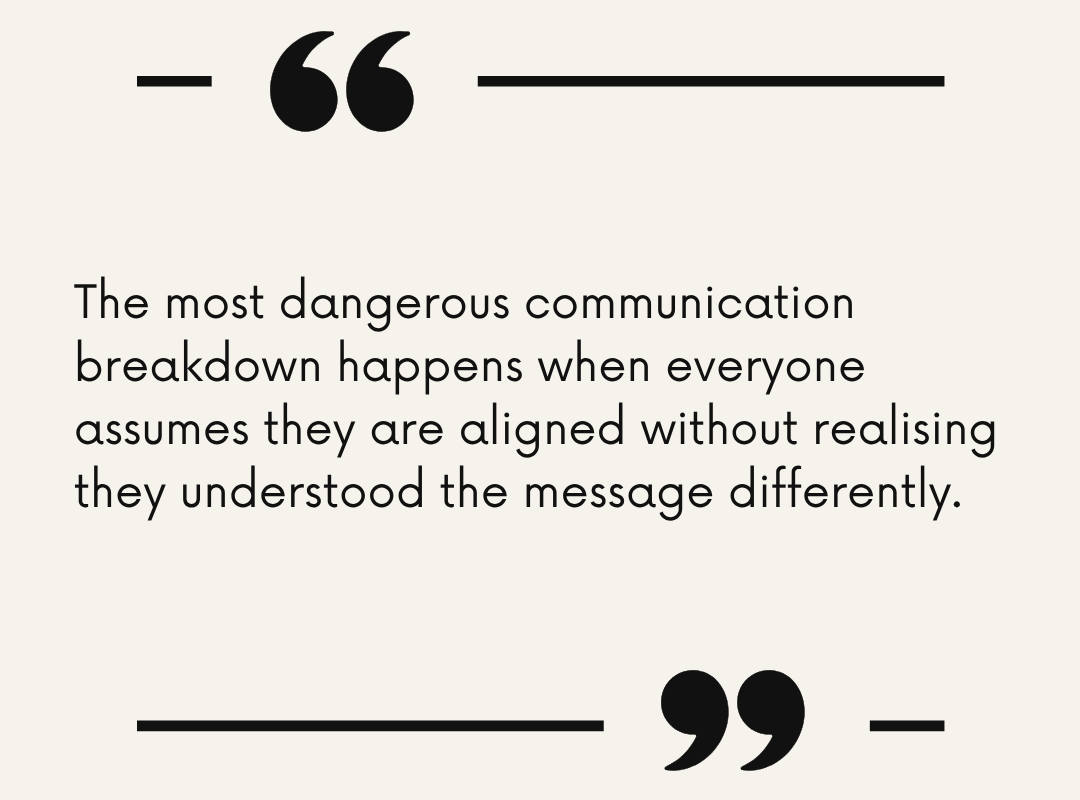
That is the pattern I see again and again. The most dangerous breakdown is the one nobody notices, because everyone assumes they are aligned. Silence gets read as agreement; “yes” gets read as “yes, and I understood it the same way you did.” You usually don’t discover the gap until a deliverable comes back wrong or a deadline is suddenly at risk. So communication breaks down less in the speaking and more in the assuming , the belief that because something was said, it was heard, and because it was heard, it was understood the same way.
Q2. Many teams begin a project aligned but gradually drift in different directions. What are the biggest reasons for this misalignment, and what can leaders do to prevent it?
Most teams don't drift because they start disagreeing. They drift because they were never as aligned as they thought , they agreed on the words, not on the meaning. Everyone leaves the kickoff nodding, and each person walks out with a slightly different picture of what was actually decided. Nothing looks wrong at first. The gap only surfaces weeks later, when the work each team produces doesn't fit together.
I've watched a single agreed objective mean one thing to headquarters, another to the implementation partner, and a third to the business users who'd actually use the result , all three genuinely convinced they were building the same thing, right up until integration proved they weren't. The second big cause is dependencies nobody can see. In large programs, one team's progress quietly rests on another team's deliverable, and when that upstream piece slips , often for a perfectly good reason, like an audit or a key person being pulled away , everything downstream drifts with it, usually before anyone connects the slip to the drift.
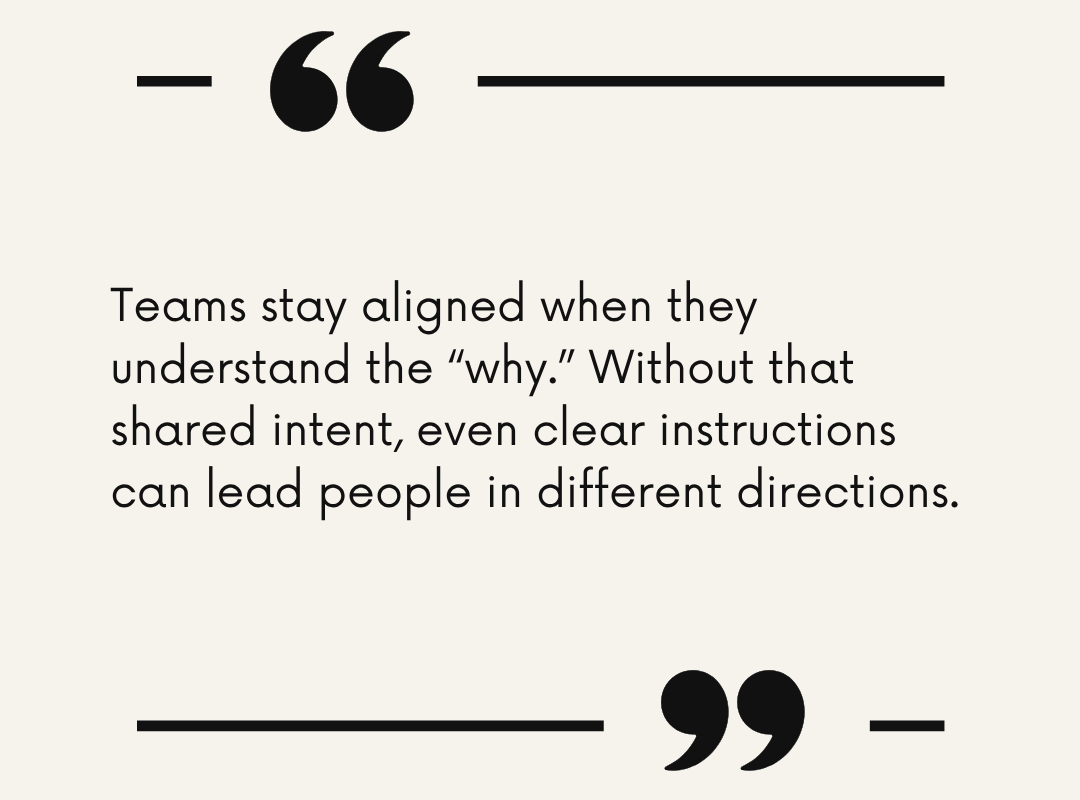
The mistake leaders make is treating alignment as something you do once, at the start. It has to be maintained, because people and priorities keep moving. A few things I’ve seen actually work: don’t assume “we agreed” means “we agreed on the same thing” ask each team to say the goal back in their own words, and the gaps show up immediately. Make every cross-team dependency explicit and give it a named owner, so a slip gets flagged early instead of discovered at integration. And keep the “why” alive, not just the “what” . People who understand the intent behind a goal correct course toward it on their own , people who only have the instruction drift the moment reality gets messy.
Q3. Many employees today feel overwhelmed not because of one major transformation, but because of a constant stream of new initiatives, tools, and priorities. How do you recognize when an organization has crossed into change fatigue?
The clearest early sign isn’t that people are tired , it’s that they’ve gone quiet. Early in a change, even a hard one, people push back they ask questions, they argue, they raise concerns. That’s healthy , it means they still believe their input matters. Fatigue sets in when that resistance flattens into a patient “let’s wait and see if this one actually sticks” and people quietly start doing the bare minimum on anything new because they’ve been burned before by initiatives launched with great energy and then abandoned.
But the way I really diagnose it is as a mismatch between capacity and velocity. If an organisation keeps introducing new initiatives before the previous one has stabilised and delivered any measurable value, it starts accumulating what I think of as “change debt.” And like any debt, it compounds. Past a certain point, employees stop spending their energy on doing the work and spend it instead on adapting to how the work keeps being changed. That’s the real tipping point: the output looks like busyness, but very little is actually landing.
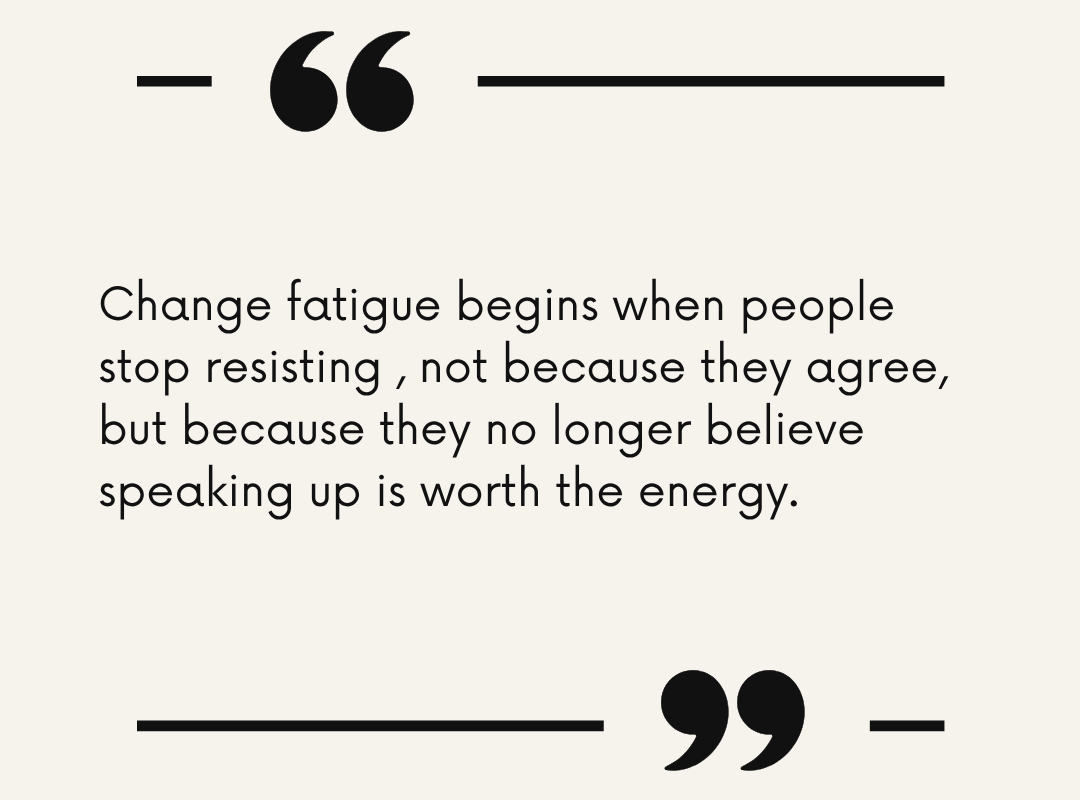
You can see the symptoms downstream , meetings get more compliant and less honest, and rework and small errors creep up because everyone is context-switching between too many half-finished changes. The final tell is emotional. Resistance means people still care enough to fight. Fatigue is when they’ve stopped fighting , not because they agree, but because they’ve concluded it isn’t worth the energy. By the time an organisation reaches that point, the problem is rarely any single change. It’s the accumulated debt of all of them.
Q4. How can leaders communicate change in a way that builds trust instead of uncertainty or resistance and create space for honest feedback when employees may hesitate to voice confusion, disagreement, or concern?
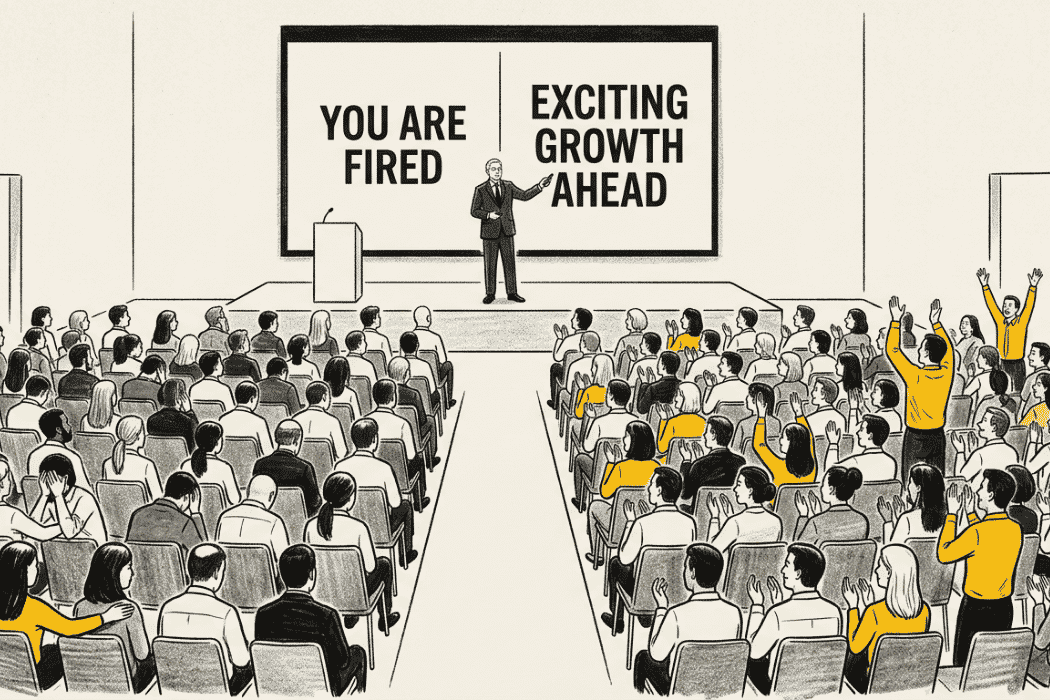
Trust is built less by what you promise and more by how honestly you handle what you don’t know. The fastest way to lose a team during change is to project false certainty to commit to timelines and outcomes you can’t actually guarantee because the moment reality contradicts you, every future message gets discounted. People handle “here’s what we know, here’s what we don’t, and here’s when we’ll know more” far better than a confident story that later falls apart.
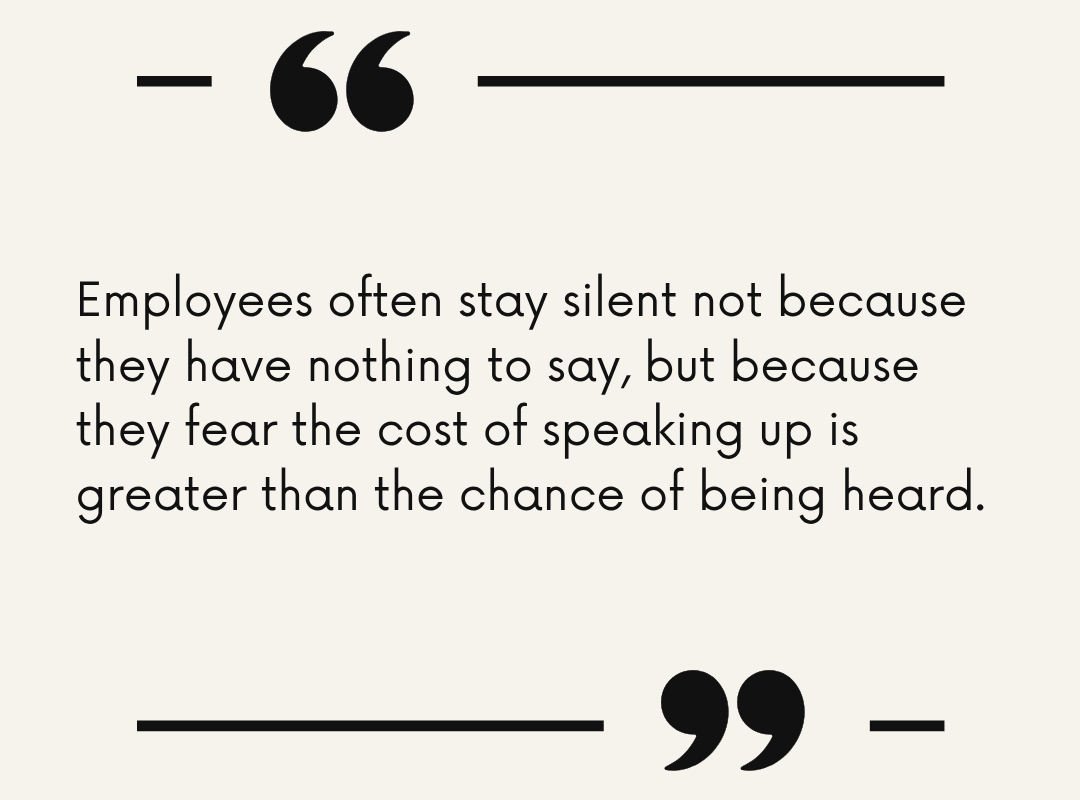
On feedback, the uncomfortable truth is that safety to speak is rarely distributed evenly. In practice, whether a concern lands often depends less on the concern itself and more on who is raising it their seniority, their standing, their relationship with the room. That is the quiet inequality inside a lot of feedback cultures, and people read it instantly. They stay silent not because they have nothing to say, but because they’ve calculated that, for someone in their position, the risk of speaking outweighs the chance it changes anything.
Leaders have to change that math deliberately. That means working to make it as safe for a junior voice to raise something as a senior one. It means responding visibly when someone does speak even “we heard you, and here’s why we’re still going ahead” beats silence, because silence tells everyone watching that speaking up is pointless. And it means the first person who raises something uncomfortable has to be protected, not punished because everyone else is watching what happens to them and deciding whether it’s safe to be next.
Q5.Employees are often expected to adapt quickly while continuing to deliver results. How can organizations strike a better balance between driving change and protecting employee well-being?
The well-being problem in change is usually misdiagnosed as simply too much work. In my experience it’s the combination that breaks people: high workload, plus uncertainty, plus a feeling of no control. People can carry a heavy load for a long time if they understand why it matters and have some agency over how they do it. Strip away the clarity and the control, and the same workload turns corrosive.
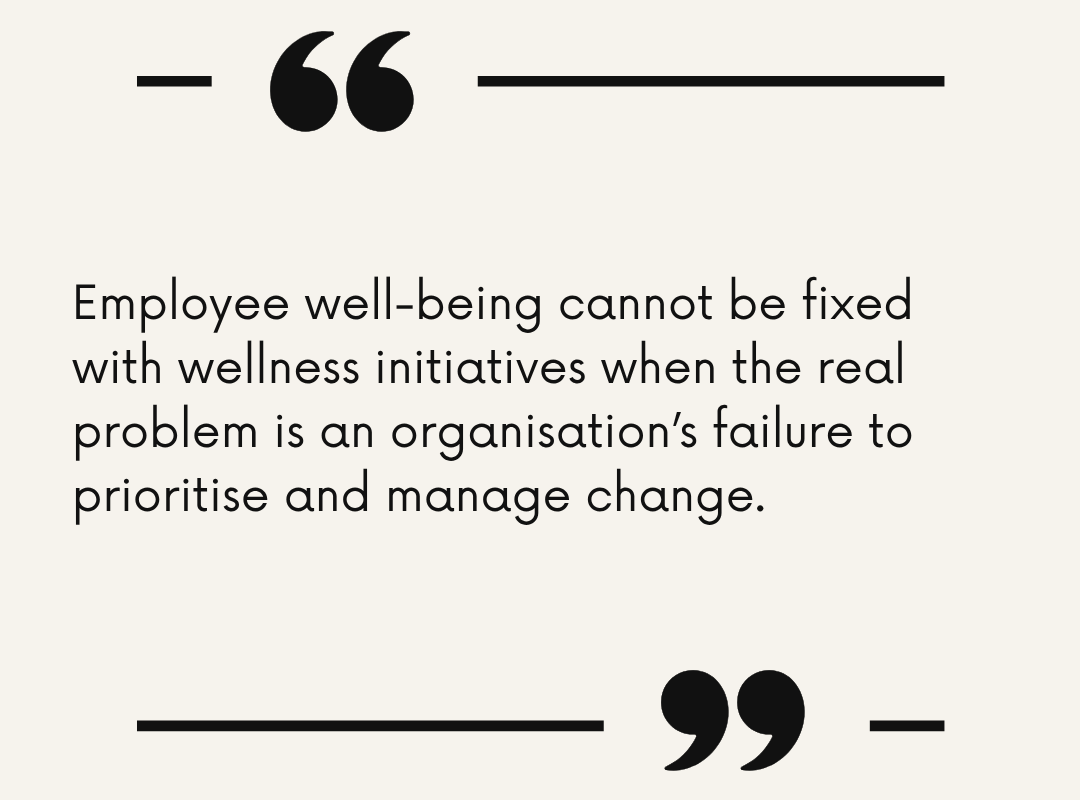
Much of the damage comes from the capacity-versus-velocity gap stacking new transformation on top of unchanged day-to-day expectations before the last change has settled. People are told to adopt the new way while still delivering everything the old way demanded, on the same timeline. That isn’t a well-being problem you fix with a wellness webinar; it’s a prioritisation failure being quietly passed down to individuals.
So the most honest thing an organisation can do is prioritise ruthlessly and say out loud what to stop doing. “Everything is important” is functionally identical to “nothing is prioritised,” and it leaves employees to absorb the conflict themselves. Beyond that: let a change stabilise and prove its value before launching the next, set timelines with real buffers, give people as much control as possible over their own work, and recognise the invisible effort of the people holding the change together in the middle they’re usually the first to burn out and the last to be noticed.
Q6. Have you seen an example where transparent communication significantly improved the outcome of a difficult transition? What made that approach effective?
One that stays with me came during a large cross-border enterprise-system rollout, where headquarters and our regional entity had fundamentally different views on how the system should be deployed in essence, adopt the central system as-is, or stand up a regional instance shaped to local realities. Both positions were legitimate, both sides felt strongly, and for a while it sat there as a genuine hurdle, absorbing enormous effort from me and from senior management on both sides with no resolution. It was the classic situation where a difficult decision generates a lot of heat and very little forward motion.
What finally moved it wasn’t more escalation or a louder argument. It was stepping back and laying the whole thing out plainly for the right stakeholders — the concrete pros and cons of each option, the real impact on the organisation, what each path would cost and what it would enable stripped of jargon and positioning, in language a decision-maker could act on in a single sitting. Once the trade-offs were genuinely visible and simple, management could make the call, and it resolved.
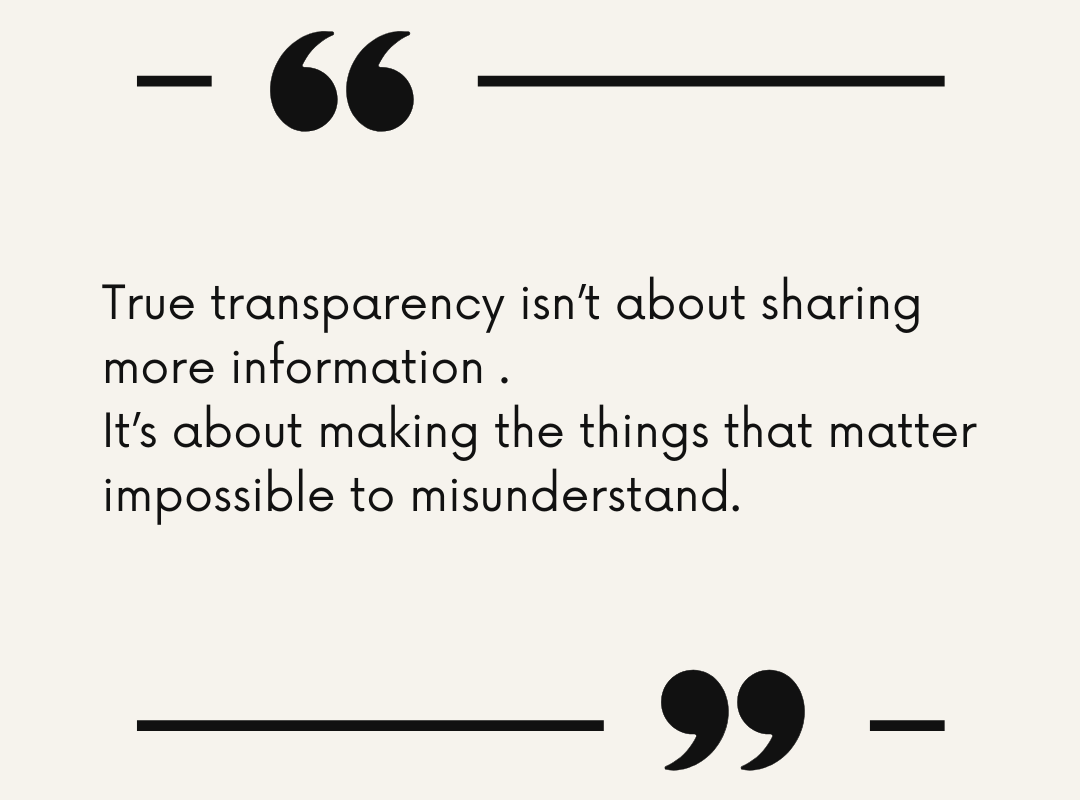
What made it effective was almost unglamorous: clarity, simplicity, and getting the right information in front of the right people rather than in front of the most people. Difficult decisions often stall not because the answer is unknowable, but because nobody has done the work of making the trade-offs legible. Transparency, to me, isn’t about sharing more it’s about making the few things that actually matter impossible to misunderstand.
Q7. In your view, what role does middle management play in either reducing or amplifying miscommunication during organizational change?
Middle management is where organisational change either gets absorbed or amplified and often both at once. I say this as someone who lives in that layer.
A team’s actual experience of a change is shaped far more by their immediate manager than by any leadership town hall — the manager sets the local weather. The same announcement can land as “here’s what this means for us and here’s how we’ll handle it,” or as undigested pressure passed straight down, and that difference is almost entirely down to the person in the middle.
I’ve also lived the other side of it ,a change in senior leadership partway through a major program, where someone I’d learned a great deal under moved on and a new reporting line came in while the work carried on at full pace. A transition like that tests exactly this layer you’re absorbing your own uncertainty about new expectations and a new working relationship, while still holding continuity for everyone depending on the program. It taught me how much quiet stabilising work the middle layer does that never shows up in any status report.
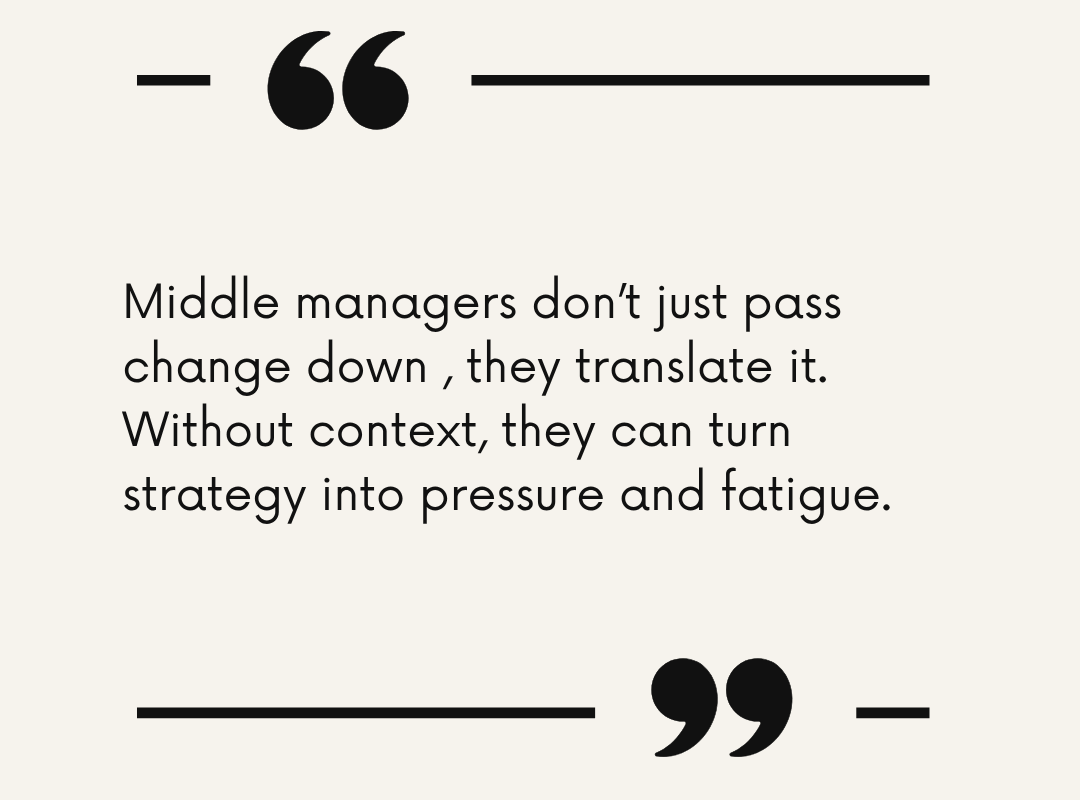
The reason middle management so often amplifies miscommunication is structural, not personal middle managers are frequently handed accountability without authority, expected to relay decisions they had no part in shaping and sometimes don’t fully understand themselves. If you can’t translate a change, you can only transmit it and transmitted pressure, stripped of context, is exactly what fatigues a team. At their best, though, these are the only people fluent in both languages leadership’s strategy and the ground’s reality and a good one translates in both directions, making the strategy concrete for the team and making the team’s ground truth legible to leadership before it becomes a crisis.
Q8.Looking ahead, what communication habits or leadership practices do you believe organizations must adopt to navigate change more effectively in the future?
The biggest shift organisations need is to stop treating communication as a series of events and start treating it as a constant rhythm. Change used to arrive in discrete waves you could announce and then absorb , now it’s continuous new tools, priorities, and structures layered on top of each other. Big-bang announcements simply can’t keep pace with that. Steady, predictable, two-way communication can.
A few habits I’d put near the top. First, radical clarity on priorities, including explicit permission to stop doing things in a world of constant change, telling people what not to do matters as much as telling them what to do. Second, respect the capacity-versus-velocity limit : let a change stabilise and prove its value before stacking the next one, so you’re not quietly running up change debt. Third, honesty about uncertainty as a default, not a last resort. And fourth, closing the loop treating feedback as something you visibly act on, not something you collect and bury.
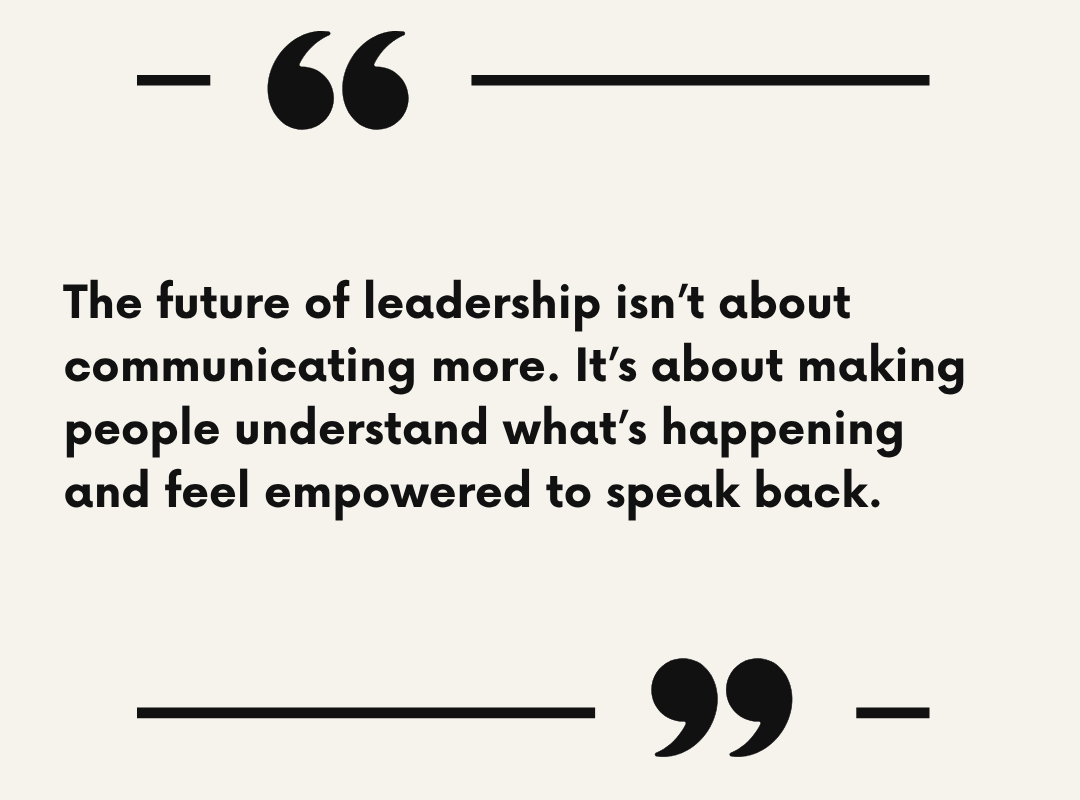
I’d also add that the tools now exist to make communication genuinely better used well, AI can summarise, translate across teams, and hold a shared source of truth that people actually trust. But that only helps if it reduces the noise rather than adding one more channel to an already overloaded system. The organisations that navigate change well in the future won’t be the ones that communicate the most. They’ll be the ones whose people actually understand what’s happening and believe they can say something back.
About Anuj Gupta
Anuj Gupta is a Senior Business Analyst in enterprise IT, with around four years of experience at the intersection of business and technology in the logistics sector. An engineer by training (B.Tech, NIT Jaipur), he currently works on a large-scale, cross-border SAP S/4HANA transformation, coordinating between global headquarters, implementation partners, and internal business teams across multiple countries.
His day-to-day sits squarely in the territory this piece is about translating between stakeholders who each speak a different organisational language, and holding complex programs together under real deadline pressure. A cross-border training stint abroad shaped much of his thinking on how culture quietly shapes the way people communicate.
Beyond his core role, Anuj is a compulsive builder of practical tools and automations, and has led internal GenAI adoption programs for large groups of colleagues. Outside work, he follows cricket closely, cooks, and shoots photography.
.jpg)

%20(1).png)

.png)