
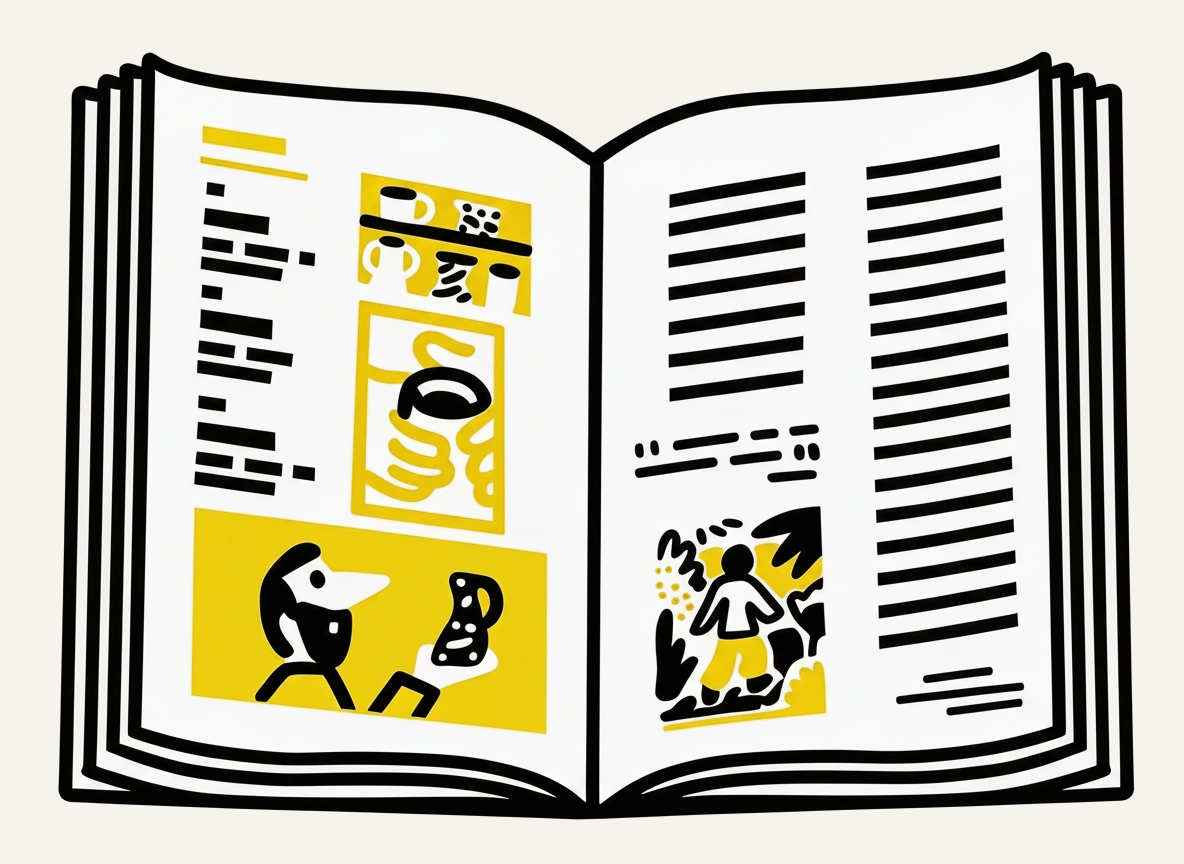




There is a coffee mug you love. You chose it once, deliberately for it's weight, colour and design, and now you reach for it every morning without seeing it at all.
Writing in The Atlantic's Wonder Reader, Rafaela Jinich describes the trick the mind plays: "A strange thing happens when you see something every day: eventually, you stop seeing it." The building you once admired dissolves into the commute. The trees on your street become background. The people closest to you become furniture you navigate around. Familiarity doesn't only breed contempt. It breeds a kind of blindness: the mind's ruthless efficiency, filing away the known so it can scan for the new.
That instinct kept our ancestors alive. But here is the uncomfortable part, we no longer aim it only at mugs and trees; we aim it at our own lives.
The waiting room
We tend to think the problem with modern working life is that it's too fast, or too much. Both are true. We've written before about the first, the strange courage it takes to slow down. But underneath the speed sits a stranger problem, and slowing down alone won't reach it. Even when the free evening finally arrives, even on the holiday we waited eleven months for, even the week the promotion lands, we somehow aren't there for it. We spend the evening planning tomorrow. We spend the holiday photographing it for a version of ourselves who will enjoy it later. We spend the promotion already measuring the next rung.
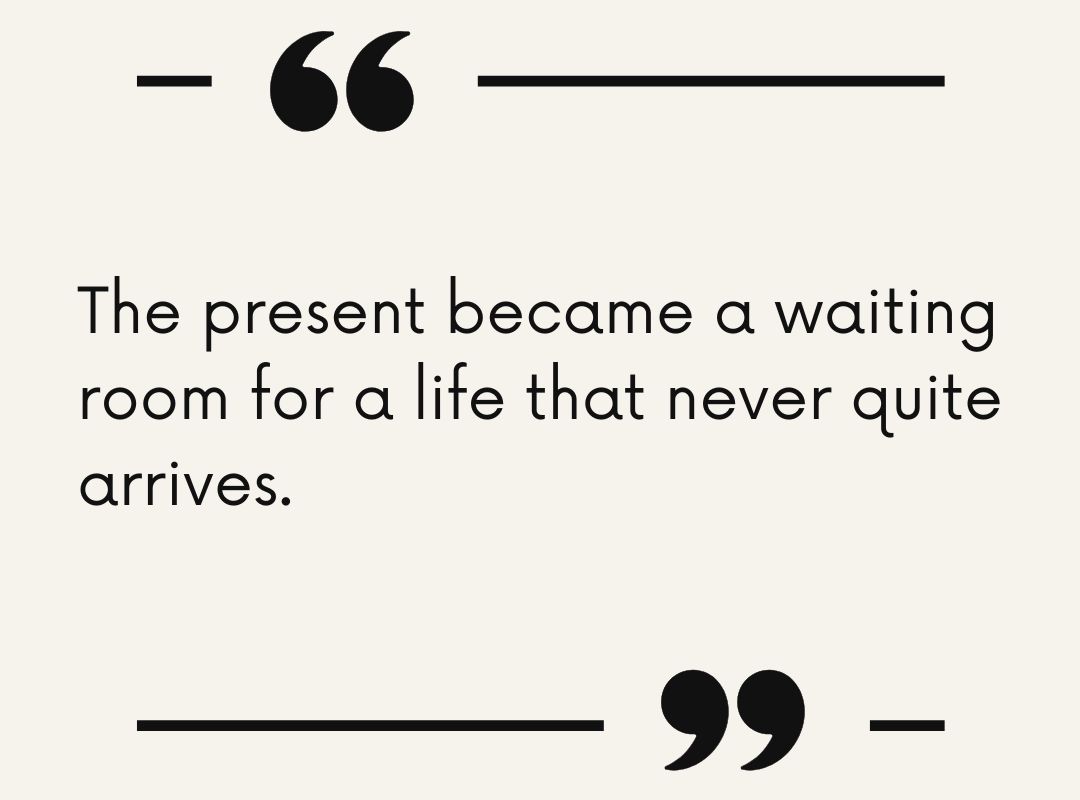
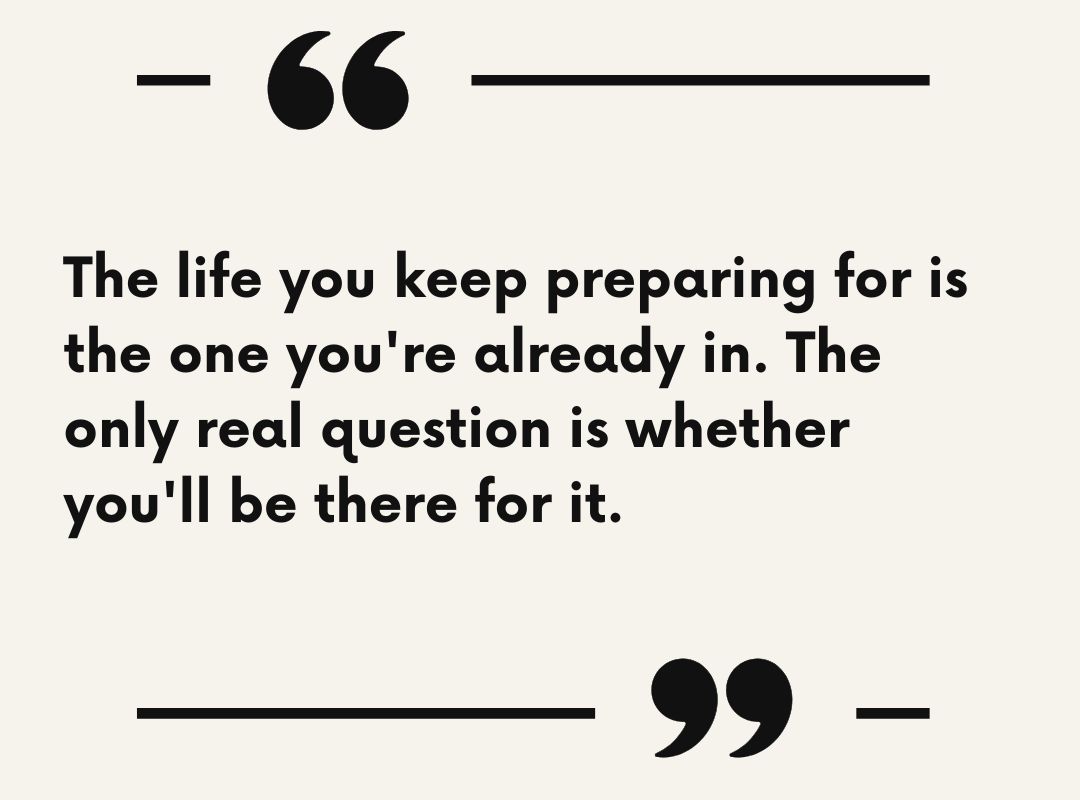
The present has become a waiting room. We sit in it, glancing at the door, certain the good part is about to be called. And the appointment never comes, because there is no appointment. The waiting room was the building.
The cult of delayed gratification
We have a respectable name for this, and we hand it out as praise. We call it delayed gratification, the marshmallow-test discipline that supposedly separates the grown-ups from the children. And in fairness, some of it genuinely is a virtue. Saving, planning, studying, building slowly toward something that matters: these are real goods, and a life with no deferral in it at all is just impulse wearing a smile. That is not the argument.
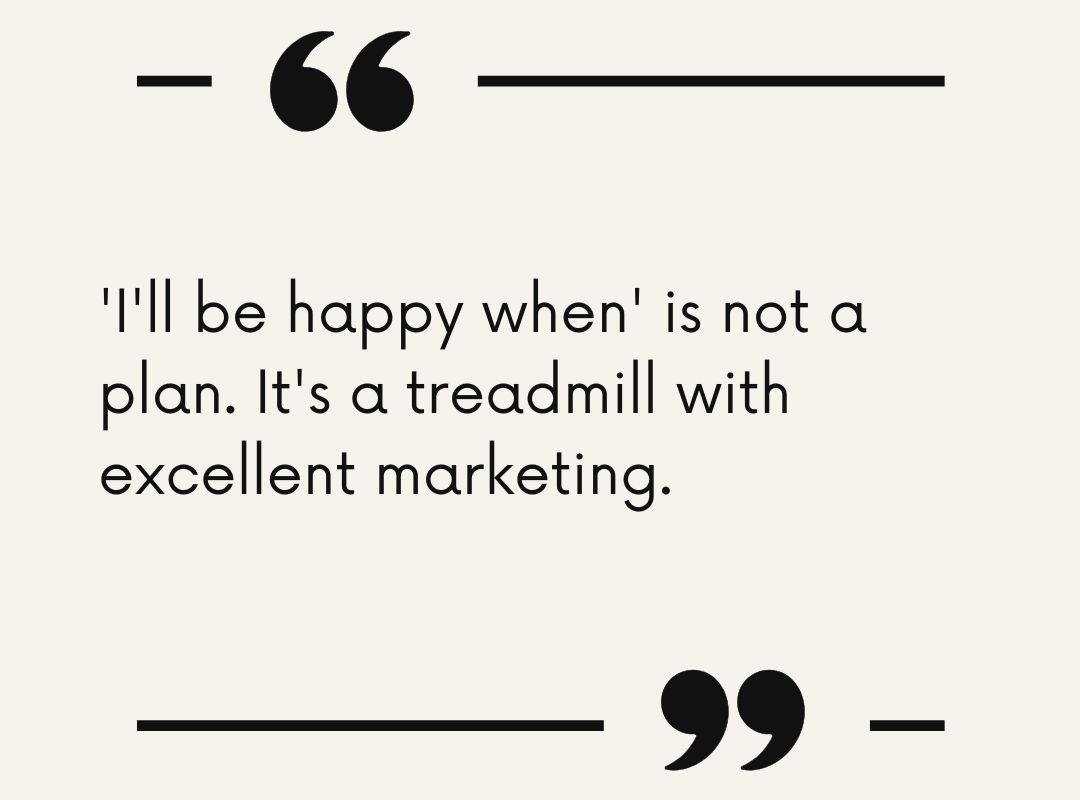
The argument made recently by the writer Ian Bogost, in a piece bluntly titled "The Cult of Delayed Gratification Is a Lie", is that we have let the deferral swallow everything. We've become so skilled at postponing life to a cleaner, more optimised future that the future is the only tense we know how to live in. And psychology has mapped the dead end at the far side of that habit. It's called the arrival fallacy, the positive-psychology researcher Tal Ben-Shahar's term for the stubborn, near-universal belief that reaching the goal will finally deliver the happiness. It rarely does, and never for long. You reach the summit you were sure would fix you, feel the odd flatness at the top, and move the finish line further out. "I'll be happy when" is not a plan. It's a treadmill with excellent marketing.
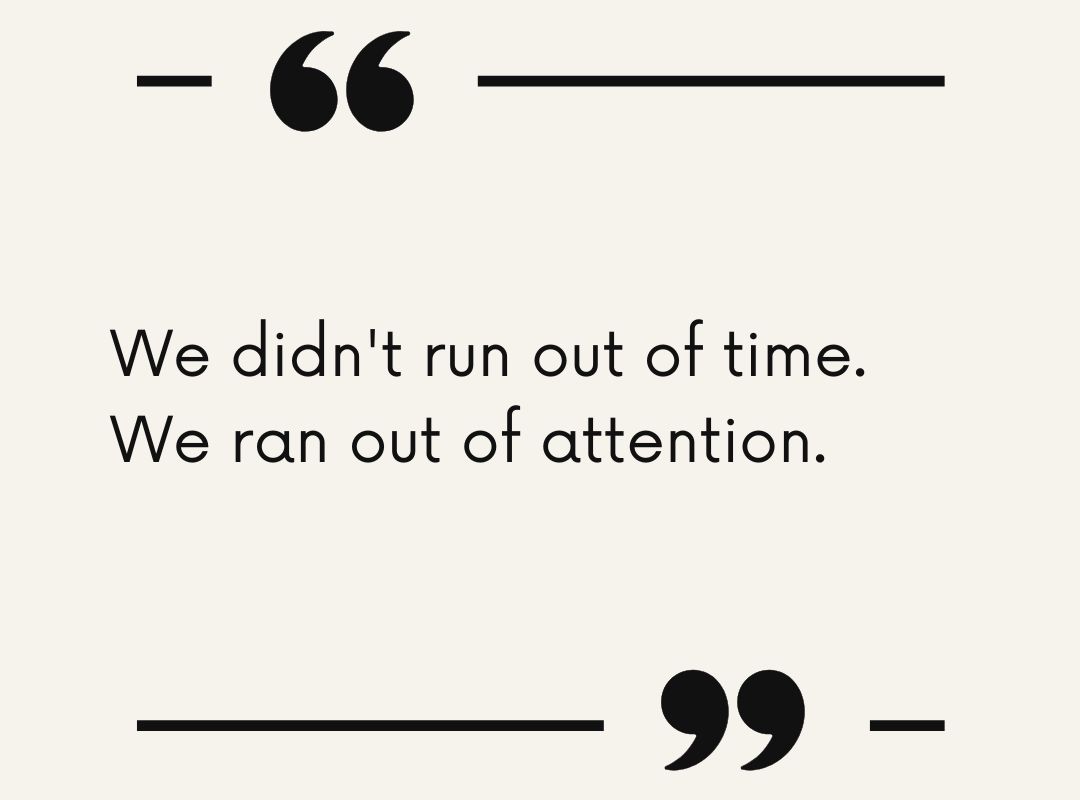
The cost of all this isn't paid in years. It's paid in attention. In 2010, the Harvard researchers Matthew Killingsworth and Daniel Gilbert pinged thousands of people at random moments and asked what they were doing, and where their mind actually was. The finding became famous, and it should be taped to every laptop: people spent nearly half their waking hours, about 47% thinking about something other than what they were doing. And they were measurably less happy when their minds wandered, even when the wandering was pleasant. The paper's title reads like a warning label for the modern professional: "A wandering mind is an unhappy mind." We didn't run out of time. We ran out of presence.
How work industrialises the waiting
If deferral is the water we swim in, the workplace is where it's bottled and sold.
Almost everything about corporate life is organised around the next thing. The next quarter. The next review cycle. The next reorg that will finally fix the thing this reorg didn't. Headcount comes "next year." The vacation gets rolled over because now isn't a good time, and now is never a good time. We are trained, gently and relentlessly, to experience today as an investment whose returns land somewhere in a future spreadsheet. A good employee, the culture whispers, is one who sacrifices the present efficiently. And so we become very good at being somewhere other than where we are: answering a mail about next month during the one dinner this month we said mattered.
The tragedy isn't only that this is unpleasant. It's that it doesn't even work on its own terms. The wandering, deferring mind is not a more productive mind. It's a more anxious one.
The Indian ladder
Nowhere is deferral more lovingly institutionalised than in the Indian middle-class life plan. You know the ladder, because you were raised on it.
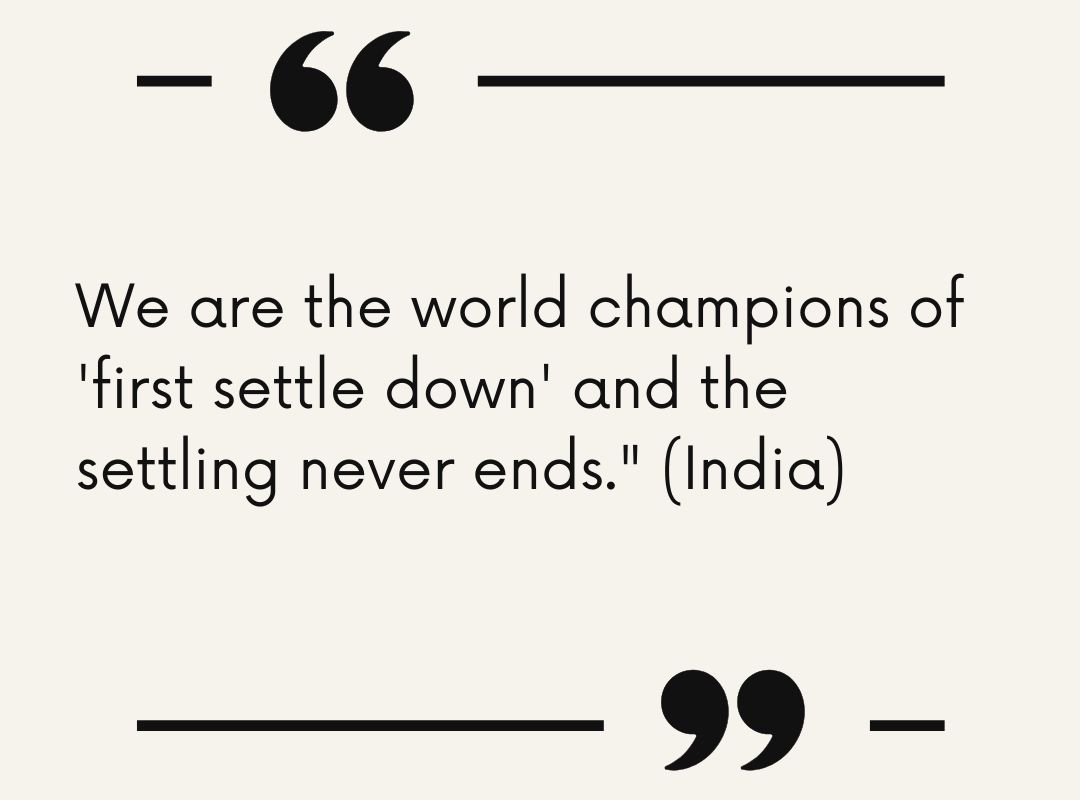
Study hard now,because your real life begins in a good college. Get the college, and it begins with the job. Get the job, and - first settle down. Marry, and it begins once the house is bought. Buy the house, and it waits until the loan is cleared, the children are settled, their education secured; and then, surely, at retirement, the living can finally start. We are, culturally, world champions of delayed gratification. We have simply never noticed that "settling down" is a horizon that recedes at exactly your walking pace. The whole architecture is designed to keep the reward one rung up and to call the person still climbing, at sixty, responsible.
None of this is stupid. It lifted families out of scarcity in a single generation; it built extraordinary things. But it has a failure mode we rarely say out loud: a life spent so completely in preparation that the thing being prepared for never arrives because it was never a destination waiting at the top. It was the climbing, all along.
The antidote is almost annoyingly cheap
So what's the way out? Here's the good news. The escape hatch is not a sabbatical, or Bali, or quitting to find yourself in a nicer time zone. Those are usually just the arrival fallacy with better lighting, one more thing to reach before the living starts.
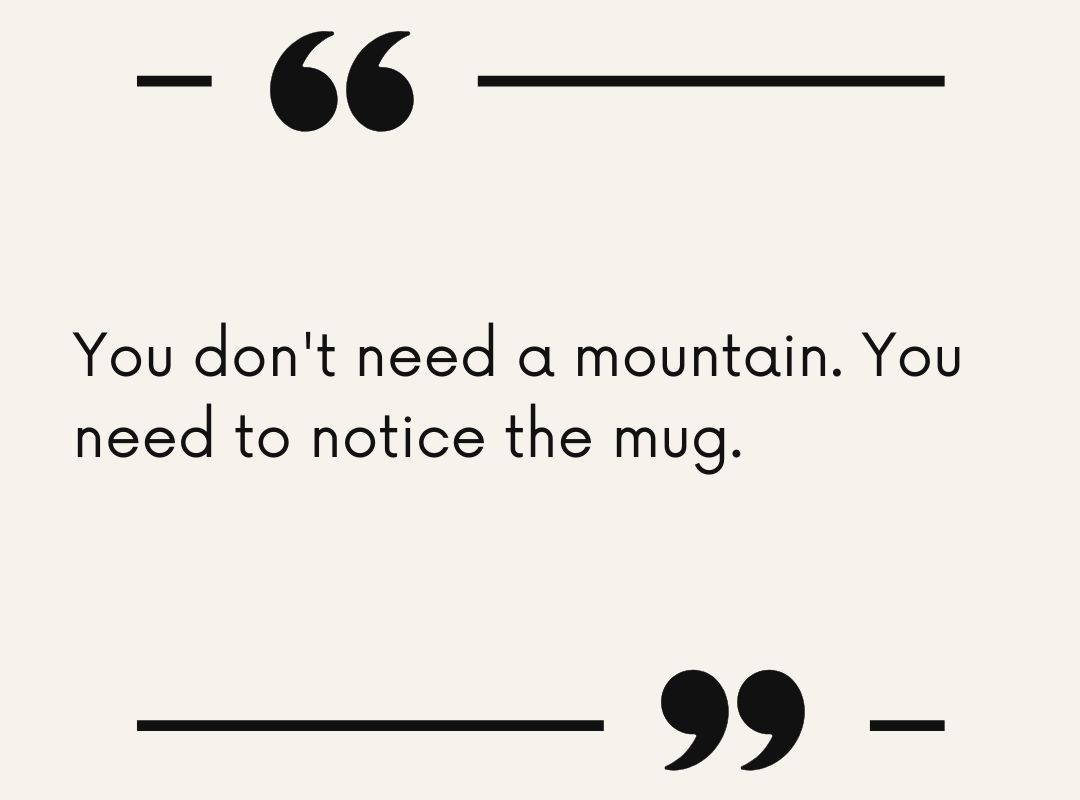
The antidote is attention. Specifically, the ordinary kind of wonder Bogost points to: not the awe of mountains and sunsets, which we ration out to holidays, but the wonder available in the toaster, the crunch of gravel underfoot, the surprising warmth of that mug. Alan Lightman, the physicist, puts the largest version of it plainly, being alive at all, he writes, is "the most extraordinary stroke of good luck any of us will ever experience," the experience of consciousness so sublime it's hard to believe it arose from mere atoms. Strip away the optimising for one second and the fact underneath is genuinely staggering: you are the universe having a look at itself over a cup of tea. That is not nothing. It may be the only thing.
And this isn't soft. The psychologist Dacher Keltner has spent years measuring what everyday awe does to a body, and the findings are hard-nosed: small, regular experiences of wonder lower stress and inflammation, lift mood, and quiet the churning self-focus that anxiety feeds on. In one study, older adults sent on weekly "awe walks", the same walks, but taken with deliberate attention, grew measurably happier and more generous than those who simply walked. The mechanism is the exact opposite of optimisation. Awe works by making the self smaller, not more efficient.
The one way to ruin it
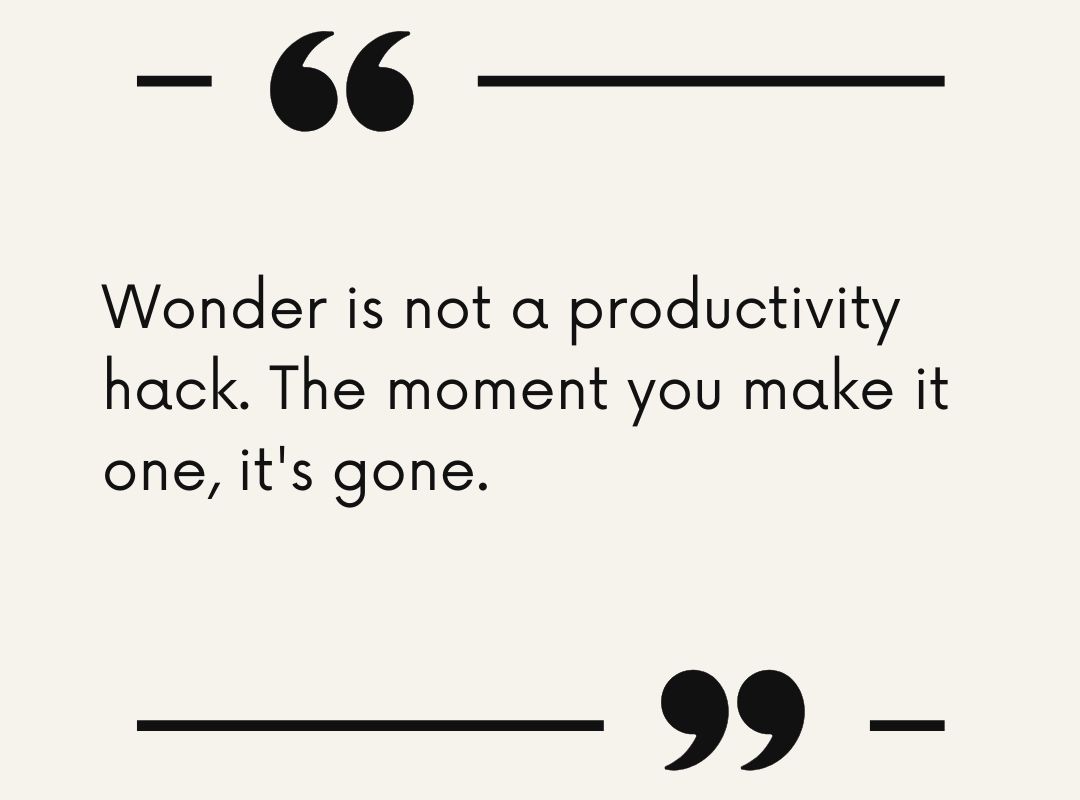
There is a single way to ruin all of this, and it's the most modern temptation there is: to turn wonder into a productivity hack. To slot the awe walk between stand-ups because a podcast said it lowers cortisol and cortisol dents output. To practise gratitude so you perform better on Monday. The instant wonder becomes a means to an end: sharper focus, higher throughput, a calmer employee who bills more but it evaporates, because its whole value is that it is not for anything. It is one of the last human experiences that refuses to be instrumentalised. A workplace, or a person, that can only justify a moment of attention by its downstream ROI has already missed the entire point.
The Tuesday is the life
Which leaves us somewhere quietly radical for a work culture built on the next thing.
The present is not preparation. It is not the dull stretch you get through on the way to the life that starts later. It is the life. The Tuesday is the life. The commute, the ordinary meeting, the cold cup of chai you forgot to drink because you were drafting a reply about next quarter that was an hour of the only life you get, and you weren't in the room for it.
None of this asks you to abandon your ambitions or stop planning. Keep the pension. Keep the goals. But notice what they're quietly costing while you chase them, and take a little of the present off deferral. Look up from the screen for the ten seconds it takes to actually see the person speaking to you. Taste the food. Feel the mug. Let one ordinary thing a day be genuinely astonishing which it is, if you look at it long enough. You are not falling behind by paying attention. Paying attention was the thing you were falling behind on.
We began with a mug you'd stopped seeing. End there. Pick it up tomorrow and, just once, feel how warm it is: the small daily proof that you're here, and alive, and that this improbable, ordinary morning was never the waiting room. It was the appointment.
Sources / further reading
- The Atlantic: Ian Bogost, "The Cult of Delayed Gratification Is a Lie" (confirm/add the live article URL before publishing)
- Alan Lightman: "The Ordinary Miracle of Existing" (author's posting; also in The Atlantic)
- The Atlantic: Rafaela Jinich, The Wonder Reader newsletter (the "you stop seeing it" passage) (add link)
- Harvard Gazette: Killingsworth & Gilbert, "A wandering mind is not a happy mind" (~47% of waking hours) · original paper, Science (2010)
- Psychology Today: the arrival fallacy (Tal Ben-Shahar's term)
- Dacher Keltner: Awe: The New Science of Everyday Wonder (2023), and the Sturm et al. "awe walk" study, UC Berkeley/Greater Good Science Center
- Internal: Wocult's "The Courage to Slow Down" and the wellbeing long view (this is the presence companion to the pace piece)

%20(1).png)

.png)