



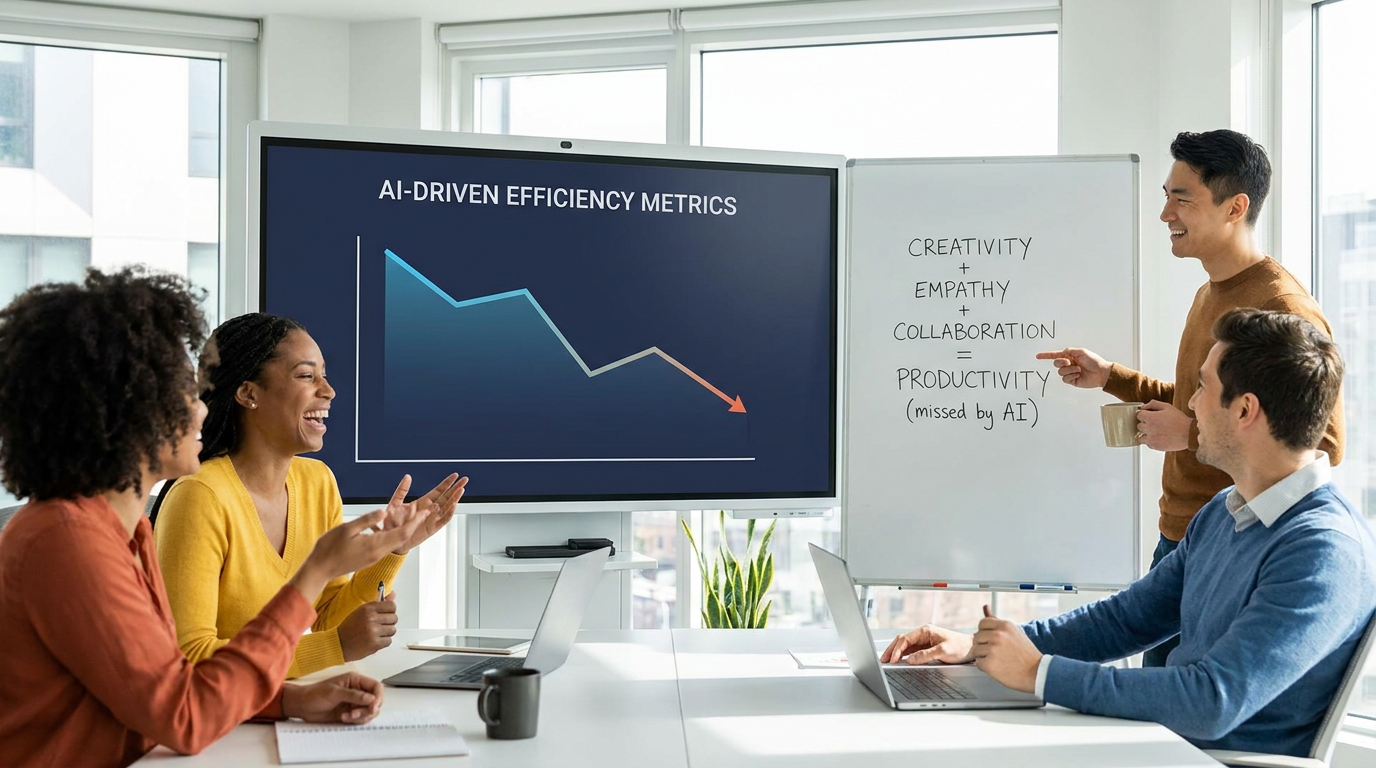
Demis Hassabis, CEO of Google DeepMind, recently called AI-driven layoffs 'dumb' during a discussion about workplace productivity. His reasoning cuts through the tech industry's obsession with algorithmic efficiency: if AI makes engineers three to four times more productive, companies should focus on maximizing that potential rather than cutting headcount based on narrow performance metrics.
What AI sees versus what actually matters
AI excels at tracking quantifiable outputs—lines of code written, tickets closed, sales calls made, deadlines met. These metrics feel objective and fair, which makes them appealing to companies looking to make difficult decisions about people. But they miss the invisible work that actually determines whether teams succeed or fail.
The colleague who asks the right questions that prevent a product launch disaster doesn't get credit for the crisis that never happened. The person who helps others solve problems might show lower individual output while making everyone around them more effective. The employee who pushes back on bad ideas or suggests process improvements that save time later appears less productive in the short-term metrics that AI systems typically analyze.
Cultural factors matter even more than individual contributions. A team with strong relationships and psychological safety will outperform a group of high-performing individuals who don't trust each other. But measuring culture requires understanding context, reading between the lines, and recognizing patterns that don't show up in productivity dashboards.
The mathematics of human complexity
When companies apply AI to layoff decisions, they're essentially running a math equation on human behavior. The algorithm optimizes for efficiency based on historical data, assuming that past performance predicts future value. This approach treats people as interchangeable units of productivity rather than complex individuals whose contributions depend heavily on environment, relationships, and circumstances.
This mathematical approach often eliminates exactly the wrong people. Someone going through a difficult personal period might show temporarily lower metrics while remaining a valuable long-term contributor. A senior employee whose individual output appears to be declining might be spending more time on strategic thinking and mentoring that multiplies the team's overall effectiveness.
The AI also cannot account for potential that hasn't been realized due to poor management, unclear expectations, or being placed in the wrong role. A person who appears unproductive in one context might excel in another, but the algorithm only sees current output, not untapped capability.
Why this trend will likely continue anyway
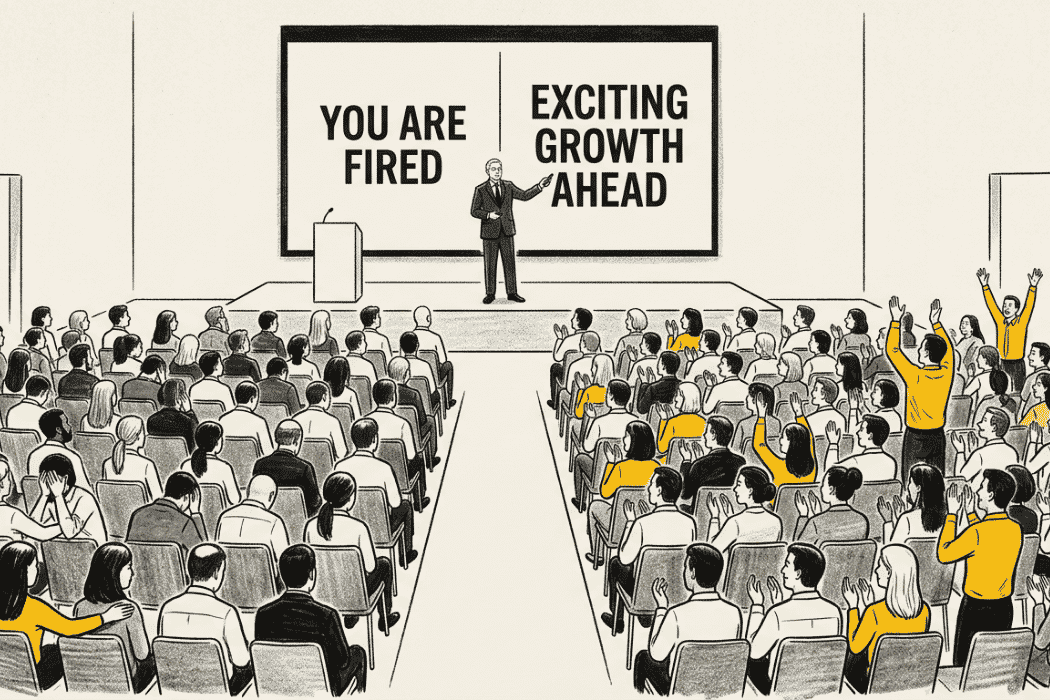
Despite the obvious limitations, AI-driven workforce decisions will probably become more common, not less. The appeal is too strong for companies facing pressure to cut costs quickly and defend their choices to shareholders. AI provides a veneer of objectivity that makes difficult decisions feel more palatable and legally defensible.
Companies can point to data and metrics rather than admitting they're making subjective judgments about people's value. This shifts responsibility from human managers to algorithmic systems, even though humans still choose which metrics to prioritize and how to interpret the results.
The technology will also improve at capturing subtler forms of contribution. Future AI systems might analyze communication patterns, peer feedback, and project outcomes to build more complete pictures of employee value. But even sophisticated algorithms will struggle with the fundamentally contextual nature of human productivity and the cultural factors that determine team effectiveness.
The question worth asking your company
The real issue isn't whether AI can accurately measure productivity—it's whether companies understand what productivity actually means in their specific context. Before implementing any algorithmic approach to workforce decisions, organizations should be able to answer a basic question: what makes people successful here, and how much of that can actually be measured?
If the answer reveals that success depends heavily on relationships, cultural fit, institutional knowledge, or other intangible factors, then AI-driven decisions will inevitably miss the mark. Companies might end up optimizing for the wrong things while destroying the very elements that made their teams effective in the first place.
As an employee, you can't control whether your company chooses to use AI in workforce decisions. But you can pay attention to how your organization talks about productivity and value. Companies that reduce human contribution to simple metrics are revealing something important about how they see their people—and whether they understand what actually makes their business work.
.jpg)


%20(1).png)

.png)