



What changed and why nobody announced it ?
The shift did not happen because organisations decided to be progressive. It happened because the speed of change made the old model structurally inadequate. Job descriptions began evolving faster than designations could keep up. Teams reorganised while titles stayed the same. Responsibilities expanded without promotions following. And then AI arrived, not as a future threat but as a present reality, and began reshaping entire job categories in real time.
Roles that took years to master are being partially automated. Skills that were differentiating three years ago are now table stakes. And new capabilities such as AI literacy, prompt thinking, human-machine collaboration, data fluency, are being demanded by industries that did not know they needed them eighteen months ago.
The ladder assumes the rungs stay fixed. They are not fixed anymore. They are moving fast.
Three generations. Three relationships with this shift.
GenX built careers inside the ladder and trusted it. They stayed. They accumulated tenure. They waited for the promotion that the system had implicitly promised. Many of them got it. Some are still waiting or have retired. And a significant number are now in their fifties, watching the organisation restructure around them, realising that two decades of loyalty did not produce the security they were told it would.
Millennials were the first to feel the ladder wobble. They entered the workforce during economic disruption, watched their parents' generation get restructured out of jobs they had spent thirty years building, and began to question whether the deal was real. They built side hustles. They changed industries. They started talking about transferable skills before that language was mainstream. They did not reject the ladder so much as they began hedging their bets against it.
GenZ did not inherit the ladder. They inherited the conversation about what comes after it. They have watched two generations navigate disruption, read the burnout essays, absorbed the AI anxiety, and arrived in the workforce already thinking in portfolios. They are not waiting to be developed. They are developing themselves in parallel, continuously, and often faster than their managers can track.
What a portfolio actually means ?
A skill portfolio is not a CV with more bullet points. It is a deliberate combination of capabilities that travels with you across roles, organisations, and industries, and compounds in value over time.
It includes the expected: domain expertise, technical fluency, communication. But increasingly it includes things that no job description has ever captured cleanly. The ability to operate in ambiguity. The willingness to pivot without losing momentum. The capacity to take a risk on something unproven and recover quickly when it does not work.
Creativity belongs here powerfully, as a strategic skill. In a world where AI can replicate process, the human capacity to make unexpected connections, reframe problems, and produce something genuinely original is becoming one of the few capabilities that cannot be automated or commodified.
Outcome-orientation and owner's mindset belong here, the ability to define what done looks like and deliver it with ownership. And adaptability sits underneath all of it. Not as a personality trait, but as a practiced discipline. The professionals building the strongest portfolios are the ones who have learned to treat uncertainty not as a threat to be managed but as the permanent condition of modern work.
What AI is actually doing to all of this ?
AI is not replacing careers. It is accelerating the irrelevance of the ladder and making the portfolio more urgent.
It is compressing the time it takes for a skill to become standard. It is raising the floor on what every professional is expected to be capable of. And it is creating entirely new categories of work, at a pace that no traditional career framework was designed to absorb.
The professionals most at risk are not the ones in technical roles being automated. They are the ones who have spent years optimising for a single specialisation and have not built the adjacent capabilities that would allow them to pivot when that specialisation narrows.
The professionals most positioned to thrive are the ones treating their career as a living document updating it continuously, adding new capabilities deliberately, and staying curious about the edges of their own expertise.
What organisations with traditional thinking need to face ?
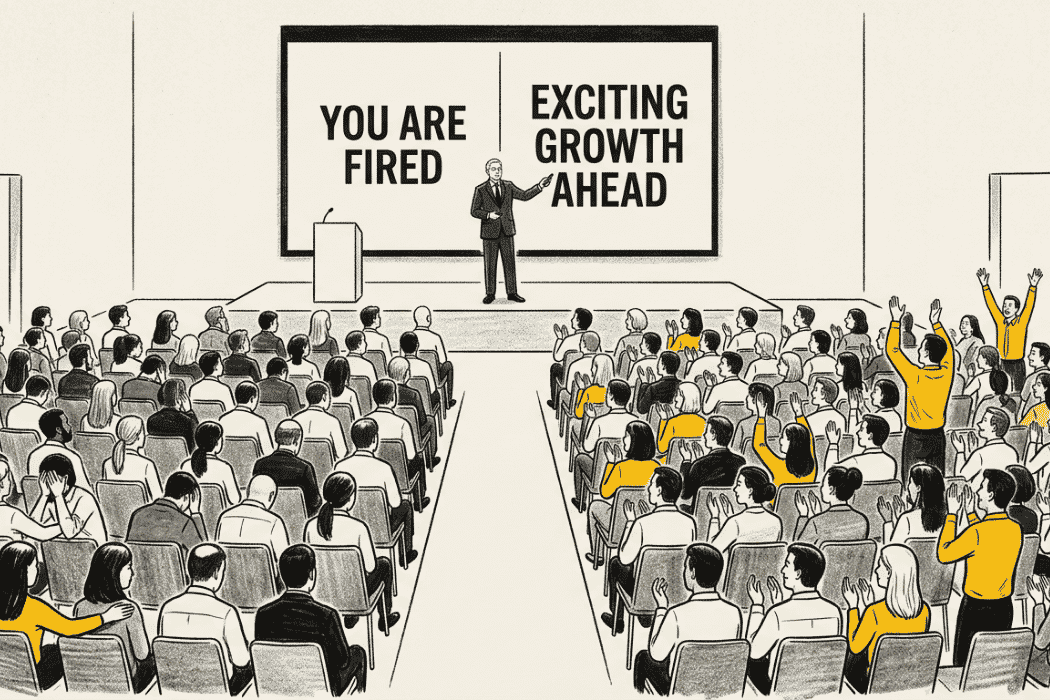
The organisation still selling the ladder as the deal, titles and tenure in exchange for loyalty and time, is making a promise it can no longer keep. And increasingly, the people it most wants to retain are the ones who know it.
The ones that will hold onto the best professionals are not the ones offering the most impressive designations. They are the ones redesigning the deal entirely making learning visible, recognising outcomes rather than hours, and building career frameworks honest enough to acknowledge that portfolios have replaced ladders as the architecture of a working life.
The professionals who have understood this shift are not waiting for permission, promotion or for the organisation to catch up with what they already know. They are building — quietly, continuously, and with increasing confidence that their next opportunity lives inside their portfolio, not inside anyone's org chart. Will they stay? Well, some will — for the right culture, the right growth, the right manager. But not out of loyalty to a structure that no longer serves them.
The rest will leave when they are ready. And they are getting ready faster than most organisations realise.
.jpg)

%20(1).png)

.png)