




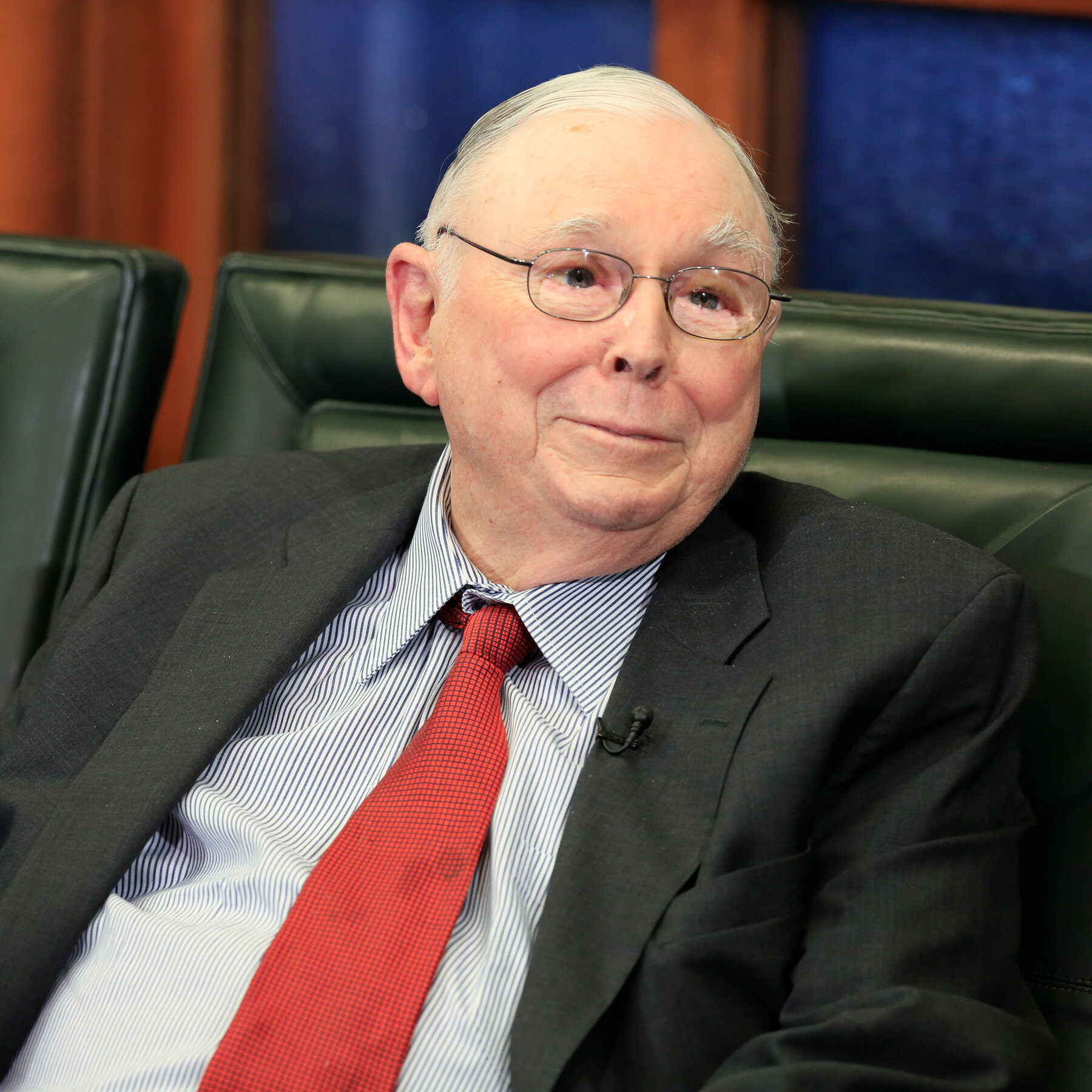
Image Credit : The New York Times
Munger's life was not easy. He lost a child. He went through a painful divorce. He lost his eyesight in one eye following a botched surgery. He faced market crashes, public criticism, and the slow grind of building something significant over a very long time. He faced numerous difficult situations but rarely appeared rattled. He learned to manage those situations by building mental frameworks that made difficulty navigable rather than destabilising. For working professionals navigating restructuring, career uncertainty, workplace pressure, and the daily friction of organisational life, Munger's framework is not self-help. It is mental infrastructure built by a man who tested it across nine decades of real consequence. He never called himself a Stoic. But his thinking aligned almost perfectly with the tradition of Epictetus, Marcus Aurelius, and Seneca — philosophers less interested in abstract wisdom than in the practical question of how a person stays functional when things go wrong.
Four principles formed the backbone of that framework.
1. Accept reality before you respond to it
"I think that one should recognise the reality even when one doesn't like it - indeed, especially when one doesn't like it." - Charlie Munger
Your organisation announces a restructuring. Your role is eliminated. Your project is cancelled after eighteen months. Your performance review says something you did not expect.
The first response for most professionals is resistance : an internal argument with the fact in front of them. It should not be happening. It is not fair. It was not supposed to go this way.
Munger's observation, borrowed directly from Marcus Aurelius, is that this internal argument is where composure dies. The composure doesn't die in the difficult event itself but in the energy spent refusing to accept that it has occurred. The panic most people feel in a crisis is rarely about the crisis rather it's about the gap between what is happening and what they insist should be happening instead. Acceptance is not passivity. It is not an agreement that the situation is right. It is the recognition that before you can respond to a problem, you have to stop arguing with its existence. That clarity is the foundation on which every useful response is built.
2. Ask what would make things worse and then do not do that
"It is remarkable how much long- term advantage people like us have gotten by trying to be consistently not stupid, instead of trying to be very intelligent." - Charlie Munger
Most professionals in a difficult moment ask: what is the right thing to do? Munger flipped the question. What would guarantee that I make this worse?
Send the reactive email. Escalate without thinking. Make the decision under pressure that you would never make with a clear head. Burn a relationship in a moment of frustration that you will need in six months.
The ancient Stoics called this premeditatio malorum : the premeditation of evils. If you identify in advance the behaviours that consistently make things worse for you, you build a defensive map you can use in real time. You are not trying to perform calm. You are simply not doing the things that destroy it. Most career- damaging moments are not caused by ignorance. They are caused by knowing what the right response is and choosing the reactive one instead. Inversion does not require wisdom in the moment. It only requires the prior decision not to do the thing you already know makes everything worse.
3. Separate what you control from what you do not
"Envy, resentment, revenge, and self- pity are disastrous modes of thought." - Charlie Munger
Your colleague was promoted ahead of you. The organisation moved in a direction you disagreed with. The client chose someone else. The decision was made above your level and without your input.
Munger viewed envy and resentment not as understandable responses to hard circumstances but as strategic errors. They keep your attention fixed on things you cannot change while draining the resources you need for the things you can. The person or situation you resent is entirely unaffected by your resentment. You are the one paying the ongoing cost. The practical version of this in any difficult professional moment is a clean mental division: what in this situation can I actually influence right now, and what is entirely outside my control? Whatever falls into the second category gets no more of your time or emotional energy. Whatever falls into the first becomes your entire focus.
This is not a philosophical exercise. It is a daily discipline and it eliminates an enormous amount of unnecessary suffering.
4. Build enough mental models that no single situation leaves you stranded
"To a man with a hammer, everything looks like a nail. That's a perfectly disastrous way to think." - Charlie Munger
Most professionals panic in unfamiliar situations because they only have one way to understand what is in front of them. When that single framework breaks down, they have nowhere to go.
Munger spent his life deliberately collecting mental models from physics, biology, psychology, economics, and history as practical lenses. When one framework did not produce clarity, he reached for another. Confusion has far less grip on a mind that can find a different angle. In professional life, this means building the habit of asking: what else could this be? What would a historian say about this situation? What does the psychology of this moment suggest? The broader your mental toolkit, the harder it is for any single situation to leave you with no useful frame of reference.
This is a long- term investment in composure, not a quick fix. The broader your toolkit, the harder it is for any situation to leave you stranded.
Why this matters ?
Munger's composure was not a personality trait. It was a set of practiced habits applied consistently over decades, in markets, in relationships, in the ordinary difficulty of a long professional life.
Radical acceptance. Inversion. The dichotomy of control. A latticework of mental models. None of these require exceptional intelligence. They require only a decision to build them before you need them because the moment of crisis is not when the construction happens. It is when the building either holds or it does not.
.jpg)

%20(1).png)

.png)