




What is actually happening after a layoff
Layoffs have become a routine corporate instrument. In 2023 and 2024, waves of cuts moved through technology, media, and financial services with a kind of administrative efficiency; announcements made, severance processed, Slack channels archived. But for the people who stayed, the experience did not end with the announcement. It lingered.
A Forbes analysis drawing on workplace research suggests that what layoff survivors experience is frequently misidentified. The standard corporate label is 'change fatigue' : a phrase that implies the problem is about pace, about too much happening too fast, and that rest or better communication will fix it. But grief does not work that way. Grief is what happens when something you valued disappears without your consent. And in a layoff, that is precisely what occurs. Colleagues you trusted are gone. Teams that had a rhythm are restructured. The unspoken contract that if you performed, you would be safe, is broken.
Gartner research has flagged that employee disengagement is not a passing response to change. It appears to be a sustained state that follows disruption, particularly when workers feel the disruption was handled without transparency or fairness. The distinction matters because the response to fatigue and the response to grief are entirely different. One requires rest and clarity. The other requires acknowledgment, time, and something that resembles honesty.
Why the wrong label is doing real damage
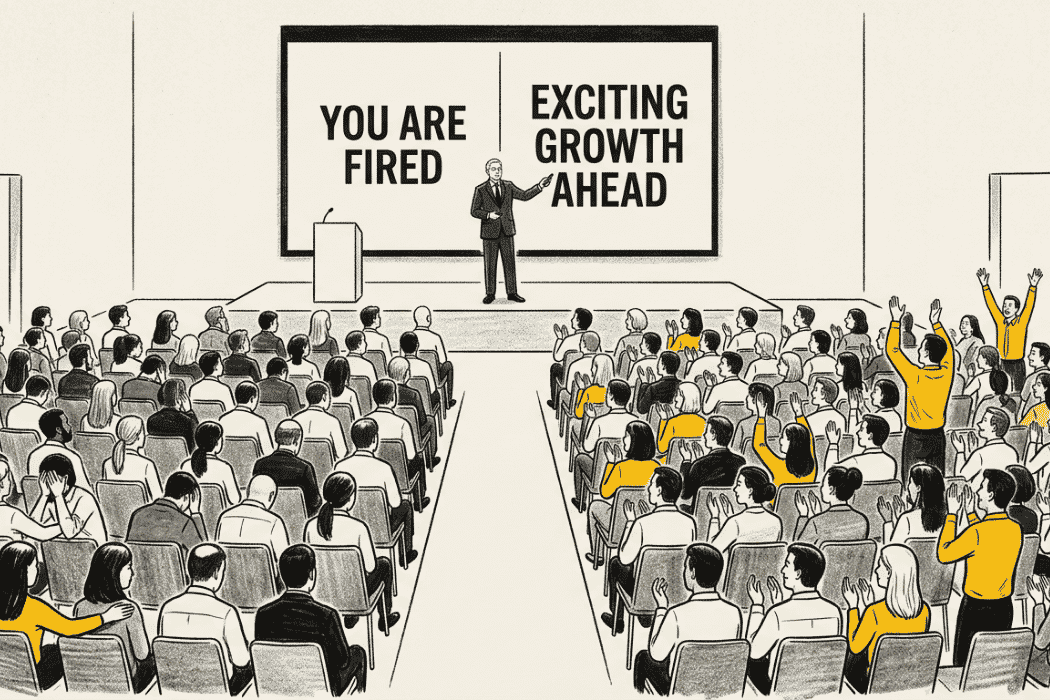
When an organisation calls grief change fatigue, it is not just being imprecise. It is actively steering toward the wrong intervention. Change fatigue gets treated with town halls, updated FAQs, and manager toolkits. Grief requires something that organisations are structurally uncomfortable offering: an admission that something was lost, that people are hurting, and that productivity is not the most urgent thing right now.
The cost of getting this wrong is significant. Gartner has estimated that disengaged employees cost organisations globally in ways that compound over time, reduced output, higher attrition among the people who were not laid off but are now quietly looking, and a collapse in the kind of discretionary effort that cannot be mandated. When someone is grieving and feels unseen, they do not suddenly re-engage because a slide deck told them to focus on the future. They withdraw further.
For the working professional sitting in this situation, the mislabeling creates an additional burden. You are told you are fatigued, which implies the feeling will pass if you just adjust. But the feeling does not pass on that schedule. And when it does not, you start to wonder if something is wrong with you when the more accurate reading is that something happened to you, and nobody named it correctly.
A pattern that has been building for years
This is not a new problem. Layoff survivor syndrome has been documented in organisational research for decades. The symptoms are consistent: guilt at having retained your job, anxiety about the next round, a drop in motivation, and a loss of psychological safety. What is newer is the scale and speed at which layoffs are now happening, and the way companies communicate them or fail to.
The pattern that emerges across industries is one where the human experience of the people who remain is treated as a secondary concern. The primary communication effort goes into the announcement itself, the carefully worded email from the CEO, the talking points for managers. What follows is often a vacuum. Survivors are expected to process the loss on their own time and return to full performance without delay. In some organisations, they are also expected to absorb the responsibilities of the people who left, without a proportional change in compensation or support.
This is where the grief compounds. It is not just about missing a colleague. It is about realising that the organisation's definition of you is primarily functional. You are a resource. When that becomes clear, something in the relationship shifts permanently for many people. They may stay, but they stay differently with a part of themselves held back, a calculation running quietly in the background about whether this place deserves their full effort.
The question worth sitting with
If you have lived through a layoff at your company as a survivor, as someone who was let go and landed somewhere new, or as a manager asked to deliver the news, you probably already know that the official framing rarely matched your internal experience. The language of change and transformation sits awkwardly alongside the reality of watching someone clear out their desk.
The broader question this raises is what working professionals owe themselves in these moments. Not in a self-help sense, but in a practical one. If the organisation is going to misname what you are feeling, you may need to name it correctly for yourself. Grief has a shape. It moves. It does not mean you are failing to adapt. It means something mattered to you, and now it is gone.
Organisations that want to retain trust after a layoff will need to do more than improve their communication decks. They will need to make room for the reality that their remaining employees are not simply recalibrating. Some of them are mourning. And mourning, unlike fatigue, cannot be scheduled around the next all-hands meeting.
The people who stay after a layoff are often treated as proof that the organisation survived. Rarely are they treated as people who are still figuring out what they lost.
Sources : Forbes.com , Gartner
.jpg)

%20(1).png)

.png)