





What Nayar actually said
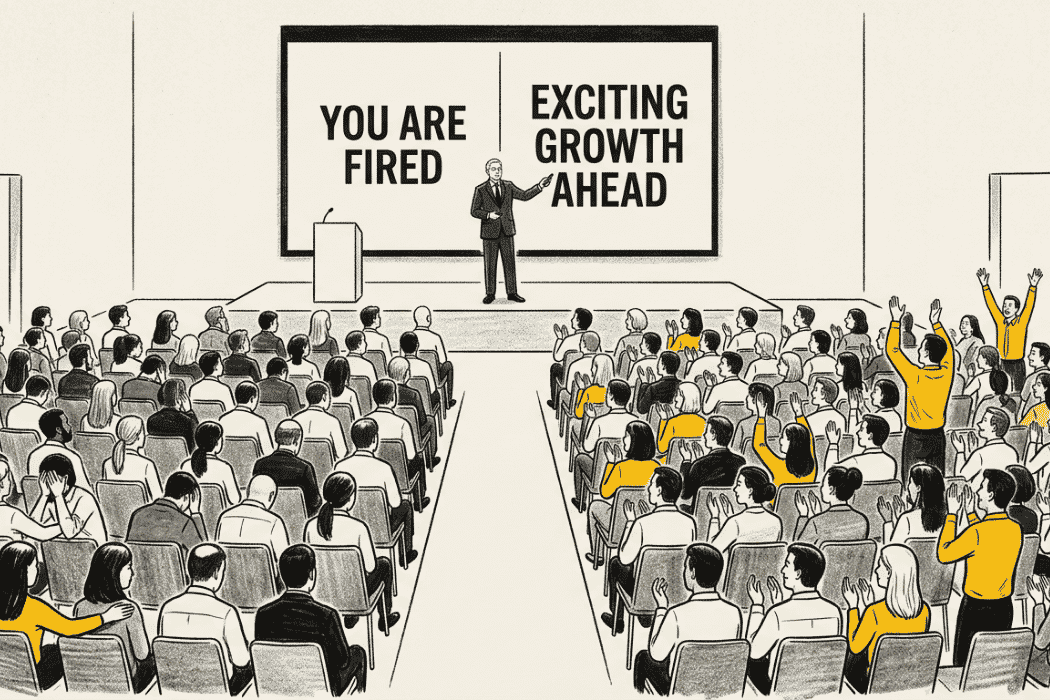
Vineet Nayar, who led HCL Technologies through a period of significant growth before stepping down, did not hold back. He called out a pattern that has become disturbingly common across the global tech industry i.e. companies using AI transformation as cover for mass layoffs, executed with minimal dignity. The 7am email has become a symbol of exactly this: employees logging in to start their day and finding they no longer have one. No conversation. No warning. No acknowledgment of the years someone gave to an organisation.
Nayar's broader point was about the moral choices corporate leaders are making. These are not companies bleeding money. Many of the firms carrying out large-scale layoffs have reported strong earnings. The decision to cut people, in that context, is not about survival. It appears to be about margin improvement and appeasing investors. Nayar suggested that leaders need to be held accountable for how they treat people during these transitions, not just for the financial outcomes they deliver.
Why this lands differently for Indian professionals
For Indian working professionals, this conversation carries a specific weight. A large portion of global tech employment particularly in services, software, and IT operations sits in India. When a US-headquartered company sends layoff notices, the people receiving those 7am emails are often sitting in Bengaluru, Hyderabad, Pune, or Chennai. They are far from the headquarters where those decisions were made. They often have little visibility into why they were selected, what criteria were used, or what recourse they have.
India does have some legal protections around retrenchment. Under the Industrial Disputes Act, companies employing above a certain threshold are required to give notice or pay in lieu of notice, and in some cases need government approval before retrenching workers. However, most tech professionals in India are hired under contracts that define them as employees in the formal sector, and the practical enforcement of these protections varies considerably. Many professionals only discover the limits of those protections when they actually need them.
Beyond the legal dimension, there is a psychological one. When your job ends in an email before you have had your morning tea, it does something to how you see yourself and your relationship with work. That experience does not stay at the door when you join your next company.
The larger pattern that Nayar is pointing to
What makes Nayar's remarks worth taking seriously is that he is not an outsider criticising the system. He ran a large technology company. He understands what operational decisions look like from the inside. When someone with that vantage point says this has to stop, it suggests the behaviour has become normalised enough that even people within the industry are uncomfortable.
The pattern he is describing has been visible for a few years now. A wave of tech hiring during the pandemic was followed by a sharp correction. Companies like Google, Microsoft, Meta, and Amazon all announced significant cuts between 2022 and 2024. Indian IT firms have also been managing headcount more carefully, with some reducing fresher hiring and others not renewing contracts. The language used is almost always the same: restructuring, optimising for the future, aligning with strategic priorities. The experience for the person on the other end is far simpler, they lost their job, often without adequate warning or human acknowledgment.
AI is now being used to justify another round of this thinking. The argument is that automation will handle work that people currently do, so fewer people are needed. That may well be true in some functions over time. But the leap from that possibility to eliminating thousands of jobs immediately, while reporting record profits, is a choice. It is not an inevitability. Nayar's point is that leaders are framing it as the latter when it is clearly the former.
The question worth sitting with
There is something worth reflecting on here beyond the immediate news cycle. If you are a working professional in India, in tech, or in any sector where AI is being discussed as a replacement for human work, the question is not just whether your job is safe. That is the obvious question and it matters. But there is a deeper one underneath it.
What do you actually know about how your employer would treat you if it came to that? Not what the HR policy document says. Not what your manager says when things are going well. But what the actual culture of the organisation suggests about how it handles people when they become inconvenient.
Nayar's remarks are unusual because leaders of his standing rarely say this kind of thing publicly. Most choose careful, diplomatic language that protects relationships and reputations. He chose not to. That itself is worth noting. It suggests that what employees have been feeling privately is not just a feeling. It is a reasonable assessment of a real problem.
The 7am email is not just bad manners. It is a signal of how much an organisation actually values the people inside it once they are no longer useful. That signal was always there. AI is just making it harder to ignore.
Sources : https://www.cnbctv18.com/
Image Credit : https://speakingminds.com/Speakers/Details/Vineet_Nayar_
.jpg)


%20(1).png)

.png)