




What the hike was really about
The Bengaluru woman's post was not really about hiking. It was about permission. Permission to pause, leave the workplace when the day is done, permission to exist as a whole person after 6pm without the undue pressure of availability that Indian working culture has long mistaken for dedication. Employees staying until the boss leaves. Calls at 11pm. Weekends that are never fully off. These are not edge cases. They are the unremarkable texture of professional life for millions of Indians in the service sector working in technology, banking, consulting, everywhere the hours are long and the hierarchy is deeply complex.
Her post went viral because she named something most people had stopped naming. America offered her something India had not - a better salary with a more prestigious role and the permission to be a full human being after the work day was over.
What the 60-day clock is really about
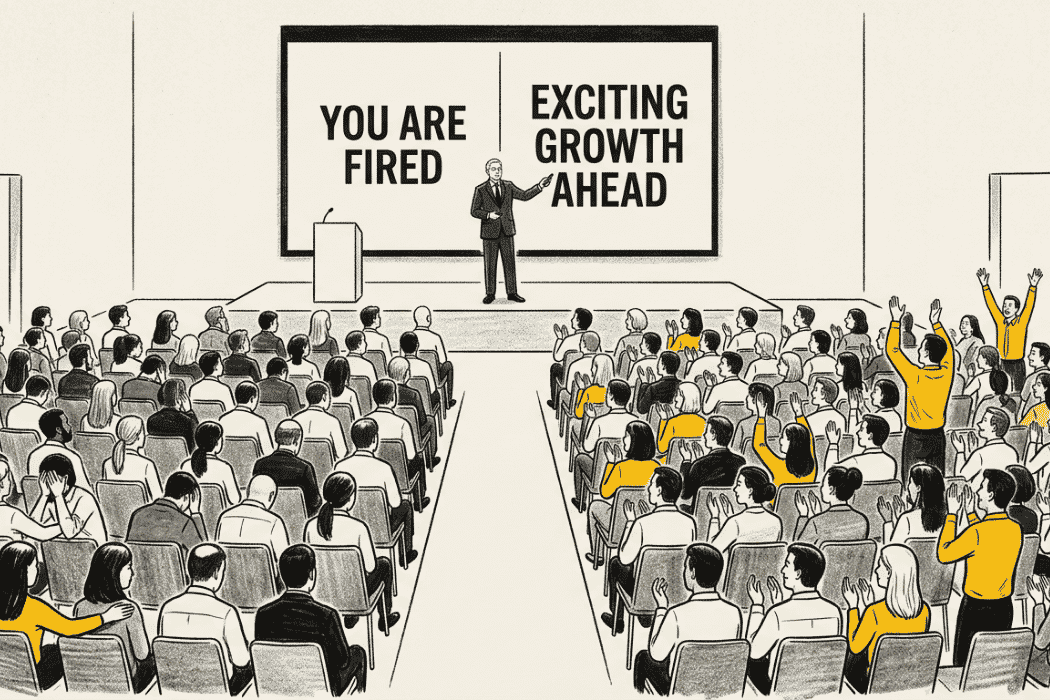
Meta's latest layoffs target engineering and product teams as the company pivots toward AI. For most employees, a layoff is devastating but navigable. For Indian professionals on H1B visas, the arithmetic is entirely different. 60 days - that is the window to find a new employer willing to file the sponsorship paperwork. If they fail, they are expected to leave the US. Not 60 days to find the right job but 60 days to find any employer before the legal clock runs out.
More than 71,000 tech jobs have been cut in 2026 so far. Indians are the largest nationality group among H1B holders. Many have spent a decade waiting for a green card that moves at geological pace. What a layoff activates for them is not just professional disruption but the entire life - jobs, homes, children's schooling, and even the right to stay in the country are suddenly at risk.
Immigration attorneys report unprecedented surges in rejections. Laid-off professionals exploring emergency protocols have begun calling themselves "H-1B refugees."
The generation that left and what it cost
Two generations of Indian professionals — GenX and Millennials — who made a choice that, at the time, felt not just reasonable but necessary. India in the 1990s and 2000s offered limited infrastructure, constrained opportunity, and a work culture that asked everything in return for a career that moved slowly. So they left to settle abroad.
They built something extraordinary — careers, homes, identities — in a country that needed their talent and, for a long time, made them feel valued. But today, many of them are now the engineers counting days. This is not a failure of their judgment. The immigration architecture that once felt like a gateway has revealed itself, in a moment of corporate restructuring, to be a trapdoor. The stability they built over years can be interrogated in 60 days. They gave the best years of their capability to an economy that is, in some cases, now handing them an exit notice.
Can GenZ choose differently ?
GenZ is watching all of this. And they are being handed a genuinely different set of options. India in 2026 is not India in 2000. The startup ecosystem is real, job market and entrepreneurship both are booming. The opportunity to build something — a company, a career, a contribution — without leaving the country is more available than it has ever been. The problems India to be solved in India are among the most complex and consequential in the world. Solving them at scale creates professional experience and entrepreneurial opportunities that no Silicon Valley tenure can fully replicate.
There is a version of the next decade in which GenZ can choose to stay — not out of obligation, but out of conviction. But staying comes with a condition. GenZ has the leverage to demand that what they stay for is actually worth staying for. The 11pm calls must go. The boss who must leave first must go. The professional culture that swallows the personal life must go. The mindsets should expand and thought process should evolve.
Stay — but stay differently. Build here — but build better. That is a more powerful act than leaving.
What both stories are asking ?
A good professional life for an Indian professional, wherever they are. A working life with freedom to end the working day, the stability to plan a life beyond it and enablement to experience the life in its full spectrum. India needs to stop rewarding presence and start rewarding outcomes. The United States needs to reckon with what it built, a system that attracted the world's most talented engineers and designed an immigration architecture that treats them as contingent the moment the commercial relationship ends.
The sunset is beautiful but the clock is ticking. One generation learned that the hard way. The next one does not have to. The choice is in your own hands.
Sources
- Economic Times — Indian H1B workers scrambling after Meta, Amazon layoffs, May 2026
- Deccan Herald — Bengaluru-based woman shares observations on Indian vs foreign office culture, 2026
- Gulte / The Federal — Meta announces layoffs amid AI-led restructuring; AI investment projected at over $100 billion in 2026
- Layoffs.fyi — More than 1,10,000 employees lost jobs across 144 tech companies in 2026
- USCIS — Indian nationals represent the largest share of H1B approvals annually
- The Federal — Immigration attorneys confirm unprecedented surge in rejections and requests for additional evidence, May 2026
.jpg)

%20(1).png)

.png)