



What’s actually happening
Organizations are getting one thing right : they are taking AI seriously. There is budget, intent, and urgency. But they are getting two critical things wrong.
First, they are treating AI as a technology problem to be solved, not a business outcome to be owned. Second, they are experimenting widely but without conviction on where value actually lies. That’s why you hear the same sentence repeatedly: “Our AI pilot didn’t make it to production.” That sentence is rarely about technology. It is usually:
- A leadership problem : unclear owner of outcomes
- A decision problem : too many stakeholders, no one accountable
- A clarity problem : no defined success metric
Technology is the easiest part of AI today.What fails is everything around it. There is also a visible gap between what is said in boardrooms and what happens on the ground. In boardrooms, AI is described as transformation. On the floor, it shows up as disconnected pilots, tools without adoption and teams unsure of what changes for them. That gap is not small. It is structural. And inside that gap lives confusion, hesitation, and wasted effort.
The human and cultural cost
The most disrupted layer in this transformation is middle management. They are expected to drive AI adoption, manage teams whose work is changing, justify ROI and at the same time, protect their own relevance. Very few organizations are addressing this honestly. What we are seeing is not resistance, it is uncertainty without support. Now look at the workforce split.
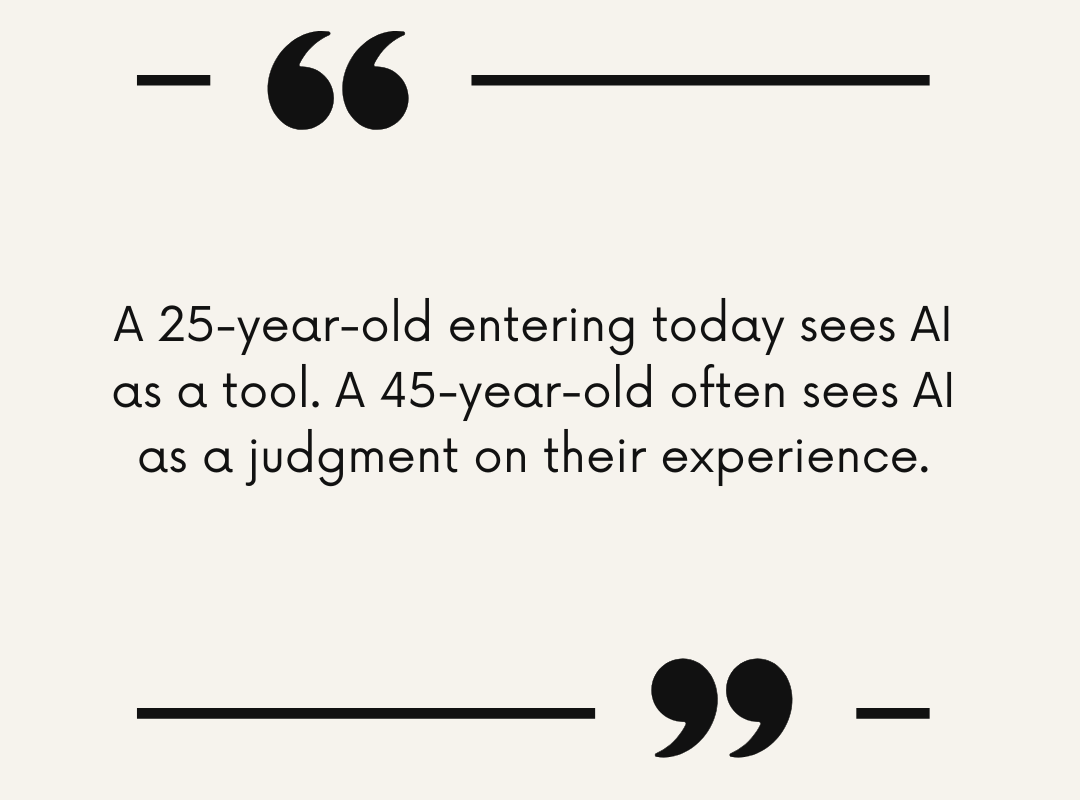
One group experiments freely. The other evaluates cautiously. Neither is wrong. But organizations often design for one and ignore the other. That’s where a new divide is emerging: AI literacy as a form of access. Those who understand how to work with AI accelerate. Those who don’t are slowly excluded from high-value work. Closing that gap is not an individual responsibility alone. It is a leadership responsibility. If organizations don’t invest in structured enablement, they will create invisible hierarchies, disengagement and eventually, talent loss.
What the next five years will bring
The biggest shift ahead is not better models. It is autonomy. We are moving from 'AI as assistance' to 'AI as execution'. Agentic systems will not just recommend, they will act. Most organizations are not prepared for this because they lack process clarity, decision boundaries and governance models. The real disruption will not come from AI replacing jobs. It will come from AI reshaping how decisions are made and who makes them. If I could tell every CXO one thing, it would be this:
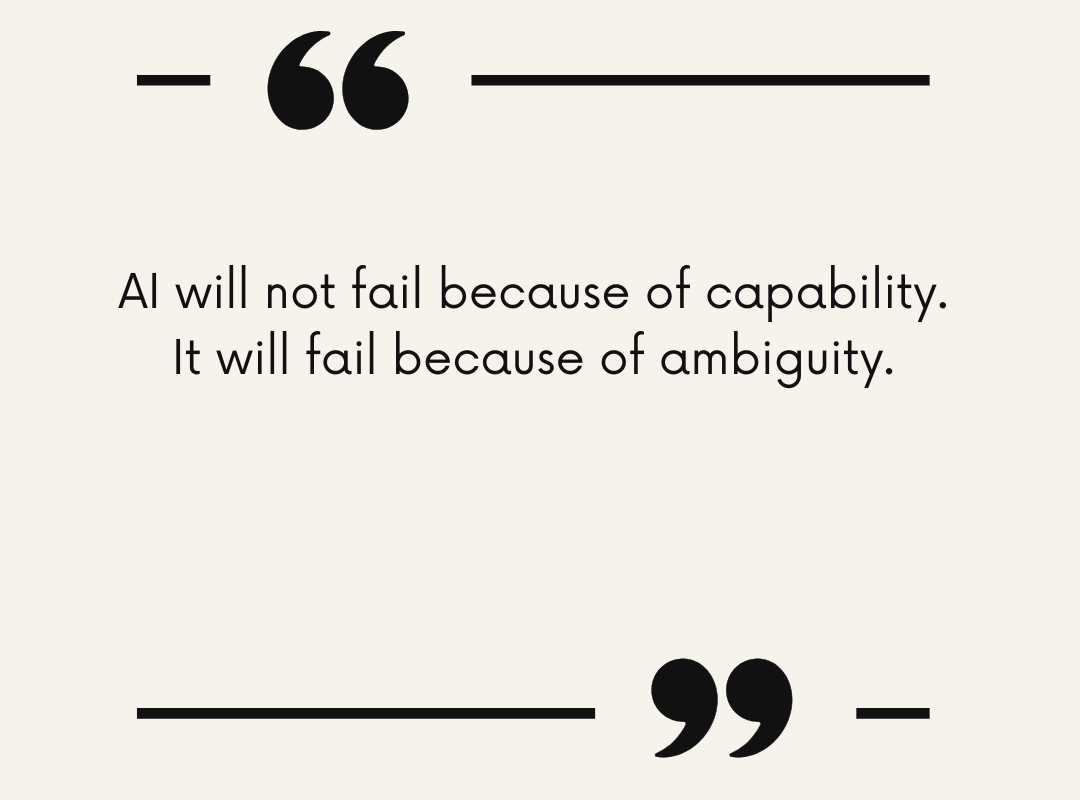
If you cannot define the process, the outcome and the owner, AI will only amplify your inefficiencies.
Preparing for an AI-first world
“Prepare for AI” has become a vague instruction. In reality, preparation is very specific. It means:
- understanding how your work creates value
- breaking that work into steps
- identifying what can be automated, assisted, or augmented
- and learning to collaborate with systems, not compete with them
What we now value in people
Eight years ago, we hired for technical depth, experience and structured execution. Today, we priortize clarity of thinking, ability to learn fast, comfort with ambiguity and most importatntly, ownership of outcomes. We value people who can say "This is the problem. This is the impact. This is how we solve it.", not just "This is what I was asked to do."
AI reduces the premium on repetition. It increases the premium on judgment. Courses and certifications help. But they are not the core.
What I want the reader to take away
There is a lot of anxiety around AI right now. Some of it is justified. But most of it comes from lack of clarity. AI is not removing the need for people. It is raising the bar on how we contribute. For any professional trying to find their place in this shift:
The future will not belong to those who resist AI. Nor to those who blindly adopt it. It will belong to those who learn how to work with it, intentionally and intelligently.
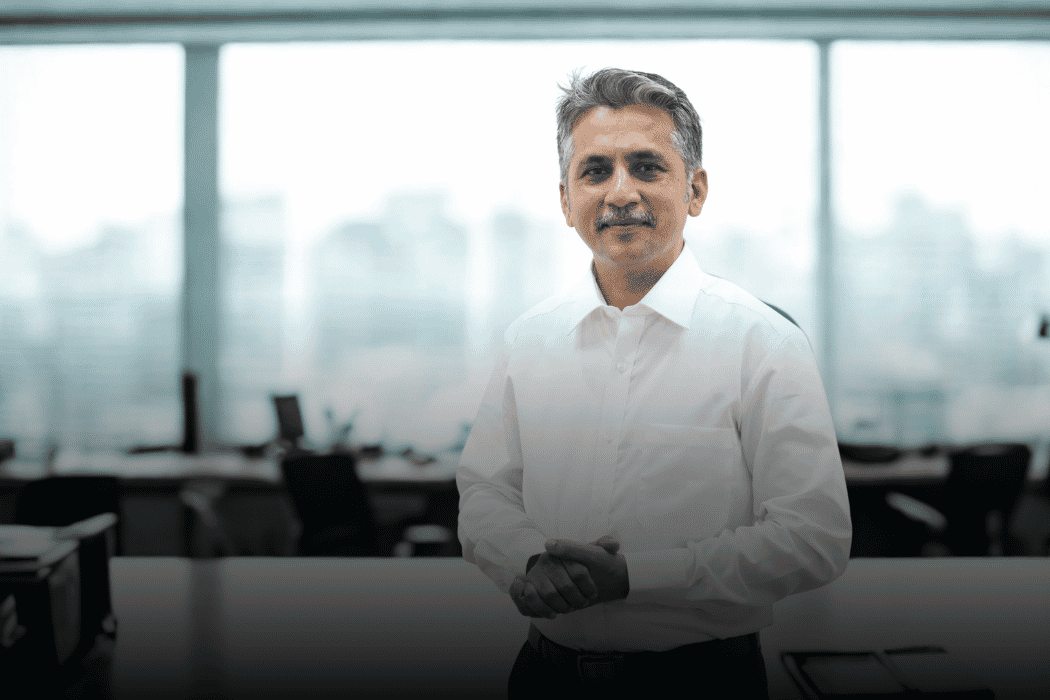
About Venkatesh Veerasamy (Venky)
Venkatesh Veerachamy is the Chief Operating Officer at Zuci Systems, where he works at the intersection of enterprise technology, data, and AI. Over the past decade, he has led the development and scaling of AI-led solutions across industries, working closely with global enterprises to move from experimentation to real-world impact. His work focuses on helping organizations identify meaningful AI use cases, operationalize them,and drive measurable outcomes. Known for his pragmatic and execution-focused approach, Venky brings a builder’s perspective to AI, grounded in what works,what fails, and what it actually takes to scale in complex enterprise environments.


%20(1).png)

.png)