




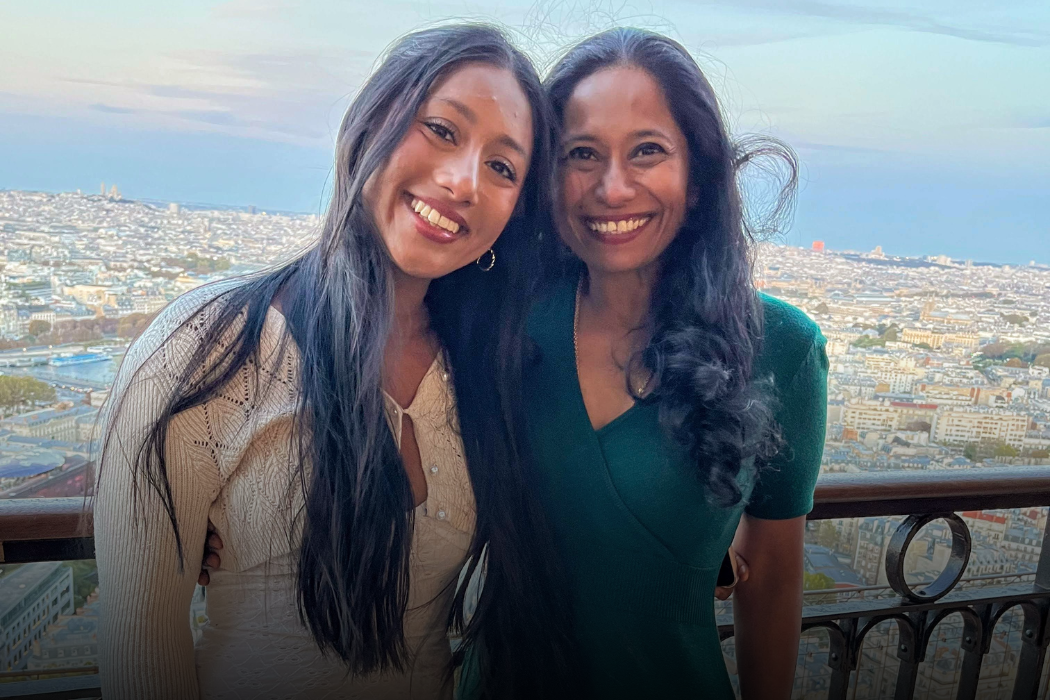
1. You spent over two decades building a serious global career at Oracle for ten years, then VP of Programs and Operations at SymphonyAI. What was driving you through those years, and looking back now, what do you wish you had understood then about what a meaningful professional life actually requires?
For two decades, I was fueled by a cocktail of responsibility, curiosity, and a drive to solve “unsolvable” problems. My career was my classroom, but it was also a manifesto for my children: I wanted them to see that you own your trajectory and that your only real competition is the person you were yesterday. I don’t believe in looking back with regret; you make your choices and you find peace with them. Looking back doesn’t change the past, and I’ve always believed that all we truly have is this moment.
My perspective, however, has evolved. If my earlier career was about the drive to arrive, my life now is about the discipline of being present. I’ve learned that a meaningful professional life is not a destination you reach after twenty years. It is something you choose to inhabit every single day. It requires clarity to know that while your career is what you do, your presence and your family are who you are.
2. You have a mantra that includes the line “Life is now, savor it.” Was that wisdom you carried into your corporate career, or wisdom that arrived later, and cost something to learn?
Yes, that belief has guided my life for a long time. “Life is now, savor it” was already part of how I lived, and somewhere along the way, I must have passed that on to Maya, my daughter, because she embodied it so naturally. It is a truth that now lives on through Maya’s Way as well.
In truth, while I understood that wisdom, Maya lived it. She made it real through the way she loved, showed up, and embraced life.
3. Before we talk about Maya’s Way, we want to know Maya. Who was she as a daughter, and as a person? What did she love, what did she believe, and what did her motto “Live Now. Love Forever.” reveal about the kind of human being she was?
Maya was light. She had that rare gift of making people feel seen, included, and deeply loved. Her greatest gift to me was the way she loved: unconditional, undiluted, and unlimited. She was joyful, thoughtful, and full of heart. She loved life, connection, and above all, people.
'Live Now. Love Forever.' was more than a motto; it was her essence. She lived fully and loved deeply, leaving a mark that continues far beyond her physical presence
4. You wrote: “I am so grateful she chose me to be her mom in this life.” What did Maya teach you about love, about presence, about what actually matters that your career, your education, and your experience didn’t earlier?
Maya taught me that love is not measured by productivity, status, or accomplishment. Love is measured by presence. By attention. By the willingness to really see another human being and to meet them where they are. My career taught me how to lead. My education taught me how to think. My life experience taught me how to persevere. But Maya taught me how to soften. She taught me how to feel the sacredness of ordinary moments. She taught me that a life can be powerful not because it is long, but because it is deeply lived.
She reminded me, simply by who she was, that what matters most is not how impressive your life looks from the outside. It is how deeply you loved, how freely you gave, how fully you showed up, and whether people felt more alive in your presence. When I say I am grateful she chose me to be her mom in this life, I mean that even through the devastation of losing her, I feel the privilege of having loved someone so extraordinary. She changed me. She expanded me. She made me more human.
5. Maya passed away on July 9th, 2025. Maya’s Way launched the same month. What happened inside you that led to that decision and where did the clarity come from when everything else must have felt like chaos?
The first days were pure grief and disbelief. But in that darkness, I kept coming back to one question: how would Maya want to see me? Would she want me broken, or standing up to fight for the beautiful way she lived, with the same vibrancy she carried so naturally?
When I saw her friends devastated, something in me shifted. I realized I could not control what had happened, but I could choose where to place my power. Maya’s Way was born in that moment, not just to keep her memory alive, but to carry forward her vision of the world.
Her smile in the smiles of others. Her love in the hearts we touch. Her dreams in the lives we help uplift. Her spirit in every moment we choose to truly live.
Through this mission, she lives on. I found clarity in realizing that while I cannot change the reality of her passing, I can carry her light in me.
6. Building an organisation while carrying a loss this profound, what has that demanded of you? And where do you find the energy to keep going on the days when it feels impossible?
It has demanded everything. It has demanded strength, surrender, faith, discipline, vulnerability, and the willingness to keep walking while carrying something unbearably heavy.
Grief is not linear. Building Maya’s Way while grieving has required me to stop pretending I am invincible. It has taught me to let heartbreak and purpose coexist. Some days I lead with purpose; other days, I am simply learning how to breathe again. The energy comes from love. It comes from Maya. It comes from the people whose lives are touched by this mission. It comes from knowing that even in sorrow, something beautiful can still be built.
On the hardest days, I remind myself that this work is how I still get to be Maya’s mother. I realized that while I lost one Maya, I can grow thousands more through love. I get to keep her values in motion, and that gives me strength when my own feels insufficient.
7. Walk us through what Maya’s Way looks like on the ground: a real moment, a real young person, a real instance where you saw Maya’s legacy land in someone’s life in a way that felt like exactly what she would have wanted.
Maya’s Way looks like kindness becoming action. It looks like young people being reminded that they matter, that they have agency, and that love can be lived, not just felt.
One moment that stays with me was during our Season of Giving event. A quiet little girl arrived with her mother and saw a giant pile of presents with her name on them. She looked up with wide eyes and softly asked, “Are these all for me?” I smiled and said, “Yes, I guess you were just incredible this year, so Santa went all out.” The feeling in that room was pure wonder. It felt like the kind of joy Maya would have wanted us to create.
Another moment came when a student team at one of our events chose to donate their prize to support children navigating cancer. After meeting with hospital leadership and touring the oncology unit, one of the students said he wanted to help end cancer. That is what Maya’s Way looks like on the ground: compassion turning into action, and action planting purpose.
8. You describe Maya’s Way as being guided by dignity, inclusion, kindness in action, and the power of listening, connection, and love to transform lives. How do you build an organisation around something that cannot be measured on a spreadsheet?
Actually, I’d argue that you can and should measure these things on a spreadsheet. After spending my career running delivery and operations and obsessing over KPIs, I don't know any other way to build. If we want to change the world, we have to be as disciplined as a Fortune 500 company.
At Maya’s Way, we apply those exact principles to our impact. We don't just 'do good'; we track it. Whether it’s the thousands of dollars in scholarships or holiday wish lists fulfilled, the hundreds of volunteer hours logged, or the specific health education milestones reached by our youth, every action is a data point in a larger strategy of change.
This is especially true with our Student Civic Leaders (SCL), our social entrepreneurship initiative. We are changing the world one team, one problem, and one community at a time through measured, calculated execution. We empower students to identify a local issue, build a project plan, track their own success and deliver a durable asset. By teaching them that 'kindness in action' is something you can manage and scale, we aren't just giving them a feeling, we’re giving them a toolkit.
In my world, love is the 'why,' but execution is the 'how.' If it’s not on the spreadsheet, it’s just a wish. If it is, it’s a mission.
9. Your mantra has eight lines that together form one of the most honest philosophies of professional life I have ever read. Starting with the first: “Life is now, savor it.” For a senior professional who is deferring their life until after the next promotion or the next milestone, what do you want to say to them?
I would say this with as much love and urgency as I can: the life you are postponing is your actual life. The dinner you rush through, the conversation you half-hear, the vacation you delay, the joy you tell yourself you will make time for later, this is the substance of life. Not the someday version. Not the cleaned-up future after one more milestone. Right now. Ambition is not the problem. Meaningful work is not the problem. The problem is when we unconsciously build a life where we are always on our way to living, but never fully living.
There is nothing wrong with striving. But do not sacrifice the irreplaceable at the altar of the impressive. Promotions can be earned again. Milestones can be replaced. Time with the people you love cannot. Savoring life does not mean abandoning excellence. It means refusing to live numb on your way to it.
10. “Failure is our most effective teacher” and “We are in charge of shaping our destiny” sit side by side in your mantra, creating a powerful tension between humility and agency. How do you hold both of those truths at the same time?
I hold them together because both are true. Failure humbles us. It reminds us that we are not in control of every outcome, that growth often comes through discomfort, and that wisdom is usually earned, not granted. Failure strips away illusion. It teaches us where we are fragile, where we are avoidant, where we need to deepen. When we lose, and we all will, the only true failure is losing the lesson. At the same time, we are absolutely responsible for what we do with what life gives us. We may not control every event, but we do shape our response, our character, our choices, and the future we help create from this moment forward. That is where agency lives. Not in perfection. Not in controlling everything. But in deciding who we become through what happens to us.
I think humility and agency are not opposites. Humility says, I do not know everything, I will learn. Agency says, and I will not stay powerless in that learning. Together, they create a life of both surrender and courage.
11. The last line of your mantra is “Death is the greatest equaliser.” What does genuinely that line in your daily choices do to the way you work, the way you lead, and the way you love?
In death, we are all the same. We take nothing with us, and all our so-called differences, material or physical, fall away instantly. Beginning with that end in mind clarifies and simplifies life. It brings my focus back to what truly matters, what outlives our brief time here, and what can persist long after I am gone, Maya’s Way and the impact it can have on the world. Life is too short for pettiness, grandstanding, or drifting through it half-awake. We are fortunate to have one more day, so let’s make it meaningful.
12. WOCULT is read by ambitious, driven professionals who are occasionally wondering in quiet moments whether the life they are building is the one they actually want. What do you want to say to them from where you stand, carrying everything you carry about what it means to live a life that will matter?
I’m in no position to tell anyone how to live their life. What I do know is that I’m doing exactly what I’m supposed to be doing because I wake up each day knowing I’m pouring my time, energy, and love into something I will never tire of building. This work brings me closest to my daughter and to all the children whose lives I may be able to make even slightly better. There is a deep peace in that. If you are wondering whether the life you are building is the one you actually want, perhaps the better question is not “How much have I achieved?” but “What am I building that I would never tire of giving my heart to?”
13. For a parent reading this who is also a professional, trying to build a career and be fully present for the people they love, what is the most important thing you have learned about how to do both?
I have learned that presence is not a luxury. It is the work. As parents, we often assume love is understood because we feel it so deeply. But love needs expression. It needs time, attention, listening, eye contact, shared memories, and emotional availability. It needs us there, not just physically, but fully.
You may not be able to do everything perfectly. In the words of Dr. Seuss, “Life is a great balancing act.” But I do believe in conscious choices. I believe in pausing long enough to ask: am I giving my best energy only to the world outside my home, or also to the people whose lives are most intertwined with mine?
Your children may not remember every professional accomplishment. But they will remember how you made them feel: seen or rushed, safe or managed, treasured or postponed. For me, the lesson is this: do not assume there will be more time for what matters most. Make the moment count now.
14. Last question. If Maya could read this piece, if she could see Maya’s Way, see the young lives it is already changing, see the woman her mother has become in the year since she left, what do you think she would say?
I think she would smile that beautiful smile of hers and say, “Mommy, keep going. You’ve got this”
I think she would remind me not to carry the grief of her absence, but the joy of who she was. She would want light. She would want love. She would want us to keep living. If Maya could read this piece, I hope she would feel my love for her. I hope she would feel that the world can sense her heart through it. And I hope she would know that she is still changing lives, still leading, still teaching, and still loving through Maya’s Way.
Because she is.
About Archana Nayar
Archana Nayar is a business and community leader, former global technology executive, and founder of Maya’s Way, a nonprofit created in memory of her daughter, Maya Nayar. After a long career spanning leadership roles at Oracle and SymphonyAI, Archana’s life was forever changed by Maya’s passing in July 2025.
Guided by Maya’s motto, “Live Now. Love Forever.”, Archana launched Maya’s Way to carry Maya’s spirit forward through kindness in action, youth empowerment, service, dignity, inclusion, and community impact. Through Maya’s Way, she is building programs and initiatives that encourage young people and communities to lead with heart, live with purpose, and create meaningful change.
Archana writes and speaks about grief, love, leadership, and what it means to build a life that is both successful and fulfilling. She believes that while achievement matters, presence, courage, and compassion are what give a life its deepest meaning.
.jpg)
%20(1).png)
.png)