



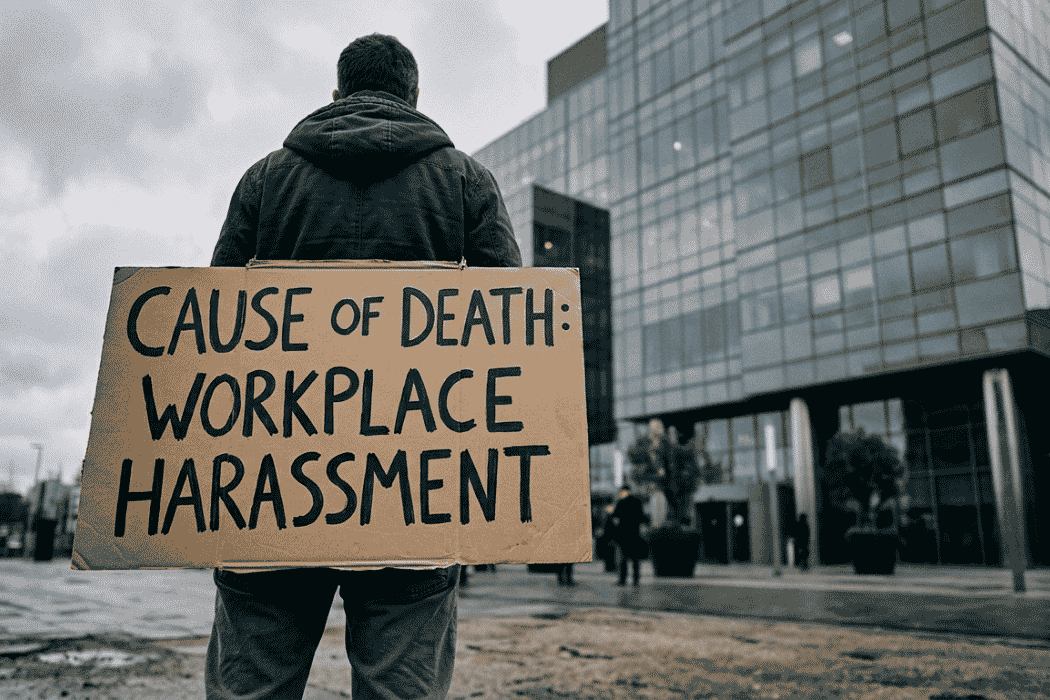
This is not an isolated incident
In 2024, Anna Sebastian Pereira died at Ernst and Young's Pune office. Her family attributed her death to extreme work pressure. EY issued a statement. The conversation it sparked lasted several weeks. Then it faded. In South Africa this month, Gcina Dhladhla died in an office washroom after her sick leave requests were denied. These are not separate stories. They are data points in a pattern that Indian corporate culture has not yet decided to confront directly.
The specific thing Amit Brahme described
Workplace harassment in India is not new. What is worth naming specifically in this case is the form it allegedly took, the cumulative, slow, interpersonal kind that is the hardest to document and the easiest to dismiss. Being humiliated in front of colleagues. Being removed from assignments without explanation. Being told to quit in a public setting. Being threatened with performance consequences. None of these is a single dramatic event. Each one, in isolation, can be explained away. Together, over time, they constitute a sustained assault on a person's professional identity and sense of worth, and that assault leaves almost no visible evidence.
This is the form of workplace harm that most organisations are least equipped to detect and least willing to address. It does not show up in a performance management system. It does not trigger a compliance flag. It lives in the informal culture, in who gets humiliated and who does not, in who is protected and who is exposed, in what leadership notices and what it chooses not to see.
The leadership crisis underneath this
India's corporate sector is in the middle of a documented leadership crisis of accountability. The organisations producing the most visible workplace harm are not, in most cases, the ones without values documents or wellbeing programmes. They are the ones where the gap between what is written on the wall and what is permitted on the floor has grown wide enough to contain entire careers of sustained harm.
Leaders who do not investigate complaints until a crisis forces them to. Managers who are protected from consequence because they deliver numbers. Cultures where the person who speaks up is more at risk than the person they are speaking up about. Is pschycological safety a soft value or a structural foundation on which everything else depends? When it is absent, what fills the vacuum is exactly what Amit Brahme described in his note.
The gap between what Indian organisations say about their people and what those people actually experience is not narrowing. The evidence suggests it is growing.
What the law now says
Section 108 of the Bharatiya Nyaya Sanhita — the provision under which this FIR has been registered — covers abetment of suicide. It is a serious criminal charge. The investigation will determine whether the specific legal threshold is met. But the legal question and the cultural question are not the same question. A prosecution, if it comes, will address what three individuals allegedly did to one person. It will not address the environment in which that behaviour was possible, the systems that failed to detect it, or the leadership that was responsible for both. Those questions do not have a BNS section. They have an answer but it requires organisations to ask them honestly, which is the harder act.
The question
Amit Brahme was a 48-year-old professional at one of India's most recognised companies. He had a son. He had a career. He had, apparently, been carrying the weight of sustained workplace harm long enough that it became unbearable. At what point did someone in that organisation have the opportunity to see what was happening and did not?
That question is not for the police investigation. It is for every organisation reading this piece, examining its own culture, and deciding whether what it finds is honest enough to act on.
Editor's note: This piece discusses death by suicide and workplace harassment. If you or someone you know is struggling, please reach out to Wocult for support at hello@wocult.com or leave comment in this article.
Sources
PTI / The Federal — TCS employees booked for abetment to suicide after staffer's death in Pune, June 12, 2026
Daily Excelsior — 2 TCS employees booked for abetment over colleague's suicide, June 12, 2026
ETV Bharat — 2 TCS employees booked for abetment, investigation underway, June 13, 2026
The Quint — Pune TCS employee dies by suicide, note alleges harassment by two colleagues, June 2026

%20(1).png)

.png)