




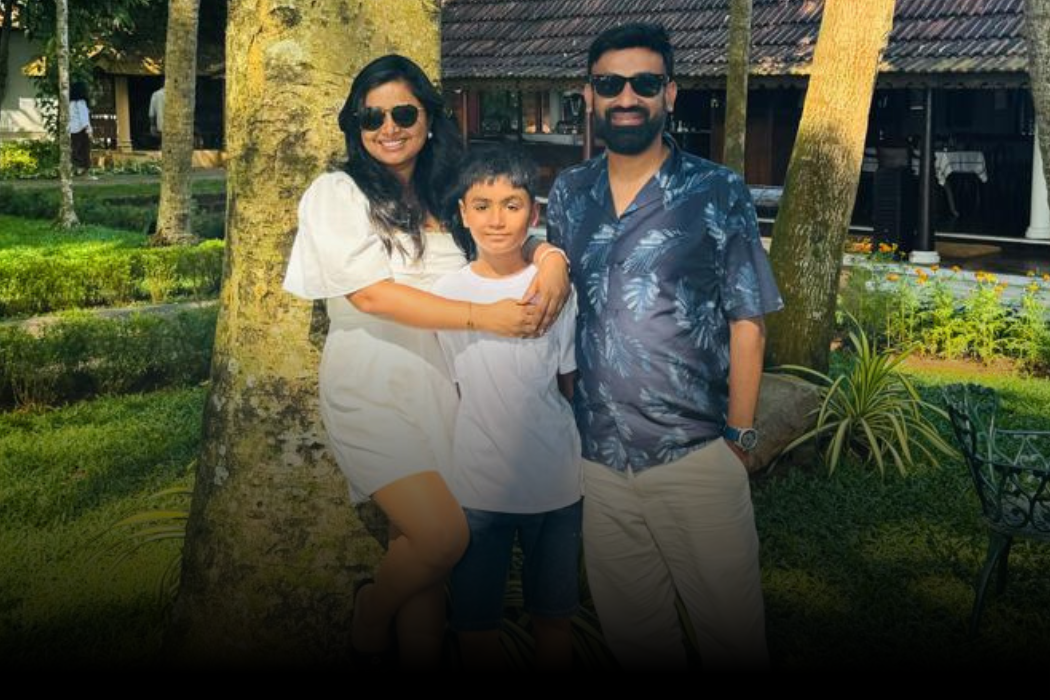
In an industry where the pressure is relentless, the margins are thin, and the human stakes are real every single day, Pallavi has built something that works through the unconventional path. This is her WOCULT Voices piece. It is about what operational leadership actually looks like from the inside, what the classroom in Seattle gave her that a business degree never could, and why the most structurally critical work in any organisation is almost always the work nobody sees.
You have worked across insurance, education, and IT staffing; three industries that have almost nothing in common. Looking back, what was the thread running through all of it?
When you look at them on paper, they definitely seem like distinct worlds. But looking back, the common thread has always been people and their potential. In insurance, the core focus is understanding people's vulnerabilities and securing their futures. In education, it is about nurturing potential and providing the tools for growth. Today, in IT staffing and recruitment, I am essentially doing a combination of both i.e. identifying specialised talent and helping secure the growth of both the professional and the business by making the right match. The industry changed, but the through-line has always been understanding what drives people and connecting them with the right opportunity.
You spent two and a half years teaching children with special needs in Seattle. What did that experience give you that a more conventional business career path would not have?
Traditional business environments train you to focus almost exclusively on the massive scale and big quarterly targets. My time teaching in Seattle taught me the strategic value of the micro-win, and forged a type of emotional resilience you rarely develop in a corporate setting.
In a special education classroom, progress requires immense patience. You often hit sudden roadblocks that demand immediate, creative problem-solving. That experience deeply grounded me. Today, when navigating the fast-paced, high-stakes environment of IT staffing, I lean on that background constantly. It taught me how to remain calm amidst chaos, de-escalate high-pressure situations, and pivot instantly when original plans fall through.
You joined Reqpedia in its first year before it had established itself, before the clients were locked in. What drew you to something that uncertain?
I simply wanted to give it a trial. I have never had an issue taking risks but what surprised me was how much I ended up genuinely enjoying the work, even amidst all the chaos. Those early months were incredibly unpredictable. We would have a few fantastic months, followed by months with absolutely no business at all. Because the team was not built yet, I was managing the entire end-to-end process myself, everything from candidate sourcing and client relationships all the way down to invoicing.
It was a true rollercoaster. But being that hands-on in every single phase of the business is exactly what laid the foundation for where we are today.
Staffing is one of the most human businesses there is. You are placing real people into real roles, with real consequences if the fit is wrong. How do you hold that weight operationally?
Because I managed the entire end-to-end process in the early days, from sourcing the candidate to managing the client relationship, I felt the real-world consequences of that weight firsthand.
To hold it operationally as a company scales, you have to bake accountability into every step of your delivery engine. Getting it right requires immense transparency — being honest with a candidate if a role is not the right step for them, and being honest with a client if their expectations do not match the market. Ultimately, it requires treating every placement not as a closed transaction, but as a career-defining moment for a real person.
As COO, you are the person who makes things work but not always the person who gets the credit when they do. How have you made peace with that?
When you help build a business from the ground up, navigating those unpredictable early months where you are personally handling everything from sourcing to invoicing, your ego quickly takes a backseat to execution. You do not look for credit. You look for results.
I do not see myself as someone working in the shadows. I see myself as the foundation. Operational leadership means being the steady pulse of the organisation. The title is just a formality. The real job is ensuring that our delivery engines run, our metrics stay sharp, and the promises we make to our clients are actually kept. When you know you are the backbone of that execution, you do not need the external validation.
IT staffing in India is intensely competitive. What has Reqpedia built that is genuinely distinctive?
Our distinct advantage is a hyper-efficient delivery engine that consistently achieves 24-hour profile turnaround times with over a 30% selection rate. The hardest part has been maintaining that uncompromising quality and speed as we scale. In a market where most firms compete on cost, we compete on precision and speed and that combination is what our clients come back for.
What does a typical week actually look like for you and where does the energy come from to sustain it?
A typical week is incredibly demanding, focused entirely on maintaining our fast turnaround times and high delivery standards in a fiercely competitive market. To sustain that pace, I rely on a consistent daily workout routine and a deep inclination towards spiritual practices to stay centred. Come the weekend, I completely unplug — unwinding with friends and family. That combination of physical discipline, spiritual grounding, and quality time with the people I love provides the energy I need to tackle the market week after week.
You navigate being responsible to both sides simultaneously, companies that need talent urgently and candidates who need the right opportunity. How do you manage that tension?
It comes down to fierce transparency. In IT staffing, desperation from either side usually leads to a bad placement that falls apart in three months. Operationally, we navigate this by making the vetting process a strict two-way street, scrutinising the company's internal culture and true role requirements just as intensely as we evaluate a candidate's technical capabilities.
If you treat the talent as your client just as much as the company paying the invoice, the friction disappears. You are no longer rushing to fill a seat. You are engineering a mutually beneficial partnership.
There is a generation of women building operational careers in startups and young companies across India, doing the work that makes growth possible, often without the visibility that founders receive. What would you want them to know?
Understand that the invisible work is the most structurally critical work in any startup. Founders build the pitch, but operational leaders build the house.
There will inevitably be days when the lack of external credit feels heavy, especially when you are the one holding the chaotic pieces together behind the scenes. But true operational power is quiet. When you know you are the backbone of the execution, when your systems are the reason the company survives the lean months and thrives in the good ones, you stop needing the applause.
Your true leverage comes from knowing the mechanics of the business better than anyone else in the room.
What are you seeing in the mid-to-senior IT talent market right now that most people outside the industry do not fully understand?
The mid-to-senior market is under more pressure than the headlines suggest. At the senior end, data engineering, risk modelling, AI and ML specialisations, demand is significantly outpacing supply. Companies, particularly GCCs, are offering 1.5x to 2.5x salary premiums for the right profiles, and the competition for genuinely experienced candidates is intense.
What most people outside the industry miss is how thin the genuinely qualified pool is. India has a large number of professionals who describe themselves as AI or data specialists but the subset who have actually deployed solutions at scale, in production, with measurable outcomes, is far smaller. Those candidates are being competed for aggressively. The mid-level market, by contrast, is crowded. Professionals with three to five years of experience in standard technical roles are finding it harder to differentiate and the ones who are moving are the ones who have built adjacent capabilities rather than deepened a single specialisation.
The advice we give candidates consistently: do not wait for the market to find you. Build the deployment experience, not just the certification.
What has building Reqpedia taught you about yourself that nothing else could have?
It taught me that grit outweighs background. Coming from a non-technical background into the tech industry and simultaneously stepping into my first senior role managing a large team and senior clients, was genuinely intimidating. I was nervous during my first few major client interactions. But this journey taught me that every single one of those hurdles can be overcome. With clear determination and a commitment to showing up consistently, you can master any process and grow into any level of leadership.
If you could go back and tell the version of yourself standing in that primary school classroom in Seattle something about the career ahead, what would it be?
I would look at my students and say: my path ahead holds even more unknown territory including helping build a new startup, stepping into rooms I was not sure I belonged in. I am still trying things that make me nervous. But I want you to know that the feeling of being scared never stops you from succeeding. Whatever your path looks like, approach it with clear determination and consistency and there is no hurdle you cannot cross.
About Pallavi Singhania
Pallavi Singhania is the COO of Reqpedia Technologies, an entrepreneur and operational leader whose journey spans insurance, special education, and technology staffing. Her diverse experiences have shaped her people-first leadership style, built on empathy, resilience, and the ability to create structure in uncertainty.
Having joined Reqpedia in its early stages, Pallavi played a key role in building the company’s operational foundation, from managing end-to-end processes in the initial days to scaling efficient delivery models, strong teams, and long-term client partnerships. She believes that successful businesses are built not only through strategies and numbers but through understanding people and unlocking their potential.
Her time teaching children with special needs in Seattle strengthened her patience, adaptability, and problem-solving approach, qualities she continues to apply as a leader. Outside work, Pallavi finds balance through regular workout sessions, spiritual practices, and spending meaningful time with family and friends.

.jpg)


%20(1).png)

.png)