




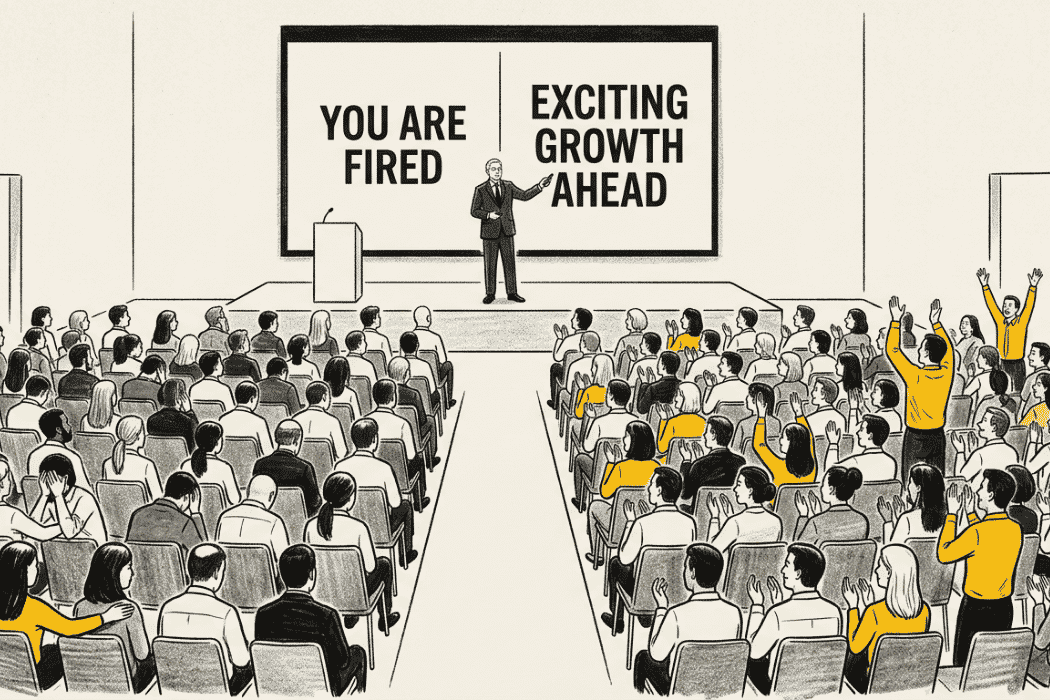
This is not just another round of corporate cost-cutting disguised as innovation. Companies are genuinely rethinking what work needs human intelligence versus what AI can handle. The result is a job market where your current role might disappear, not because you are not good enough, but because a machine can do it faster and cheaper.
The work that is disappearing
Global capability centres in India have long been built on routine technical work, junior developers writing standard code, analysts preparing basic reports, support teams handling predictable queries. These roles provided stable employment for millions and a clear career path.
AI now performs many of these tasks with minimal human oversight. Companies are not eliminating the functions, they just need far fewer people to manage them. Teams that required twenty analysts now operate with five. The pyramid structure of Indian tech employment, with its wide base of junior roles, is collapsing.
What companies want instead
The new hiring focus is on skills that complement rather than compete with AI. Data scientists who can design models, not just run them. Engineers who can integrate AI into complex systems. Project managers who can coordinate human-AI workflows. And increasingly, the abilities that machines cannot replicate creative problem solving, stakeholder management, cross-cultural communication, judgment under ambiguity.
The money follows the skills
The signal is coming from the top. Jamie Dimon, CEO of JPMorgan Chase, the world's largest bank told Bloomberg Television this week: "I think we will be hiring more AI people and fewer bankers in certain categories, and it will make them more productive." When the CEO of Wall Street's biggest institution says this plainly, in public, it is not a warning. It is a job description for the decade ahead. India's GCCs heard it and they are already acting on it.
GCCs are projected to lead salary growth in 2026 with increments of 10.4%, structurally elevated and widening their distance from the rest of corporate India. India Inc's average hike has declined steadily: 9.6% in 2024, 9.3% in 2025, a projected 9.1% in 2026. The gap is not narrowing. It is growing.
The real premiums go to AI-adjacent skills often in the 30 to 40% range. BFSI GCCs are grappling with a 42% skill gap in AI and data roles, offering 1.5x to 2.5x salary premiums to fill them. Top performers now earn 1.5 to 1.6x the increment of average performers, with some GCCs pushing that multiplier to 1.7x. Outstanding performers receive 120 to 150% of their variable pay targets. Average performers take home 60 to 80%.
The middle gets squeezed
Mid-career professionals face the hardest choices. Senior roles require deep expertise AI cannot replicate. Entry-level positions still exist for those willing to learn AI-adjacent skills. But the middle between five to ten years of routine technical experience finds itself with skills that AI is making obsolete and without the seniority to move into strategic roles.
This squeeze hits where it hurts most. Mid-career professionals carry the heaviest financial obligations like ageing parents, children, mortgages. They cannot easily take salary cuts to retrain or spend years rebuilding from scratch.
The question that matters
The real question is not whether AI will change your job. It is whether you can change faster than AI improves.
The timeline for skill obsolescence has compressed from years to months. Career stability no longer comes from expertise in any single skill. It comes from adaptability — the willingness to keep learning before the market forces you to.
The companies driving this change will adapt or disappear. The professionals living through it must make personal decisions without knowing what the job market will look like in even two years.
That uncertainty, more than any specific technological change, defines the new reality of professional life in India.
Sources
EY Future of Pay 2026
Zinnov GCC Salary Trends Report 2025
Zyoin Group GCC Research 2026
Quess Corp Workforce Solutions Report 2026
Scaler AI Engineer Salary Survey 2026
Digital Skills and Salary Primer 2024-25
.jpg)


%20(1).png)

.png)