



Because inside the organization, transformation is not a strategy deck.
• It is uncertainty.
• It is identity shift.
• It is silent anxiety that never makes it into a steering committee update.
The truth about transformation that never makes it to the final report
From the outside, transformation looks structured:
• Clear milestones
• Defined KPIs
• Strong leadership alignment
From the inside, it feels very different:
• “Will my role exist in six months?”
• “Do I still matter here?”
• “Am I becoming irrelevant faster than I can adapt?”
Transformation is not experienced as a program.
It is experienced as a personal disruption.
And yet - this version of the story is rarely told.
Do 70% of transformations really fail?
You’ve heard the statistic: 70% of digital transformations fail.
In my experience, that number is both right - and deeply misleading.
Because most transformations don’t fail on paper.
They deliver:
• Cost reduction targets met
• Automation deployed
• Platforms modernized
But here’s the uncomfortable truth:
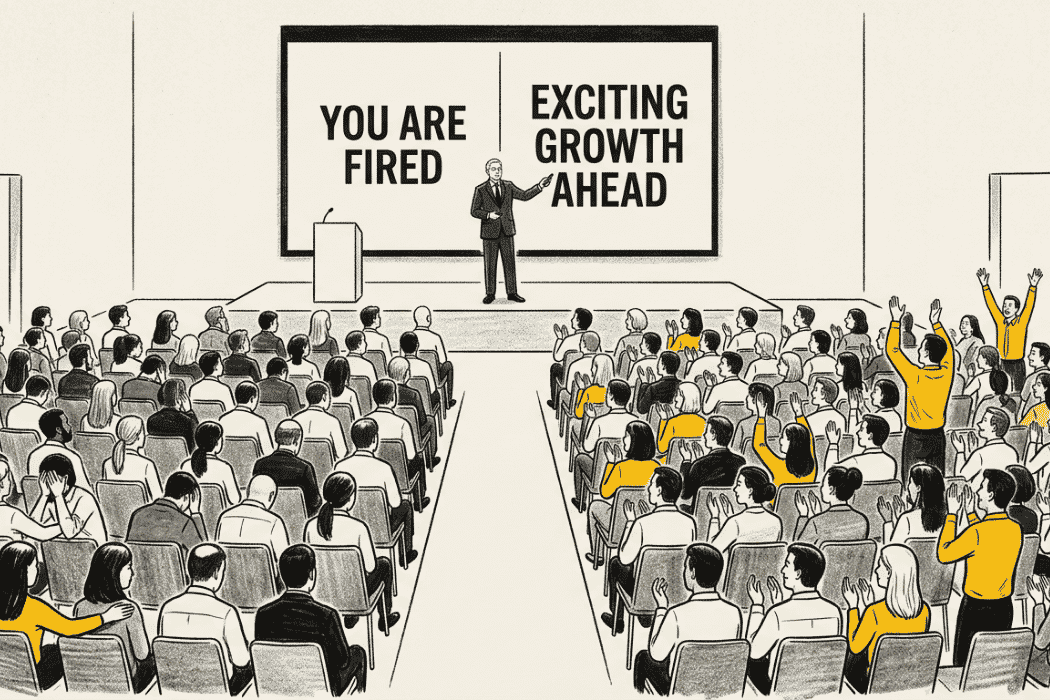
A transformation can succeed on dashboards - and still fail the people living through it.
I’ve seen organizations celebrate “successful transformation” while:
• Their best talent quietly disengaged
• Middle managers burned out
• Teams operated with reduced trust and psychological safety
So, what is failure?
Not just missed targets.
Failure is when people stop believing they belong in the future you are building.
What leaders say vs what people experience
I’ve spent years in rooms with CXOs shaping transformation strategy.
Leaders genuinely care about their people.
They say the right things:
• “People-first transformation”
• “Reskilling and empowerment”
• “No one will be left behind”
But the execution often tells a different story.
Because when timelines slip or margins tighten, the first things to go are:
• Deep change management
• Real capability building
• Time for people to adapt
And what remains is:
• Pressure to deliver faster
• Communication that feels transactional
• Change imposed, not absorbed
The gap is not intent.
The gap is priority under pressure.
The invisible human cost of transformation
Every transformation has a business case.
Very few have a human case.
We measure:
• FTE savings
• Productivity improvement
• Automation rates
But we don’t measure:
• Loss of confidence
• Erosion of identity
• Fear of becoming irrelevant
And yet, these are the forces shaping behaviour during transformation.
The most underrated casualty: the middle manager
If there is one group that carries the heaviest burden of transformation, it is the middle layer.
They are:
• Asked to lead change they did not design
• Responsible for teams who look to them for answers
• Simultaneously unsure about their own future
They become the shock absorbers of transformation.
And over time, that pressure shows up as:
• Decision fatigue
• Emotional exhaustion
• Quiet disengagement
We expect them to inspire confidence -
when they themselves are navigating uncertainty.
Let’s be honest about change management
I am a certified change management practitioner.
But let me say this clearly:
In most organizations, change management is not practiced - it is documented.
It exists as:
• A workstream in the plan
• A set of communication templates
• A training calendar
And when timelines tighten?
It is the first thing to be compromised.
Because change management requires:
• Time
• Patience
• Leadership bandwidth
And those are the scarcest resources in any transformation.
AI is changing more than work - it’s changing identity
Today, we are entering a new wave:
GenAI and Agentic AI-led transformation.
The narrative is powerful:
• “Free people from repetitive work”
• “Augment human capability”
• “Enable higher-value contributions”
And yes - that version exists.
But there is another reality unfolding in parallel.
People are asking:
• “If AI can do this faster, what is my value?”
• “What remains uniquely mine?”
• “Am I still needed - or just tolerated?”
AI is not just transforming processes.
It is quietly reshaping how people see themselves at work.
Is the ideal version of AI transformation real?
There are organizations where AI is used to:
• Remove low-value work
• Enable creativity and decision-making
• Upskill people meaningfully
But they are the exception - not the norm.
In many cases, the reality is more complex:
• Efficiency gains are prioritized over role redesign
• Work is reduced, but purpose is not redefined
• People are told to “upskill” without clarity on what that means
The uncomfortable truth:
We are automating work faster than we are redesigning human roles.
What good transformation actually looks like
In 19 years, across 20 countries, I have seen very few transformations done well for people.
But the ones that stood out had three things in common:
1. Clarity over comfort
Leaders did not sugarcoat reality.
They told people:
• What will change
• What will not
• What is uncertain
And that honesty-built trust.
2. Investment in transition - not just end state
They invested in:
• Real reskilling (not symbolic training)
• Transition pathways
• Time for adaptation
They treated transformation as a journey for people, not just a milestone for the organization.
3. Redefining value, not just reducing cost
They asked:
• “What will people do more of?”
Not just
• “What work can we eliminate?”
That shift changed everything.
The one thing most organizations get wrong
If I had to distill it into one truth:
Organizations focus on changing systems faster than helping people change themselves.
And that is where most transformations break - quietly.
Advice to professionals living through transformation
If you are inside a transformation right now, feel uncertain - here is the honest truth:
• Don’t wait for clarity - build adaptability
• Don’t anchor to your current role - anchor to your ability to evolve
• Don’t measure your value by tasks - measure it by thinking, judgment, and context
And most importantly:
You are not falling behind. The ground itself is moving.
The piece underneath the piece
After nearly two decades of transformation work, this is what I wish organizations truly understood:
Transformation is not about changing how work gets done.
It is about changing how people see themselves in that work.
And that is not a technical shift.
It is a deeply human one.
Until we start treating it that way,
we will continue to build transformations that succeed on paper -
but feel like loss to the people living through them.
--Ends--
Vartul Mittal is a seasoned Digital Transformation Leader with over 19 years of experience driving large-scale enterprise transformation across North America, Europe, APAC, and the Middle East. His expertise spans Agentic AI, GenAI, data platforms, and intelligent automation, with a strong focus on translating emerging technologies into real business impact.
Beyond technology and outcomes, Vartul is deeply invested in the human side of transformation - how change reshapes roles, identity, and the lived experience of work. His perspectives are grounded not just in strategy, but in years of working along side teams navigating uncertainty, disruption, and reinvention.
He is also recognized as one of the Top 10 Digital Customer Experience Leaders (2024) and actively contributes to thought leadership in AI-led transformation, future of work, and enterprise reinvention.
.png)
.jpg)


%20(1).png)

.png)