




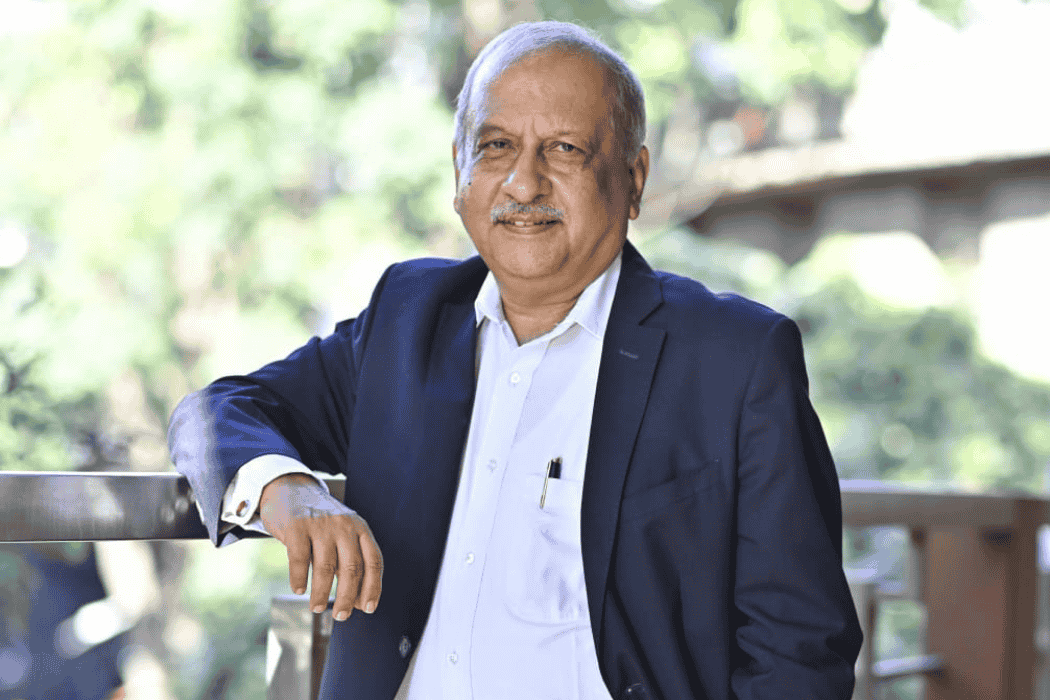
Q. On any given week, you might be advising a startup, coaching a university student, sitting on a government committee, championing sustainability, and building a women's reskilling programme simultaneously. How did one career end up containing this many worlds — and is there a single thread that connects all of them?
At one level, it does look highly disjointed — startups, students, policy, sustainability, women in leadership, CSR, skilling, mentoring.
But to me, there has always been a single thread running through all of it. It is the refusal to accept that things have to remain the way they are. The belief that talent can come from anywhere. That women belong in leadership. That young people deserve better mentors. That innovation should solve real problems. And that one individual can still make a difference.
Whether I was working with a startup founder, speaking to a university student, serving on a committee, or building programmes for women returning to the workforce, the underlying question was always the same: "How do we create more opportunity for people who may otherwise be overlooked?"
I think many people spend their lives chasing success. I have been fortunate to spend mine chasing significance. Because success is often about what you achieve for yourself. Significance is about what changes because you were there.
Q. IBM. HP. C-suite roles in two of the world's most demanding technology organisations. What did those years genuinely give you — not professionally, but as a human being trying to figure out what work is actually meant for?
When people look at names like IBM or HP, they often assume the biggest lessons are about scale, strategy, technology, or leadership. Those lessons matter, of course. But the deeper lessons were far more human.
I also have to acknowledge two organisations that shaped me long before those global roles. UPTRON, where I began my career, taught me humility and the importance of competence. TVS Electronics taught me the fundamentals of relationships and intrapreneurship — how to build something from within, how to influence without authority, and how much progress depends on trust.
My years at IBM and HP taught me the value of empathy, team spirit, and inclusivity. You realise very quickly that leadership is not about being the smartest person in the room. It is about bringing out the best in other people.
And finally, it was my time at NASSCOM and the Foundation that changed my understanding of success itself. That is where I realised that the real scoreboard is not how many people worked for you. It is how many people grew because of you.
Q. You have said you never received an "excellent" in your appraisals — and yet you kept getting promoted, kept getting chosen for the toughest assignments, kept rising. What does that paradox tell us about the gap between how organisations measure people and what those people are actually capable of?
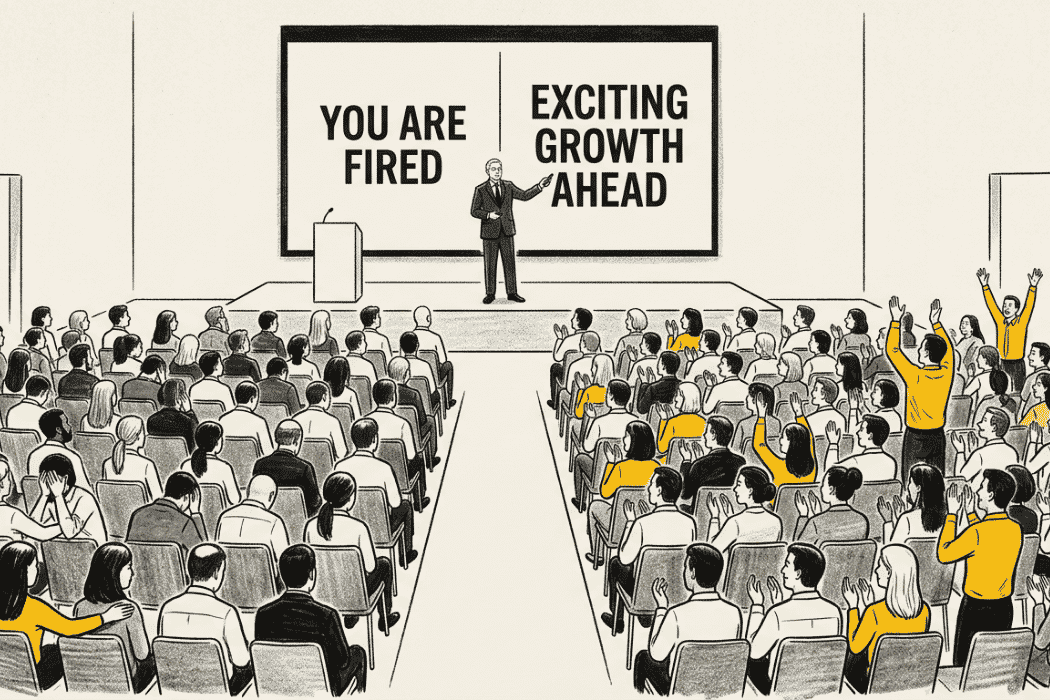
A medal is a moment. A rating is a snapshot. A title is a label. None of them are the full story of a human being.
I have never believed that an appraisal rating or a rank in college is the final verdict on someone's potential. In fact, some of the most successful people I have worked with were never toppers, never won gold medals, and were never called "excellent" on paper. But they had something far more valuable — consistency, curiosity, resilience, humility, and the ability to keep learning.
In my own journey, I was never the college topper. I never received an "excellent" in my appraisals. Yet I kept getting larger roles, more responsibility, and more opportunities. Why? Because organisations eventually promote people not just for what they know, but for what they can build, how they work with others, whether they can solve problems, and whether people trust them.
Young people often make the mistake of tying their self-worth to marks, titles, salaries, or LinkedIn headlines. But your designation is not your identity. Your values are your identity. Your character is your identity. The way you treat people, the way you respond to failure, the way you keep going when nobody is clapping for you — that is who you really are.
Life is a very long game. School rewards memory. Organisations reward execution. Leadership rewards judgement. Life rewards resilience. The people who go far are often not the ones who peak early. They are the ones who keep evolving.
Your designation is not your identity. Your values are your identity.
Q. There was a moment when your body forced you to stop — when the career you had built and the future you had imagined had to be put down, at least for a while. What did it show you about yourself that forty years of professional achievement never could?
For someone who has spent decades being busy, productive, and constantly moving, being forced to stop can be emotionally very difficult. When your identity has been built around work, titles, meetings, travel, decisions, and being "needed," suddenly slowing down can make you question your own value.
One of the hardest parts is not the physical pause — it is the emotional silence that comes with it. At family gatherings or dinner tables, you may start wondering: "Who am I if I am not working?"
Luckily for me, my wife and children were my pillar of strength, and I bounced back in about a year's time. My children quite recently told us that they never knew I was not drawing a salary for a year — they never saw a difference. That said everything about what family is.
Over time, I think one learns an important lesson: your worth cannot only come from your work. Your family does not love you because of your designation. Your children do not remember your job title — they remember whether you were present. Without health, everything else becomes secondary.
Q. You conceptualised Women Wizards Rule Tech — a programme that reskilled over 10,000 women across 100 organisations in emerging technologies. Walk us through the moment that idea was born. And what was its real impact on the professionals you worked with?
The genesis came from a disturbing reality that became impossible to ignore. While women made up a significant part of India's technology workforce, they were largely concentrated at entry levels, with very few moving into managerial or leadership roles. Research released by NASSCOM in 2017 highlighted that although women represented nearly 35% of the IT workforce, less than 10% reached CXO or senior leadership positions.
WWRT combined future-skilling in emerging technologies with mentoring, role model sessions, peer networking, and access to women leaders who had successfully navigated their own careers. The objective was not only to help women stay relevant in technology, but also to help them see themselves as future leaders.
When I see something like Women Wizards Rule Tech continue to create impact beyond what I can see or measure, it is deeply humbling. You may train one woman, but what happens next is far bigger than any metric can capture. She may return to work after a career break. She may become financially independent. She may mentor another woman. She may become a leader, hire more women, influence her organisation, inspire her daughter, or change the aspirations of an entire family.
Those are outcomes no dashboard can fully measure. Women Wizards Rule Tech was never just about reskilling. It was about restoring confidence, creating opportunity, and helping women believe that disruptive technologies did not mean the end of their professional identity.
Q. As CEO of NASSCOM Foundation, what is the thing you are most proud of that never made it into a press release or an award citation?
Perhaps the work that meant the most to me never really made it into a press release or an award citation.
One was the beginning of the TechForGood movement within the Foundation — using technology not just as an economic driver, but as a force for inclusion, accessibility, livelihoods, and social change. The second was the conscious pivot towards empowering women — especially girls in schools and colleges, and women from underserved communities.
Unfortunately, a large part of my tenure coincided with the pandemic. And during that period, I was deeply proud that we were able to contribute to humanitarian aid reaching almost five million people across 14 states in India. When you know that food, medical support, digital access, livelihoods, or emergency relief reached people at a time when they needed it most, that stays with you. That is the kind of work that reminds you why leadership matters in the first place.
Q. You have been recognised twice as a Role Model for Allyship. You championed DEI before it had a name. For a man of your generation, in the professional culture you came up in — where did that conviction come from?
I think the conviction came from very early experiences in life. My mother was a working woman — a headmistress in a school. My elder sister is also a working professional, a chartered accountant. So from a young age, I grew up seeing women succeed both at home and at work. Because of that, it never felt unusual to me that women should lead, make decisions, or manage teams. It felt completely natural.
Later in my career, I also realised something very important: the best teams are balanced teams. A strong team is not built only on functional expertise. It is built on diversity of thought — different age groups, educational backgrounds, regions, languages, experiences, and of course, gender.
Over time, it became obvious to me that diversity is not just the right thing to do. It is also the smart thing to do. Organisations grow faster, think better, and become more resilient when they create room for different voices to be heard.
Q. Allyship is a word that gets used a lot and practised very little. What does genuine allyship actually look like inside an organisation — not in a policy document, but in the daily decisions a leader makes about who gets the room, who gets the credit, and who gets the chance?
Genuine allyship is rarely loud. It is not a speech on stage, a LinkedIn post during Women's Day, or a policy that sits in a handbook. It is visible in the small, repeated decisions leaders make every day.
Real allyship shows up in questions like: Who gets invited into the meeting before the decision is already made? Who gets introduced to senior leadership? Who gets stretch assignments, not just safe ones? Who gets spoken over in meetings — and who gets protected or amplified?
Allyship also means sponsorship, not just mentorship. Mentorship is advice. Sponsorship is saying, "I am putting your name forward for this project, this promotion, this board role." Careers are often built not just on capability, but on who gets trusted with visible opportunities.
The hardest part of allyship is that it often costs something. It may mean giving up airtime, sharing influence, or questioning your own unconscious bias. A good leader asks not only, "Who is performing?" but also, "Who has not had the same access, visibility, or opportunity?" Because talent is everywhere, but opportunity is not.
Talent is everywhere. But opportunity is not.
Q. After the NASSCOM Foundation chapter, most leaders of your stature would have taken one large role and settled. Instead you built an extraordinary portfolio across education, disability, inclusion, startups, and sustainability. What were you building?
To be honest, I was not building a portfolio. I was building a life that felt meaningful.
After a long corporate career, I did not want to move into one more large role simply because that was the expected thing to do. I wanted the freedom to work on causes, organisations, and ideas that genuinely mattered to me. Education. Inclusion. Women in leadership. Disability. Startups. Sustainability. Young people.
At first glance, they may look unrelated. But to me, they are all connected by one belief: that people deserve opportunity, dignity, and the chance to fulfil their potential.
What I was really building was not a second career. I was building a platform for contribution. And perhaps that is the privilege of this stage of life — you no longer have to ask, "What role do I want next?" You can ask, "Where can I make the biggest difference?"
Q. You serve as Governing Council Member and Trustee at SuperHuman Race — a sustainability platform that automates social purpose for organisations, aligns them with UN SDGs, and has reached over a million users across 31 countries. What do you want India's corporate sector to understand about sustainability that it is still treating as an obligation rather than a competitive advantage?
Being part of SuperHuman Race has been deeply meaningful because it is trying to solve one of the biggest challenges in sustainability — how do you make "doing good" part of everyday behaviour rather than an annual report?
In India, many organisations still look at sustainability as compliance, reporting, or an obligation. But I believe that mindset is changing. The companies that move early will realise that sustainability is not just about carbon footprints or CSR budgets. It is about building stronger organisations — ones that attract better talent, earn greater trust from customers, and create long-term business resilience. In that sense, sustainability is not only a moral responsibility. It is also a competitive advantage.
I am also particularly happy to support a women-led startup in this space because it represents two things I care deeply about — innovation with purpose, and women building businesses that can shape the future.
Q. You have invested in people your entire career — reskilling women, coaching managers, mentoring the next generation, teaching at universities. When you think about the people whose careers you have touched, changed, or redirected — what does that feel like from the inside?
When I think about the people whose careers I may have touched, changed, or redirected, I feel truly humbled.
It reminds me of a story I once read in a book by Shiv Khera. A young boy is throwing stranded starfish back into the sea. Someone asks him, "Do you really think this will make a difference?" The boy does not stop. He picks up another starfish, throws it back into the water, and says, "It made a difference to that one."
My contribution, in the larger scheme of things, may be small. But I do hope that I have left behind something valuable. Not just programmes or initiatives, but a way of thinking. A belief that leadership is not only about performance, but about lifting others. A belief that talent exists everywhere if we are willing to see it. And a belief that one person can still make a difference.
Yes, I think that is what I will remember most. Not the roles, the designations, or the awards. But the people.
Q. If you could go back to the beginning — to the young Ashok Pamidi stepping into his first role, full of ambition and absolutely certain about where he was headed — and show him where the journey actually leads, what do you think his reaction would be?
If I had been completely certain where I was headed, I do not think I would have ended up where I am today. Life has a way of taking you to places you never planned for — and often, those turns become the most meaningful parts of the journey.
It reminds me of that old song, "Que Sera, Sera" — whatever will be, will be. When you are brought up with strong values and a spiritual grounding, you learn to take life in your stride. You work hard, you stay open, you do your best, but you also accept that not everything can be controlled.
If I could show my younger self where the journey would eventually lead — the industries, the people, the setbacks, the health scare, the reinventions, the impact — I think his first reaction would probably be surprise. Perhaps even disbelief. But I also think there would be relief. Relief that not everything worked out exactly as planned. Relief that some dreams changed. Relief that some doors closed. Because many of the things that gave my life meaning came from paths I never expected to take.
Live the moment. Be fully present. The future matters, but not so much that you forget to experience the life that is unfolding in front of you right now.
Q. Who is Ashok Pamidi beyond work — and what are the three books that have impacted your life the most?
Beyond work, I have been a travelling executive for most of my life. Because of that, Saturdays and Sundays were always strictly for family — helping my wife with household chores, spending time with the children, catching up on reading. One of my favourite ways to unwind has always been long walks with my wife or friends in Lalbagh Botanical Garden or Sanjeevaiah Park. Those quiet walks often gave me more peace and perspective than any formal break ever could.
Three books shaped the way I think about life, leadership, and purpose. Gone with the Wind by Margaret Mitchell taught me resilience — Scarlett O'Hara is not a perfect character, but she is incredibly resilient, and that stayed with me. The Mayor of Casterbridge by Thomas Hardy shaped my understanding of character and consequences, and made me reflect deeply on leadership and self-awareness. And Srimad Bhagavatam, which I read much later in life, is where I find perspective and grounding — it reminds me of purpose, dharma, and the transient nature of everything we chase in the material world.
"Success is not just what you build for yourself. It is what continues because of you."
Q. Forty years. Multiple industries. A health scare. Ten thousand women reskilled. Students mentored. Awards for allyship. A life built at the intersection of technology, people, and purpose. What does it all add up to — and what do you want the professionals reading this to take into their own next chapter?
When I look back, it does not feel like a career ladder. It feels more like a series of seasons. Seasons of ambition. Seasons of reinvention. Seasons of pain — when health forces you to stop and you realise how much of your identity is tied to work. And then seasons of meaning.
If it all adds up to anything, perhaps it adds up to this: the real measure of a life is not how many rooms you entered, but how many doors you opened for others. Not how many people reported to you, but how many people grew because you believed in them.
To the professionals reading this — especially those in the middle of their careers, carrying pressure, ambition, uncertainty, comparison — I would say this: do not spend your whole life chasing a version of success that somebody else handed to you. Keep learning. Keep reinventing. Stay curious. Protect your health. Build relationships before you need them. Be ambitious, but do not let ambition make you hard. And wherever you go, leave people better than you found them.
Because at the very end, people may forget your designation. But they will remember how you made them feel, what you stood for, and whether you used your success only to elevate yourself — or to elevate others.
--Ends--
Startup Evangelist, Former CEO NASSCOM Foundation
Ashok Pamidi is a purpose-driven leader with almost 40 years of cross-functional experience in IT, D&I, ESG and social impact. Currently, Ashok serves on the Governing Council and a Trustee at SuperHumanRace Foundation, advisory board member at Parity Consulting, PI Jam Foundation,Superhuman Race, JobsForHer Foundation and Unfold Consulting in domains such as Education, Diversity and Inclusion, Disability, and Industry 4.0. For over 8 years, Ashok has been a special invitee to the Board for IT Education Standards(BITES), Government of Karnataka and he has been a leadership coach & advisor to Persistent Systems Ltd, in the areas of DEI & Social Impact. He was also a Professor of Practice at Ramah Institute of Management in the Centre of Excellence in Sustainability.
Until June 2021, Ashok was the CEO of NASSCOM Foundation where he was able to align, scale, sustain initiatives that propelled the industry in achieving its goals of social transformation and impact through technology. He commenced the ‘Tech for Good’ initiative to harness the strength of Social Entrepreneurs to achieve impact at scale. In a short span of time, he ensured that NASSCOM FOUNDATION emerged as a convenor and non-profit partner of choice for the technology sector, government and civic bodies.
Before leading the foundation, Ashok spent over 5 years at NASSCOM, where he donned multiple hats at the leadership level. One of Ashok's greatest contributions at NASSCOM was to redefine NASSCOM's Small and Medium Enterprises (SME) portfolio. He was instrumental in conceptualizing the Women Wizards Rule Tech (W2RT) , a unique program to re-skill women in emerging technologies. W2RT impacted over 10,000 women from over 100 organizations.
Previously, Ashok held C-Suite roles in large global MNCs including IBM & HP (Hewlett Packard). He has been involved as a strategic thought leader with various forums from around the world.
He is passionate about people & impact and has the acumen of investing in, building, and nurturing people, managers, and teams that help achieve organizational vision. In his free time, Ashok likes to develop the next generation of leaders as guest faculty for prominent Indian universities.
He has been awarded by CSR Times as the ‘ COVID WARRIOR” during 2021 and by WICX( Women in Cloud ) as the Role Model of the year for allyship during 2024 and Role Model for allyship by ABBS Group during 2025.
He lives in Bengaluru, India with his wife & two kids.
.png)
.jpg)

%20(1).png)

.png)