




The Performance and the practice
1. You have spent almost 25 years in Indian industry and now lead a global sustainability-driven business in India. Be honest — when you look at how Indian corporates are approaching sustainability today, what do you see? Genuine commitment or sophisticated performance?
Honestly, the whole talk of ‘sustainability’ these days gives me an impression that Indian corporates are being taught, prepared, and pushed to adapt to something new. In reality, our practices were always sustainable and we are being molded — oriented in a very different culture in the last 100-150 years. We always prayed to and treated trees, water, air, and earth as divine. What is needed is to remove the mask of fancy words and just do what our forefathers used to do. Rather than focusing on ‘greenwashing’, we need to leverage what is working right — there are larger-than-life examples where corporate India is making a difference in the field of philanthropy, sustainable practices, and common lives. I am extremely optimistic about the change corporate India can bring.
2. There is a version of sustainability that lives in the annual report, the ESG disclosure, and the press release — and there is a version that lives in the daily decisions of every person inside an organisation. How wide is the gap between those two versions in most Indian companies today?
Most Asian corporates do not show a great urge to take short-sighted decisions and make 90-day or 60-day financial performance look good. They perhaps understand the impact of daily decisions on the long-term vision of the corporate. The true purpose of all these frameworks is to run business profitably — but with care for people and planet. Yes, I do agree sometimes it appears that companies are more concerned with following process rather than understanding the ‘purpose’.... however, we need to appreciate the fact that there is some work happening on the ground. This is satisfying rather than being ignorant.
3. Owens Corning has made sustainability central to its business model — not as a department, but as a philosophy. What does that actually look like on the ground in India - as a nation and in other organizations? What had to change — in processes, in culture, in how people think about their work?
It’s India, Asia, or any other geography; for us sustainability is a core philosophy to build and operate our businesses. Every decision involves careful attention to products, plants, people, and planet. We not only work to reduce our footprints but are also very focused on increasing our handprints — the positive impact our products can have on our customers and the planet.
Our insulation products today are helping conserve more energy in buildings, and help achieve comfort in factories and warehouses. This has not happened overnight! Many years of seeding — making employees and customers realize that this is such a ‘holy’ work we are doing to make working spaces comfortable so that businesses can run efficiently.
What is required is to treat a ‘routine job’ as a ‘mission’!
When words become work
4. "Sustainability cannot be a department. It has to be a culture." What does that shift actually require from leadership in terms of the real behavioural change that has to happen at every level of the organisation?
What is the purpose of my routine job? How will it impact ‘people’ (self-family, colleagues, vendors, customers)? How will it impact our ‘planet’? These are the questions leadership should be concerned with and communicate a clear road map to the employees. At our organisation, PMS focuses on impact rather than mere outcome.
5. Who is the biggest obstacle to making sustainability a genuine organisational culture — the board, the middle manager, or the individual contributor? And what does that obstacle look like in practice?
Rather, I will say, who can make ‘sustainability’ a real organisational ‘culture’? And the answer is ‘we all’. Every small individual can make a difference — most of the initiatives are not board-driven but started on the ground and then well supported at all levels based on the merits. Small steps of innovation to improve energy efficiency — choosing fire-safe construction materials — are well within the control of a working professional. Showing ownership — working like an entrepreneur in all the functions — can make things work.... acting in a passive manner, with a nine-to-five mentality, is the biggest obstacle.
6. You have led large teams across sales, marketing, and business development. How do you make sustainability relevant and real to a salesperson whose target is volume, a channel manager whose priority is margin, or a distributor whose concern is shelf space? How do you make it personal for people whose daily job feels far removed from it?
Let me give a real-life example of how our commercial team is trained to think very differently. We sell insulation and there are various products in different densities and thicknesses. Each SKU has insulation value (R value); we advise customers to look for ‘R’ value and not the weight of the insulation. It may be lucrative to sell high volume and high tonnage but our approach is to advise customers to choose a product which fits requirements and avoid over-engineering. This small step looks simple but is very sustainable. We care for more ‘handprints’ without going for extra material which may have more ‘footprints’. Sometimes, less is more!
7. What is the moment — if there is one — when sustainability stops feeling like a constraint and starts feeling like a competitive advantage? What has to happen inside an organisation for that shift to occur?
That’s really a ‘wow’ moment for an organisation when such shifts occur. This process revolves around three Cs: Consistency, Commitment, and Confidence.
Consistent efforts with a lot of patience and perseverance are the key. In addition, there must be an unconditional commitment towards people and planet. And in the process what you build is a beautiful product — have confidence in it and wait for that shift to occur.
Let me give an example: one of the insulation categories had some traditional features like itching, unattractive appearance and colour, use of chemical binders, etc. A few years ago, we sensed a need to develop a product which is soft, easy to handle, has no VOCs, better insulation value, and a very attractive appearance and colour. This was a more sustainable option than before, but more expensive. We demonstrated consistency in efforts to promote it without losing patience — our commitment did not dilute, and confidence in this product today has helped us to have a ‘sustainable competitive advantage’ in the market we are operating in.
The industry that builds everything — including the problem
8. The building and construction industry is one of the largest contributors to carbon emissions globally — and at the same time the industry that houses, protects, and enables everything else we do. How do you hold that tension — and what does it mean for the people working inside it?
All building materials consume some energy during the process of manufacturing and create carbon footprints, but when we use those materials, do they make some positive impact — handprints? It has to be an honest effort to increase handprints over footprints. There are a number of initiatives to make this happen. Engaging an experienced sustainability professional to work on a building project can be useful to achieve reduction in footprints and increase handprints. This is the way you make your building GREEN.
9. India is in the middle of an extraordinary infrastructure and real estate boom. Is that boom compatible with sustainability — or are we building a problem we will spend the next fifty years trying to solve?
Half of India is yet to be built! But the good news is a few billion sq. ft. of construction is already done with green building standards, with IGBC leading this transformation. More than two decades ago, greening initiative was a luxury and considered to be an expensive option. Presently, there are a few thousand projects demonstrating ‘Business Sense’ to ‘Go Green’. I am very sure this growth is shaping in the correct direction, with more responsible players operating in this space.
Twenty-five years and what they teach you
10. You are an IIM Ahmedabad alum, around 25 years in industry, now leading a country operation for a global business. What did your education teach you about leadership that turned out to be different from the ground reality of your lived experience?
At every level — from school to engineering and then management institute — there were different and valuable ‘leadership’ lessons.
- Most common is ‘hard work’; there is no short cut to success.
- Leaders need to show ‘ownership’ — without ownership there is no clear path to success.
- ‘Take decisions’ — at least you have a 50% chance of being right than being non-decisive.
- Execution — great thinkers fail in execution. This is an art; seamless execution is vital for the success of strategy.
- Trust & honesty: It pays off in the long term and can be very rewarding at times.
- Care: A genuine care builds trust and connections, and makes a great team. A great team can deliver mammoth tasks seamlessly.
The final note
12. Sustainability is a niche domain with fewer working professionals and experts. For the professionals associated with finance, sales, marketing, operations, technology, and HR roles, what advice do you have for them in enhancing their organization's sustainability — and how do they exercise it without the title, the budget, or the mandate?
I would recommend corporates start a program to evaluate the impact of products on customers and the planet. A cross-functional team can contribute to evaluating the present impact and develop a strategy to maximize impact using domain knowledge. We do this very actively and the results are amazing. This doesn’t need any special budget, title, or mandate; what is needed is passion!
--Ends--
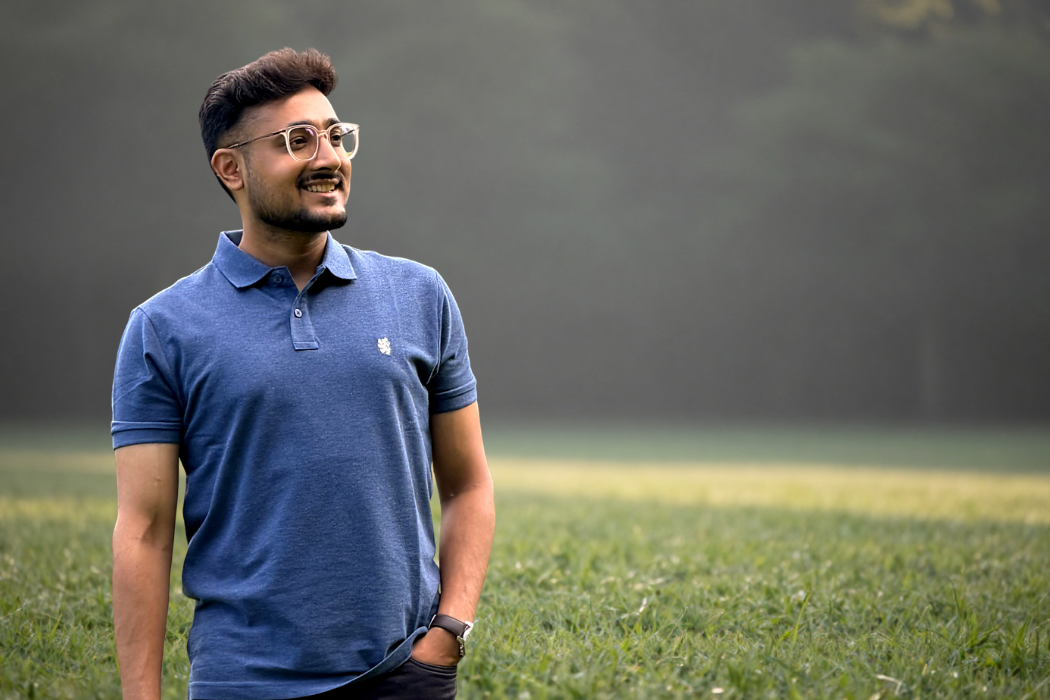
Nilesh Sonawane brings over two and a half decades of experience across polymers, composites, and building materials to his work at the intersection of industry and sustainability. An alumnus of IIM Ahmedabad, NMIMS Mumbai, and MIT Pune, he has been instrumental in setting up India's first Extruded Polystyrene insulation plant and commercialising the country's first external insulation project at DLF's Mall of India. He serves on the executive council of the India Green Building Council and is a member of ISHRAE. He has previously served on BIS and BEE technical subcommittees and as a jury member for Solar Decathlon India.
.png)
.jpg)
%20(1).png)

.png)