





Q1. Have you personally experienced the gap between having a skill, talking about it in an interview, and actually using it at work?
Yes, I have experienced this gap, especially through my work in LinkedIn content creation and helping professionals build their personal brands.When I started, I thought being good at content creation meant knowing how to write engaging posts, understanding LinkedIn, and keeping up with trends.But working with actual clients changed my perspective.I realised that writing a good post was only a small part of the job. When someone trusts you with their professional presence, you have to understand their industry, their audience, their voice, and most importantly, what they want to achieve.
For example, there were times when a post was well-written but didn't necessarily connect with the right audience. That made me realise the problem wasn't always the writing. Sometimes, I needed to understand the audience better, rethink the message, or approach the topic from a completely different angle. Over time, I started looking beyond just creating content. I began thinking about whether the content was attracting the right people, building credibility, and supporting the client's actual business goals.That experience taught me something important: knowing how to do something and knowing why, when, and how to do it are very different things.
I believe being good at your job isn't about having all the answers or knowing every tool. It's about taking ownership, asking the right questions, adapting when things don't work, and being willing to learn while doing the work.
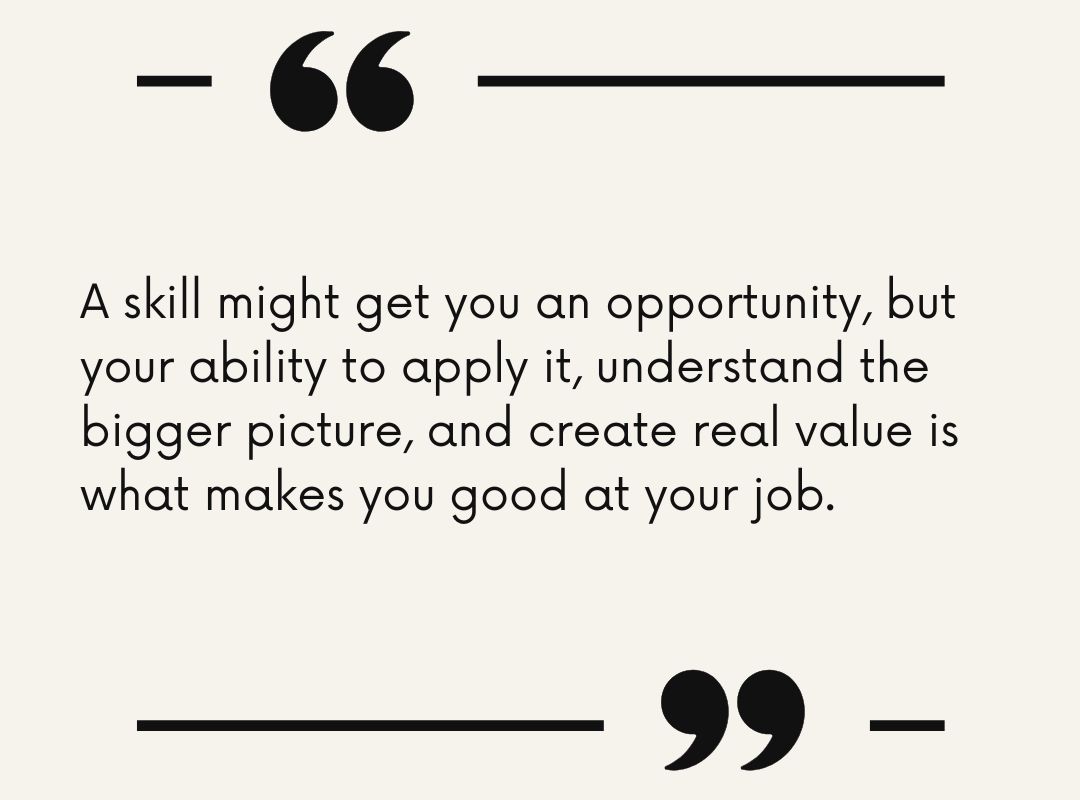
A skill might get you an opportunity, but your ability to apply it, understand the bigger picture, and create real value is what makes you good at your job.
Q2. Today, AI can help someone prepare a resume, rehearse an interview, write an email or even make their work look more polished than their actual experience. How do you think a working professional can tell the difference between genuinely becoming better at something and simply becoming better at presenting themselves?
I think the real difference becomes clear when you move from preparation to execution. AI can give you predefined answers, suggest the best ways to approach a problem, and help you prepare for almost any situation. But real work rarely follows a predefined pattern.You might know the right answer in an interview, but when you actually face a situation at work, you need to understand the context, recognise patterns from previous experiences, learn from what worked and what didn't, and then decide how to execute.
For example, in my work with LinkedIn content and personal branding, AI can suggest content ideas, write drafts, and even analyse what makes a post engaging. But it doesn't automatically mean that every suggestion will work for a particular client. I still need to understand the client's audience, look at previous content performance, identify patterns, understand what connected with people, and make decisions about what we should try next.
That ability develops through actual experience. You try something, observe the outcome, learn from it, and adjust your next approach.I think that's how professionals should measure their growth. Not by how polished their resume looks or how confidently they can explain a skill, but by whether they can apply it in an unfamiliar situation and make sound decisions.
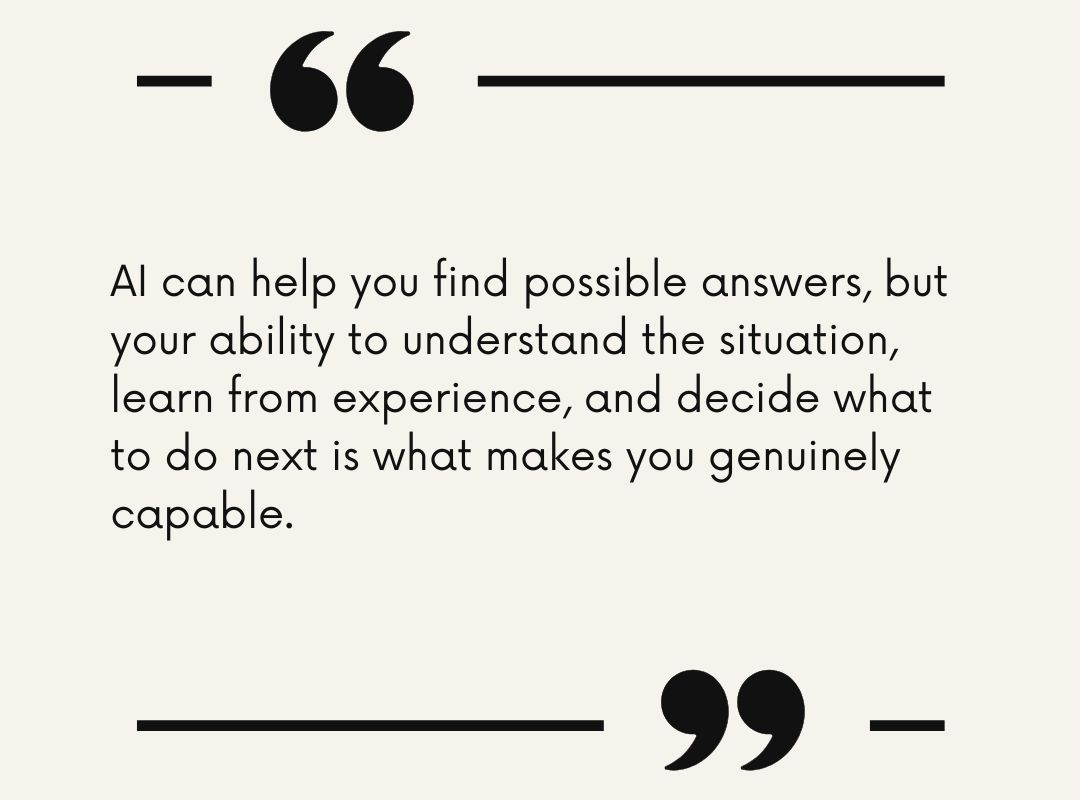
AI can help you find possible answers, but your ability to understand the situation, learn from experience, and decide what to do next is what makes you genuinely capable.
Q3. You’ve spoken about how AI has made execution easier and, in your view, made judgment more valuable. In your own work, has there been a moment when AI helped you do something faster but you still had to decide what was actually worth doing?
Yes, a recent talk I gave at a university is a good example.I was invited to speak to students about careers and visibility in the age of AI. I used AI to prepare, and within minutes, I had a full outline with key points, statistics, examples, and even a slide flow. A few years ago, putting all of that together would have taken me days. But I quickly realised that preparing a talk isn't just about collecting information or putting together the most impressive points.
You have to understand who is sitting in front of you, what they already know, what they might be struggling with, and what they should actually take away from the conversation.AI can give you ten different talking points, but you still have to decide which three are worth discussing. You have to choose examples that make sense to that audience, simplify ideas where needed, and sometimes change your approach based on how people respond.That is where human judgment comes in.
I think this applies to almost every profession. AI can make preparation and execution much faster, but deciding what is relevant, what deserves attention, and what will create actual value still requires human thinking.
For me, the real value of AI isn't that it does more of our work. It's that it gives us more time to focus on the decisions that matter.

Q4. You once wrote that hard work alone isn't enough because your work also needs to be visible. For someone who does good work but hates self-promotion, what does "making your work visible" look like without turning your career into a constant performance?
I think a lot of people misunderstand visibility. They assume it means constantly talking about themselves, sharing achievements, or trying to convince everyone that they are good at what they do. But I see it differently. Through my work in LinkedIn content creation, I've come across professionals who have years of experience, have solved real business problems, and have a lot of knowledge to share. Yet, when you look at their online presence, very little of that experience is visible. And that's an interesting gap.
For example, imagine someone who has spent ten years working in finance. They might have handled difficult situations, helped businesses make important decisions, and learned lessons that could genuinely help others.They don't need to post about how successful they are every day. They could simply share one lesson from a difficult decision, explain something they have learned from their experience, or offer their perspective on an industry trend.
That itself makes their expertise visible.
I believe the same applies to anyone, regardless of their profession. You don't need to manufacture achievements or turn your life into content. Just document meaningful things you are already doing and share the knowledge that comes from them.I've learned that people don't always need to see how successful you are. They need opportunities to understand how you think, what you know, and how you approach problems.
Visibility shouldn't be about proving that you are valuable. It should be about making the value you already create easier for others to recognise.

Q5. You’ve built a significant presence on LinkedIn, but you’ve also written about almost quitting the platform after spending years approaching it the wrong way. What changed in the way you thought about visibility, networking and being “seen” professionally?
There was a time when I genuinely thought LinkedIn wasn't working for me. I had spent years on the platform, but I wasn't getting the kind of results I expected. At one point, I even considered quitting. Looking back, I realised that the problem wasn't necessarily the platform. It was how I was approaching it. I was looking at LinkedIn more as a place where I needed to post, get engagement, and grow my numbers. But I wasn't looking at the bigger picture of what visibility could actually do for me.
My thinking started changing when I understood that LinkedIn isn't just a content platform. It's a place where people discover each other, exchange ideas, build relationships, and create opportunities. I also started paying more attention to who I was trying to reach rather than just how many people were seeing my content. Having thousands of random views is very different from getting noticed by the people who genuinely relate to your work or can benefit from what you do.
That shift changed how I approached content, networking, and visibility. I started focusing more on understanding my audience, sharing relevant perspectives, engaging with the right conversations, and building relationships instead of treating every post as a numbers game. Today, through my work helping other professionals build their presence on LinkedIn, I see the same thing happening. People often focus on getting more followers before figuring out what they actually want to be known for.
I think visibility becomes much more meaningful when you stop asking, "How many people can see me?" and start asking, "Am I reaching the right people, and do they understand the value I bring?"
For me, the biggest change was realising that being seen isn't the same as being known. Visibility gets people's attention, but your ideas, consistency, and relationships give them a reason to remember you.

Q6. With so much pressure to keep learning new skills, building a personal brand, networking, using AI, and performing at work, when does staying relevant become exhausting?
I think staying relevant becomes exhausting when we start treating everything as an obligation. We feel we must learn every new AI tool, post regularly on LinkedIn, build a personal brand, network with more people, improve our skills, and still perform well at our actual jobs.
And because there is always something new happening, it can feel like we are constantly falling behind. I've experienced this in my own work. Since I work in LinkedIn growth and content creation, I'm always exposed to new trends, content strategies, platform changes, and AI tools. There is always another tool to try or another strategy people are talking about. But over time, I've realised that trying everything doesn't necessarily make you better.
For example, I don't need to use every new AI tool that comes out. I need to understand which tools actually improve my workflow, save meaningful time, or help me deliver better results for my clients. The same applies to learning and visibility. You don't need to be present everywhere or talk about everything. You need to be clear about what you want to be known for and focus on the skills and relationships that support that direction.
I also think we need to stop comparing our progress with someone else's highlight reel. Everyone has a different starting point, career path, and set of priorities. For me, staying relevant should mean staying curious and willing to adapt, not constantly feeling pressured to prove that you're keeping up. You don't have to chase every opportunity to grow. Sometimes, knowing what not to chase is just as important.

Q7. If someone is already good at their job but sees newer professionals moving faster with AI and personal branding, what should they rethink about how they work?
I think the first thing they need to rethink is how they look at AI. Instead of seeing it as something that could replace their experience or make them less valuable, they should see it as a tool that can make them more capable. I experienced this while preparing for a talk I was invited to give at a university about careers and visibility in the age of AI.
I had my own knowledge and experience to share, but I wanted to make the session more useful for the students. So I used AI to research ideas, organise my thoughts, find relevant examples, and structure the presentation. Something that could have taken me several hours or even days became much faster. But AI couldn't decide what the students actually needed to hear. I had to use my own judgment to select the relevant points, connect them with real-life situations, and make the session meaningful for that audience. That's where I see the real opportunity.
Professionals who have years of experience already have something valuable. They understand their industries, have dealt with real challenges, and have learned things that cannot be gained simply by using a tool. Now, if they combine that experience with AI, they can work faster, explore new ideas, improve their output, and create even more value.
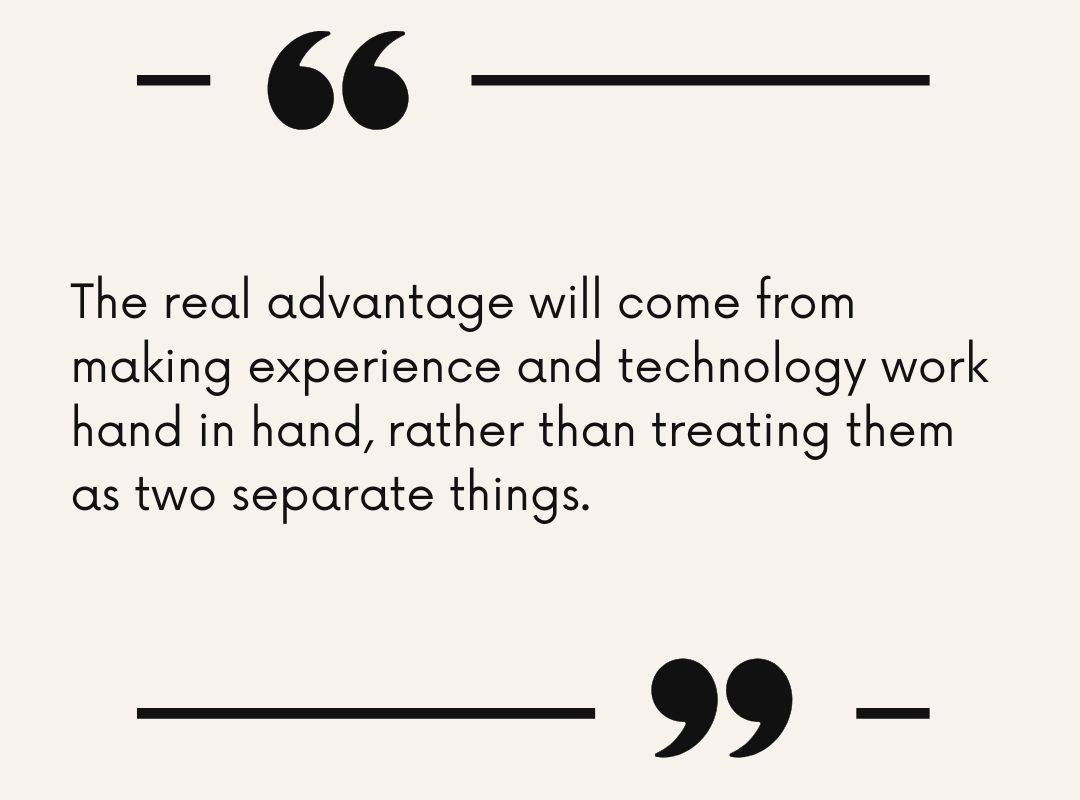
I would encourage experienced professionals not to compete with younger people just because they might be more comfortable with new technology. Instead, learn to use that technology to strengthen what you already bring to the table. Let your experience guide how you use AI, and let AI help you apply that experience more effectively. I believe the real advantage will come from making experience and technology work hand in hand, rather than treating them as two separate things.
Q8. AI can make us more productive, but it can also make us stop thinking deeply. Where do you draw the line between using AI and thinking for yourself?
I honestly feel this is one of the biggest challenges with AI today. It has made getting answers so easy that we sometimes forget the importance of figuring things out ourselves. I'll give you a personal example. When I'm learning something new or working on a coding problem, I can now ask AI to explain the concept, identify an error, or even write the code for me.
And most of the time, it gives me an answer within seconds. But I've realised something: getting the solution and actually understanding the solution are two very different things. If I simply copy the code, run it, and move on, I might finish the task faster, but I haven't necessarily developed the ability to solve that problem independently.
So I try to approach it differently. I first make an effort to understand the problem, then use AI to explore possible solutions. After that, I test the suggestions, question the logic, and make sure I understand why something works rather than simply accepting the answer. Because the next time I face a similar problem, I don't want to depend on AI to give me the answer again. I want to have developed the ability to solve it myself.
I think this applies far beyond coding. In any profession, AI can give us information, suggest solutions, and speed up execution. But we still need to develop the judgment to question those answers and understand their consequences. I don't believe we should avoid using AI just to prove that we can do everything ourselves. That would be missing the opportunity. But we shouldn't become so dependent on it that we lose our ability to think independently.
My approach is simple: let AI save you time, but don't let it take away the thinking that helps you grow.
Q9. Across changing roles, tools, and goals, what is one skill, habit, or way of thinking that has remained valuable to you?
I would say curiosity and the willingness to keep learning. One thing I've noticed in my own journey is that the more I work with technology, content, and AI, the more I realise how quickly things can change.
For example, when I started working with LinkedIn, I spent time understanding content creation, audience behaviour, and what makes people engage with a post. Over time, I became more familiar with the platform. But then AI started changing the way we research, create content, analyse information, and approach our work.
I had two choices: continue doing things the way I had learned them or stay curious and explore how these new tools could improve my work.
I chose the second. I started experimenting with AI, testing different approaches, learning from the results, and questioning things I had previously assumed were the right way to work. And I think that's an important habit.
You shouldn't become so comfortable with what you already know that you stop exploring what you could learn next.At the same time, learning doesn't mean blindly following every new trend. It means being curious enough to understand something, practical enough to test it, and honest enough to accept when your old approach needs to change.
I've realised that the people who keep growing aren't necessarily the ones who know the most. They are often the ones who remain willing to learn, even after they have achieved some level of success.
Because the moment you stop being curious, you risk becoming outdated, no matter how much experience you have.
Q10. Five years from now, when AI can do far more of the execution that professionals currently get paid for, what do you hope people will still be valued for, and what do you think working professionals should start building in themselves today?
I hope people will still be valued for judgment, trust, and the ability to make sense of a messy situation. If AI can write the draft, build the plan, and produce the analysis, what will matter is whether you know what’s worth doing, whether people trust your call, and whether you can explain your thinking in a way that moves others to act.
After my talk, a student asked me, “If AI can do all this, what should I actually get good at?” I didn’t have a perfect answer then, but I’ve thought about it a lot since. I’d start with judgment. Practice making decisions and noticing why you made them. Review what worked and what didn’t. Build enough depth in one area to spot when an answer is wrong, and learn to explain your thinking simply.
Be honest about what you don’t know, follow through, and give credit. In a world full of polished output, reliability stands out. Stay willing to relearn as your work changes. The tools will keep changing. The habit of learning won’t.
About Vidhi Toshniwal :
Vidhi Toshniwal is a LinkedIn growth strategist and personal branding professional. Around three years ago, she knew very little about LinkedIn. Curiosity led her to explore the platform, experiment with content and learn how people build an audience. Through consistent, hands-on work, she turned that interest into a career.
Last year, Vidhi founded Rank Social, where she helps clients around the world grow their LinkedIn presence through content creation, strategic engagement and audience building. Working with international clients has given her insight into different industries, perspectives and professional audiences.
Vidhi is also interested in how artificial intelligence is shaping the future of work. She believes technology should strengthen people’s ability to think, create and make their own decisions. Her experience has taught her that expertise can grow along the way. For her, it began with curiosity, a willingness to learn and the courage to keep going.






Join the conversation
Share your thoughts on this story.