


These leaders are not building trust, judgment, or shared ownership. They are building caution, dependence, and silence. They are creating environments in which people confuse survival with professionalism. They are mistaking tension for discipline and obedience for alignment.
That is one of the great lies of modern work: the belief that fear is an acceptable price for high standards.
It is not.
In many cases, fear is the very thing that makes real excellence impossible.
Fear rarely calls itself fear
Fear-based leadership does not arrive honestly. It does not walk into a room and announce its intention to make people smaller. It comes dressed in respectable language: accountability, excellence, intensity, urgency, performance. It borrows the vocabulary of ambition, which is why it is so often tolerated and so rarely named.
People feel it long before they can describe it.
They feel it in meetings where no one wants to be the first to raise a concern. They feel it when questions begin to sound dangerous. They feel it when people stop offering unfinished thoughts because only polished answers feel safe. They feel it when mistakes are treated less as opportunities to learn and more as evidence of personal inadequacy.
By then, the team has already changed shape.
It is no longer a place where people think together. It has become a place where people manage themselves carefully in the presence of power.
The team may look efficient. It is still dying.
One reason fear-based leadership survives is that it can look effective from the outside.
The slides are polished. The status updates are crisp. Deadlines are chased with visible urgency. Meetings appear controlled. People seem alert. To a superficial observer, this can appear to be a strength.
But inside the team, something essential is beginning to disappear.
Candor weakens. Curiosity narrows. Judgment gets pushed upward because the cost of being wrong feels too high. People become more loyal to self-protection than to the truth. They learn to read mood before they read reality. They become careful where they should be courageous.
This is not discipline.
It is damaged.
Fear can produce movement. It can produce compliance. It can even produce short-term results. But it cannot produce the deepest, healthiest, or most durable form of performance. It cannot build a thinking team. It cannot build a brave one.
And yet many institutions continue to reward fear-based leaders because movement is easier to measure than trust. Control is easier to recognize than capability. A team that looks tightly managed often receives more credit than a team that feels safe enough to tell the truth.
That mistake is more common than most organizations are willing to admit.
The real cost never appears on the dashboard
The deepest cost of fear rarely shows up in formal metrics.
It appears in the quality of thought that never enters the room. In the bad news that arrives too late. In the idea that dies before it is spoken. In the talented professional who slowly becomes hesitant, guarded, and intellectually smaller than they once were.
Fear reduces the system's intelligence.
When people are afraid, they do not become more thoughtful. They become more defensive. Their energy shifts from building to protecting. They begin optimizing for the avoidance of embarrassment rather than the pursuit of truth. Over time, the team loses the very qualities it most needs: courage, initiative, judgment, and honest collaboration.
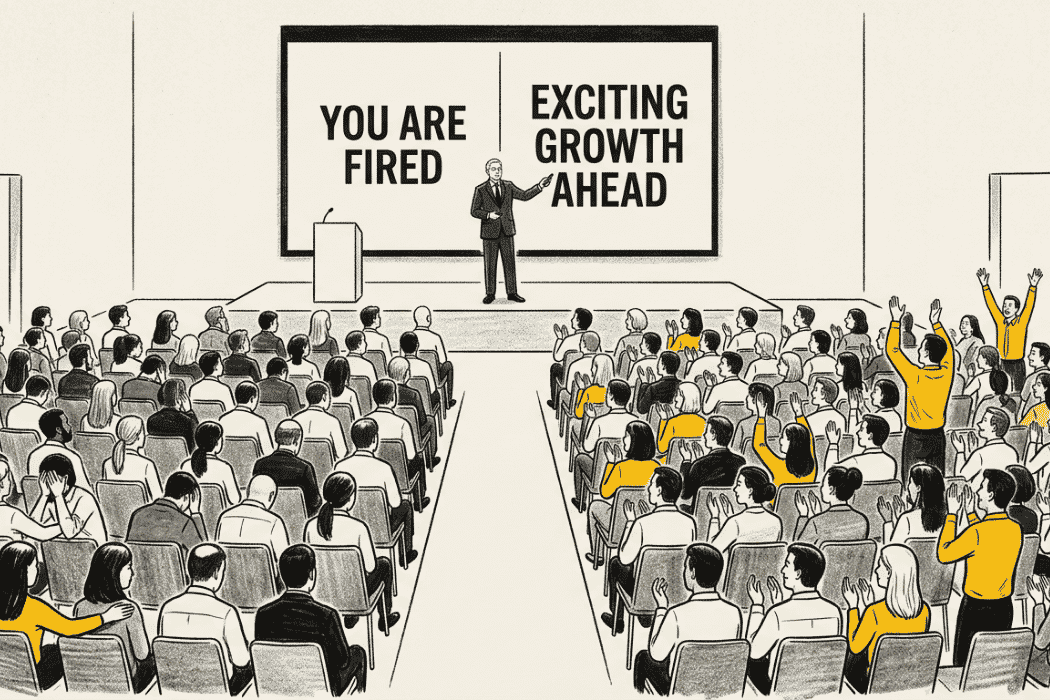
Many leaders miss this because they are watching output rather than human conditions. They see obedience and call it alignment. They see silence and call it maturity. They see apparent control and fail to notice suppressed potential.
That is how fear survives for so long. It hides inside results that look respectable from a distance.
The moment leadership begins to decay
Leadership begins to decay when authority remains, but apprenticeship ends.
Too many leaders drift away from the difficulties their teams carry each day. They stop learning. They stop practicing. They stop engaging deeply enough with hard problems to remain humble. But they continue reviewing, criticizing, escalating, and finding fault.
That combination is dangerous.
A leader who is no longer learning often becomes insecure in ways they do not fully recognize. And insecurity, when paired with authority, has a tendency to disguise itself as rigor.
The leader becomes more controlling because they are less connected to the work. They speak more about accountability because they have less to offer in development. They begin to monitor more than they mentor. They judge more than they teach.
Their language remains professional.
Their impact becomes corrosive.
This is why I have come to believe something strongly: if a leader has not deeply enough learned anything difficult to teach their team lately, they have very little right to keep criticizing that team.
That is not a slogan. It is a moral standard.
Leadership is not the right to evaluate from a distance. It is the responsibility to remain close enough to complexity that your standards are anchored in humility, not ego.
Real team building is harder than control
The best teams are not built on control. They are built on a strong trust that holds high standards without humiliating people.
That kind of leadership is harder than it sounds.
It is easy to dominate a room. It is much harder to create a room in which truth can survive pressure. It is easy to make people nervous. It is far harder to make them brave. It is easy to criticize after something goes wrong. It is much harder to build the conditions in which people can think clearly, speak honestly, and recover well when they fail.
Real team building is not soft work. It requires steadiness. It requires fairness. It requires emotional control from leaders who are under pressure themselves. It requires the ability to hear uncomfortable truths without punishing the person who brought them. It requires leaders to correct without humiliating, to challenge without belittling, and to raise standards without shrinking the human being standing before them.
That is leadership with a spine.
When someone makes a serious mistake, the difference becomes obvious.
In a fear-based culture, the conversation quickly turns personal. Who did this? Why were you careless? Do you realize what this has caused? The underlying purpose is rarely learning. It is the reassertion of power.
In a trusting culture, the conversation remains serious, but it unfolds differently. What did you see at the time? What assumptions were shaping the decision? What support was missing? What must now change in the system, and what must change in you?
Both cultures may use the language of accountability.
Only one of them builds adults.
What fear does to the professional inside it
For the person being led inside such an environment, the damage is not always immediate. Often it is slow. Quiet. Accumulative.
At first, you simply become more careful. Then you begin editing yourself. Then you stop taking certain risks. Over time, your ambition changes shape. You no longer think about growth in expansive terms. You think about safety. You stop asking what you could build and start asking what you must avoid.
That is one of the saddest things fear does. It not only exhausts people. It shrinks them.
And because this shrinking happens gradually, many capable professionals begin to internalize it. They mistake the harshness of the environment for proof that they are lacking. They start treating their own diminishing confidence as a personal failure rather than a cultural symptom.
That is why protecting your inner ground matters.
Keep evidence of your growth. Stay close to people who can tell you the truth without diminishing your dignity. Continue learning so that your confidence is not entirely dependent on one insecure system. And if an environment repeatedly asks you to trade your clarity, self-respect, and courage for survival, do not romanticize endurance.
Sometimes, leaving is not a weakness.
Sometimes it is the only way to remain fully yourself.
The AI era may make this worse
This question becomes even more urgent now, as we enter a workplace increasingly shaped by AI, measurement, and digital visibility.
More outputs can be tracked. More deviations can be flagged. More behavior can be translated into signals. In the hands of a secure leader, some of this can create clarity and reduce noise. It can help teams work better.
In the hands of an insecure leader, it can become something far more dangerous.
The data-driven workplace can easily become the most sophisticated fear machine we have ever built.
If every deviation is highlighted but the context is ignored, people do not become more accountable. They become more anxious. If measurement expands but trust does not, people do not become more creative. They become more performative. If AI is used to intensify surveillance without deepening human judgment, organizations will not become stronger. They will simply become more efficient at control.
That is the real leadership question of the AI era.
Not whether we can measure more.
Whether we can remain human while we do it.
The real goal of leadership
A team does not become brave because a leader demands bravery.
It becomes brave because people learn, through repeated experience, that truth is safe in that room. They learn that mistakes can be examined without humiliation. They learn that standards can remain high without dignity becoming low. They learn that authority need not arrive wrapped in fear.
That is the real work of leadership.
Not making people small enough to control, but helping them become strong enough to think, speak, learn, and build without fear.
Anything else may produce activity for a while.
But it will never produce a real team.
--Ends--
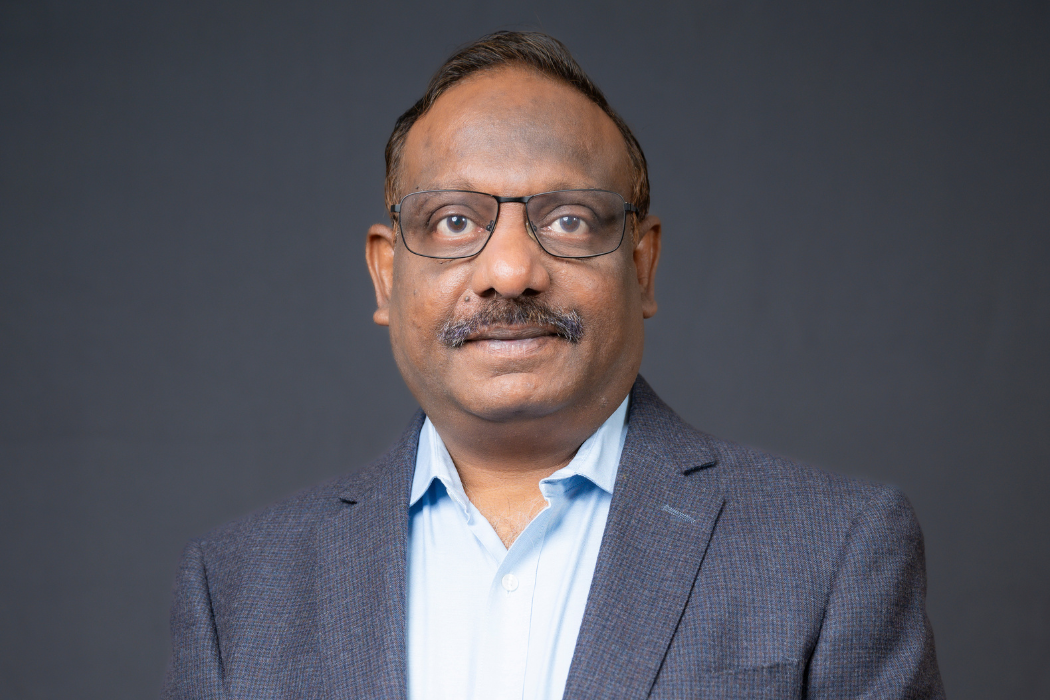
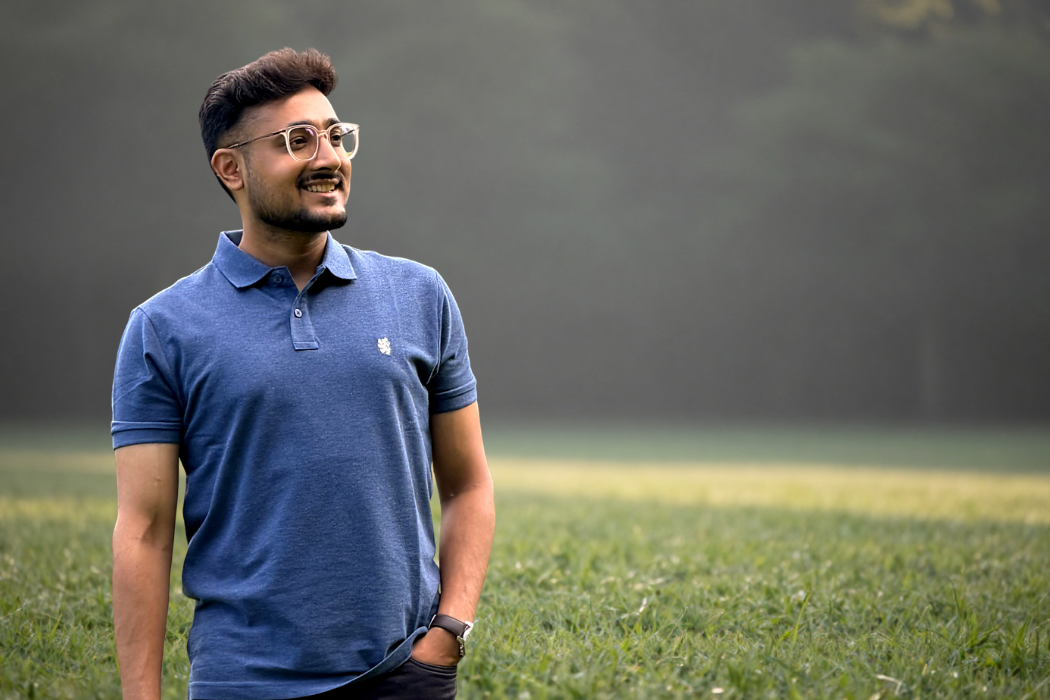
Madhu Murty Ronanki is Co-founder and Head of India Operations at QualiZeal, a digital quality engineering firm focused on helping organizations build quality, trust, and performance into modern technology systems. Over the course of his career, he has worked across global technology and services environments, observing closely how leadership, culture, and capability shape the human experience of work. He writes on leadership, workplace culture, quality engineering, and the future of teams in the age of AI.
.png)
.jpg)
%20(1).png)
.png)