



Q. Lazy. Entitled. Can't take feedback. Job-hops for "vibes." You've heard the labels. Which one makes you roll your eyes, which one low-key gets to you, and which one — hand on heart — are you willing to own just a little?
‘Lazy’ is just lazy criticism. It is what people say when they don’t understand how someone works differently. If something can be done in 2 hours, we’re not stretching it to 8 just to look busy. We’re not lazy, we just don’t romanticize burnout anymore. There’s a difference.
‘Entitled’, this one does hit a nerve because there’s a hint of truth. Not because it’s fully true, but because there is a shift because we expect clarity, respect and growth faster. Older generations see that as entitlement, I personally see it as awareness. We know what’s possible, we’ve seen better, and we’re not okay settling for less just because “that’s how it’s always been.”
‘Can’t take feedback’ is mostly false. We take feedback fine, we just don’t accept disrespect disguised as feedback. There’s difference older generations don’t always acknowledge.
What I’ll own? Job-hopping for “vibes”, but not the way it’s framed. It’s not about vibes, it’s about alignment. Not everything needs to be abandoned the moment it gets uncomfortable (toxic culture, no growth, biased leadership). We don’t sit around waiting for things to automatically improve anymore.
Yes, we do move on fast. Sometimes too fast. But at the same time, we’re not wasting years proving loyalty to environments that aren’t worth it.
Q. What does Gen Z look for in a job and workplace?
Peace. Growth. Realness.
Not just surface-level we’re a family; actual psychological safety. A place where I don’t have to shrink, pretend or constantly second-guess myself. We’re looking for a place that doesn’t drain our energy.
All we want is:
• Clear growth paths, not vague promises
• Flexibility that trusts us, not monitors us
• Work that feels like it matters, even a little
• Respect without having to earn basic dignity
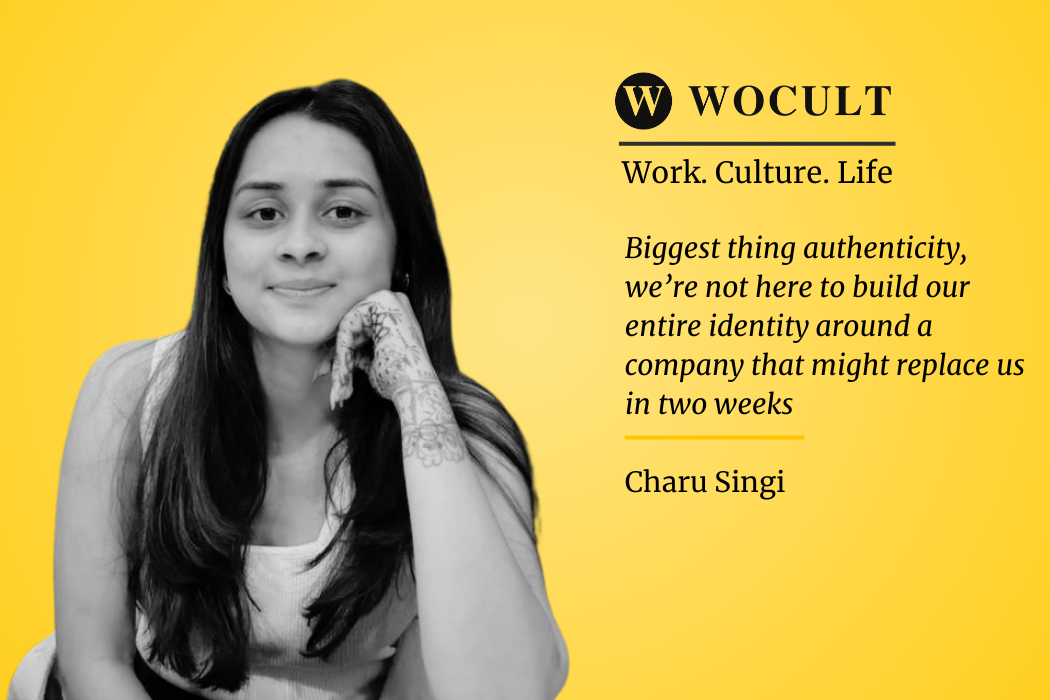
And the biggest thing authenticity, we’re not here to build our entire identity around a company that might replace us in two weeks.
And we’re very aware of trade-offs. If a job pays well but destroys our mental state, we’ll question it. If a job is chill but stagnant, we’ll question that too.
We want work to fit into our life, not consume it.
Q. You’re doing things differently — what are you building instead?
We’re trying to take a more diversified approach to our future.
We have all seen how people in our surroundings give all their time and energy to one job or one company, and have watched them get burned out, laid off or stuck. It’s hard to have faith in that model.
So we’re building options. We want to have multiple streams of income, side hustles and develop transferable skills. It’s not always about having a grand plan. Sometimes it’s just about not wanting to be stuck if this doesn’t work out.
We are prioritizing autonomy, flexibility and break from the hierarchy. It’s not about being anti-work. We just don’t want to put our trust into one decision.
We simply want to have a bit more control over things like our time, growth and we want to have a plan to have our way around risks if things go wrong.
Gen Z is not really interested in climbing someone else’s ladder. We would rather be building our own ladder so we have a safe floor that won’t disappear.
That is the main difference. It is a more honest way to go about things.
I feel this way more sensible but less optimistic.
Q. What’s not being leveraged well about Gen Z? What should workplaces change?
Honestly, one of our biggest strengths is how quickly we figure things out.
We grew up with the internet, if we don’t know something, we don’t wait around to be taught we just go learn it. We’re used to adapting, switching, picking things up on the go. That’s normal for us.
But workplaces don’t really use that instead it’s still very rigid like fixed roles, step-by-step processes, constant supervision (lack of delegation) like we can’t be trusted to think for ourselves. And that’s where it starts to feel off.
Because we CAN move fast. We learn fast, build fast, solve problems without needing everything spelled out.
But we get slowed down by systems that care more about control than actual output.
That’s the frustrating part as it’s not that we lack capability, it’s that the environment doesn’t let us use it properly.
If I had to say one thing workplaces need to change, it’s this:
Stop managing time like it’s school. Start focusing on outcomes.
If someone is delivering, improving, and actually adding value then why does it matter if they took 3 hours or 8? Why does it matter where they were sitting? The obsession with hours, presence, and constant checking just kills momentum.
Trust people a bit more. Give them ownership.
You’ll get way better work out of us if we’re treated like people who can think, not like we need to be watched all the time also stop making us feel like we take everything for granted :)
Q. One thing Gen Z does best at work
If I had to say one thing we do differently is that we don’t get emotionally trapped by work the same way.
We know how to detach.
Not in a careless, “we don’t care” way but in a way where we don’t let a job become our entire identity. We care about the work, do it well and even take pride in it. But we’re not tying our worth or our whole life to it.
And that changes everything because at the same time, we also see through things very quickly.
Corporate buzzwords like, “we’re family”, “performative leadership” it just doesn’t land on us. We grew up with too much information, too many perspectives also too much exposure to not notice when something feels off and once we see it, we can’t unsee it.
So we don’t just sit there quietly tolerating it. We either call it out, dis-engage or leave.
That mix of being aware and being detached is what truly makes us different.
It makes us harder to guilt trip into overworking, harder to control through fear and harder to keep in environments that don’t feel real.
And I think that’s what unsettles people the most.
We’re not blindly loyal we know our worth and we’re consciously choosing where we stay.
Q. On being misunderstood
We like every other generation sees the system clearly but we are the only one choosing not to play by rules that were never built for us, or sacrifice ourselves just to keep them going.
--Ends--
.png)
.jpg)

%20(1).png)
.png)