




.jpg)
How common is it—really?
Globally, the scale is bigger than most workplaces admit.The World Health Organization estimates that 15% of working-age adults livedwith a mental disorder in 2019 and that depression and anxiety alonecost the global economy about US$1 trillion each year, with around 12billion working days lost annually.
In India, the story is both widespread and undercounted ineveryday conversation. WHO’s India page (drawing from the National MentalHealth Survey 2015–16) notes that nearly 15% of Indian adults need activeintervention for one or more mental health issues, and “one in 20”suffers from depression.
Workplace wellbeing data reflects the same strain. Gallup’s2024 reporting (as widely covered in India) shows only 14% of Indianemployees describe themselves as “thriving,” while 86% are “struggling” or“suffering.”
That isn’t a clinical diagnosis—but it’s a powerful signal of the emotionalbaseline many people are carrying into office life.
Why depression at work feels like “suffocation”
People often describe workplace depression as a kind ofsuffocation—because it compresses multiple parts of life at once:
- The mind feels slower, foggier, less able to initiate.
- The body feels heavier, tired earlier, unrested even after sleep.
- Time feels hostile: everything takes longer, but deadlines don’t move.
- Social energy collapses: even small talk feels like labour.
Clinically, depression commonly involves tiredness andpoor concentration.
And research on depression symptoms and functioning finds that fatigue/energyloss is a major “bridge” symptom linked with poorer executive functioning(the mental system behind planning, focus, working memory, and task-switching).
That’s why depression at work can feel like being trappedinside your own day: you’re expected to operate at full cognitive capacitywhile the very systems required to do that are running on low power.
The productivity myth: “If I push harder, I’ll snap outof it”
Workplaces often treat depression like a motivation problem.Many employees internalize that framing and respond by pushing harder—morehours, less rest, more self-criticism.
But the evidence points elsewhere: depression is stronglyassociated with absenteeism and presenteeism (being at work butfunctioning below capacity).
And across multiple countries, studies find the cost of presenteeism fromdepression can be 5–10 times higher than absenteeism—meaning the biggestloss isn’t from people being absent, but from people showing up while unwelland running at partial output.
This matters because presenteeism is socially rewarded. Itlooks like commitment. It’s often mistaken for resilience. In reality, it canbe the mechanism that keeps depression chronic.
The vicious circle: Depression → performance pressure →deeper depression
Many working professionals get stuck in a loop that lookslike this:
1) Low energy + low focus
You start the day already depleted. You delay tasks, miss small deadlines,forget details. Depression’s most common symptoms—fatigue, sleep disruption,poor concentration—make “normal work” feel harder than it should.
2) Shame + self-surveillance
You notice you’re not functioning the way you used to. You hide it. Youover-correct. You become hyper-aware of how you’re perceived. The officebecomes a mirror you can’t escape.
3) Compensation mode
You work longer, take fewer breaks, eat poorly, scroll late into the night,rely on caffeine, skip movement. The body gets less recovery. The mind getsless quiet.
4) Sleep disruption deepens
Depression is closely tied to disturbed sleep, and sleep problems can amplifyfatigue and mood issues.
Now you’re tired and you can’t properly rest.
5) Presenteeism becomes identity
You keep showing up. Output drops. Mistakes rise. You feel behind. You workmore. The loop tightens.
6) “Healing” becomes another task
You try to fix yourself like a project—apps, routines, productivity hacks—thenfeel worse when you can’t maintain them. Even recovery becomes performance.
This is how people can be “functioning” and still drowning.
The long game: quality of life and lifespan
Depression at work isn’t only about a bad quarter. Overtime, untreated or severe mental health conditions shape lifespan and qualityof life—through stress biology, sleep disruption, increased risk behaviours,and the way mental illness can block access to healthcare and stability.
A major meta-analysis across 24 countries found that peoplewith any mental disorders experienced about 14.7 years of potential lifelost compared to the general population.
Separately, WHO has noted that severe mental disorders are associated withpremature mortality, reducing lifespan by 10–20 years, largely due topreventable physical health conditions.
That doesn’t mean every person with depression will loseyears of life. It means mental health isn’t “soft”—it is deeply entangled withphysical outcomes and long-term wellbeing.
Key Stats: The Scale of Workplace Depression
Depression at work is not rare. It’s structural.
- 15% of working-age adults globally lived with a mental disorder in 2019
Source: World Health Organization (WHO)
https://www.who.int/news-room/fact-sheets/detail/mental-health-at-work - Depression and anxiety cost the global economy ~$1 trillion annually, with 12 billion workdays lost each year
Source: WHO
https://www.who.int/teams/mental-health-and-substance-use/mental-health-at-work - In India, nearly 15% of adults require active mental health intervention; 1 in 20 lives with depression
Source: National Mental Health Survey (India), cited by WHO
https://www.who.int/india/health-topics/depression - 86% of Indian employees are “struggling” or “suffering” at work
Source: Gallup State of the Global Workplace 2024 (reported in India)
https://www.ndtv.com/feature/gallup-report-reveals-86-of-indians-struggling-at-work-mere-14-thriving-5875899 - Presenteeism (working while unwell) costs organisations 5–10× more than absenteeism
Source: Journal of Occupational & Environmental Medicine
https://pmc.ncbi.nlm.nih.gov/articles/PMC5101346/ - People with mental disorders experience 10–20 years shorter life expectancy, largely due to preventable physical conditions
Source: WHO
https://www.who.int/publications/i/item/9789241550383
Why workplaces become part of the problem
WHO points out that poor working environments—excessiveworkloads, low job control, job insecurity, discrimination and inequality—poserisks to mental health.
These are not individual failures. They are structural stressors.
And when the structure is the stressor, individual copingcan feel like trying to breathe through a straw.
What breaks the loop (without turning healing intohomework)
Not everyone can take a break. Not everyone can quit. So themost realistic question becomes: what reduces harm inside the system you’restill operating in?
Here are the interventions that tend to matter most—becausethey reduce pressure at the source:
1) Naming it early (privately, not publicly)
Even admitting “I’m not okay” to one person—doctor, therapist, trustedfriend—interrupts the invisibility that sustains the loop. Depression growsfastest in isolation.
2) Reducing presenteeism, not just absenteeism
If you’re mentally unwell, “showing up” isn’t always neutral. Sometimes it’serosion. The goal is not perfect attendance; it’s sustainable functioning. Theproductivity research shows why this matters.
3) Making work smaller, not life bigger
When you’re depressed, adding goals (“work out daily,” “morning routine,” “newhabit tracker”) can backfire. What helps is shrinking decisions: one task, oneblock, one meeting at a time.
4) Getting real support, not motivational content
Workplace mental health guidance increasingly emphasizes organizationalmeasures and access to support—not just resilience talk.
If your workplace offers counselling/EAP, use it. If it doesn’t, considerexternal care. (This isn’t a “self-help” issue when symptoms persist.)
5) Designing a low-friction recovery rhythm
The most effective “healing” for working professionals tends to be unglamorous:sleep consistency, light movement, sunlight, fewer late-night screens, eatingenough protein. Not as a transformation—just as stabilizers.
A WoCult note
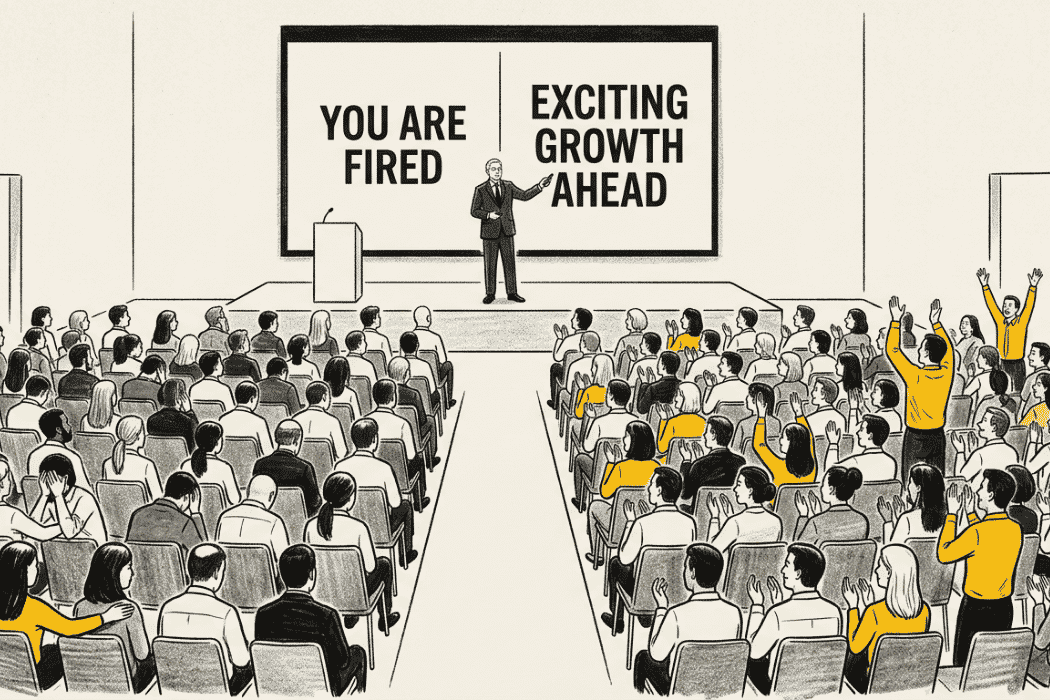
The most dangerous thing about depression at work is not that it exists. It’s that it becomes normal.
When “tired” becomes identity, when suffering becomes professionalism, when people feel they must look fine to keep their place inthe room—work stops being a part of life and starts consuming it.
The point of naming workplace depression isn’t topathologize working people. It’s to challenge the culture that quietly demandsemotional sacrifice as the entry fee for ambition.
Because no job should cost you your sense of breath.
At WoCult, we don’t believe burnout and depression are individual shortcomings dressed up as resilience stories. We believe they’re signals — from bodies and minds responding honestly to modern work.
Talking about them genuinely and honestly is cultural responsibility.
.jpg)

%20(1).png)

.png)