



Why big culture resets rarely work
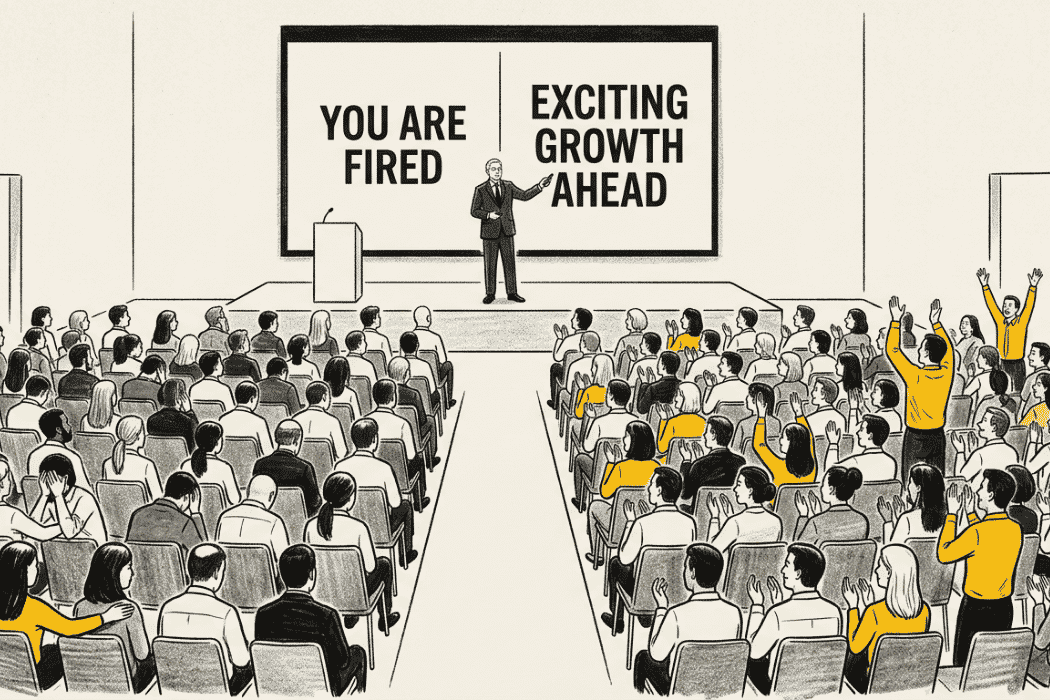
When leadership announces a cultural transformation, the intent is usually genuine but are they invested in the execution as well ? Too many priorities arrive at once with delegation to the teams to communicate better, collaborate more, innovate faster, care about wellbeing, move with urgency, embrace ownership. Each one sounds reasonable. Together, they overwhelm people. Employees don't know what to change first, so they change nothing. Culture becomes something leadership "rolls out" with clarity and by demonstrating changed behaviours themselves.
Culture lives in behaviour, not intention
Every organisation already has a culture. It is visible in how meetings start and end, how mistakes get discussed, how decisions are made, how people ask for help, how time is treated. These are not abstract traits. They are behaviours that are specific, observable, repeatable. If you want to change culture, you do not begin by redefining values. You begin by changing one behaviour that is causing the most friction.
Why one behaviour is enough
High-impact behaviours act like levers. When they shift, everything around them moves. If people don't speak up, you change how disagreement is handled. If work bleeds into nights, you change response-time expectations. If accountability is weak, you change how ownership is named. If burnout is normalised, you change how workload is flagged. Each of these is narrow, concrete, and actionable. And because it is specific, people can actually practise it.
The mistake leaders keep making
Most leaders choose behaviours that sound aspirational rather than behaviours that are broken. They say: we need more ownership. We need better communication. We need trust. These are not behaviours. They are outcomes. The real question is harder: what are people doing today that keeps this problem alive? That is the behaviour you target.
Three uncomfortable questions get you there faster than any engagement survey. What do people privately complain about most in corridors and one-on-ones? What does leadership tolerate because it feels inconvenient to confront? What single behaviour, if changed, would immediately improve daily work life in daily experience.
The answer will never be glamorous. It will be practical, awkward and hard to implement.
What this looks like in practice
Let's assume that the issue is late-night messaging. Instead of launching a work-life balance initiative, you define one rule: messages sent after 7pm do not require a response until the following morning. Leadership models it without exception. It gets repeated, becomes normal and the culture.
Or, let's say that the issue is unproductive meetings, where nothing gets decided. You introduce one behaviour: every meeting ends with a named owner and a clear next step. Repeat this messaging across your teams.
Why behaviour beats motivation
People do not change because they are inspired. They change because the environment makes a new behaviour easier than the old one. When one behaviour is clearly named, modelled by leaders without fail, and consistently reinforced, it removes the guesswork. People stop asking what the company really wants from them. They already know.
And once one behaviour sticks, something more important happens: trust is built. People believe change is real because they have seen it. That makes the next behaviour easier to introduce. Culture shifts not through momentum but through credibility.
The thing most organisations refuse to admit
Organisations do not need more vision decks. They need fewer blind spots.
Changing culture is not about becoming something new overnight. It is about stopping one thing that no longer works and doing that genuinely, consistently, and repeatedly without exception.
If you want your culture to feel different, make work feel different in one small, undeniable way. Not some day but - Now and Everyday.
.jpg)

%20(1).png)

.png)