Every company wants speed. Few confront what slows them down. It’s not technology. It’s not young talent. It’s middle management—specifically, a version of it that has lost its purpose. Too many managers now exist to report upward, not enable work downward. Their days are spent creating decks, attending alignment calls, and translating vague direction into even vaguer tasks. Ask frontline employees what blocks progress, and the answer is rarely skill. It’s approvals. Reviews. Dependencies. Endless clarification loops.

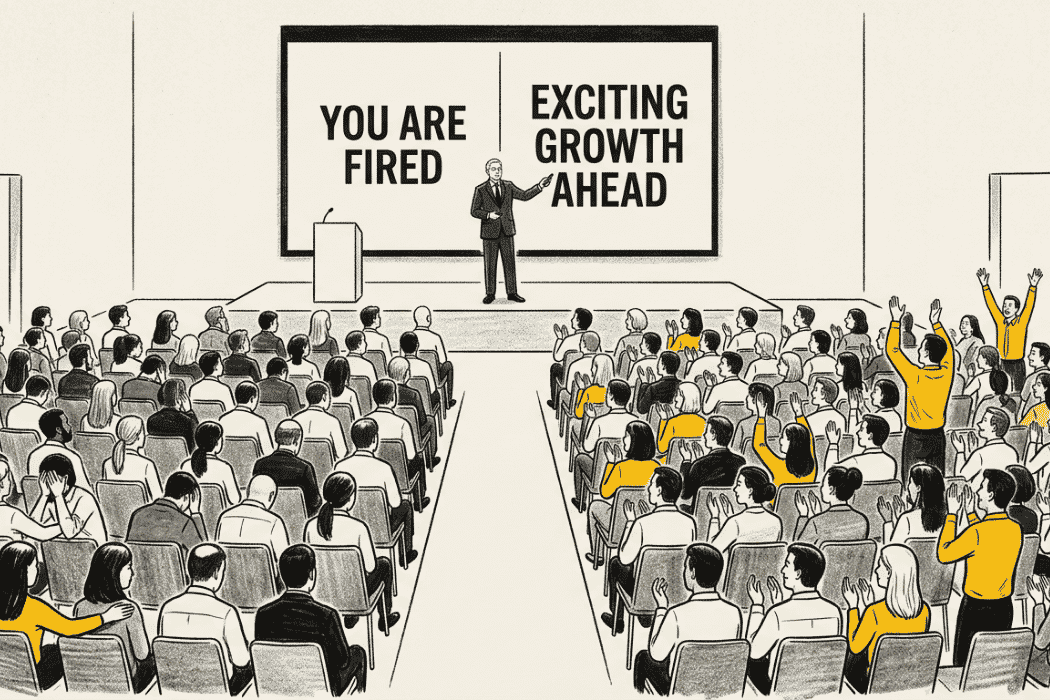
A simple decision requires multiple sign-offs and a steering committee. By the time approval comes, the opportunity has passed. Middle management was meant to remove friction. Today, it often creates it.
This isn’t about bad people. It’s about incentives. When managers are rewarded for control and risk avoidance, they optimize for safety—not speed. The result is predictable: high performers disengage, leaders get insulated, and organizations slow down while appearing “well governed.”
The healthiest teams have managers who decide, protect focus, and absorb pressure from above instead of passing it down.
We don’t need fewer managers.
We need fewer spectators with titles.
We use AI to help edit and sharpen our content because it helps us work smarter. But every thought is original, every point of view belongs to the writer, and the feeling behind the words is human.





.jpg)


%20(1).png)

.png)