




Fun at work is loud. Fun with work is silent.
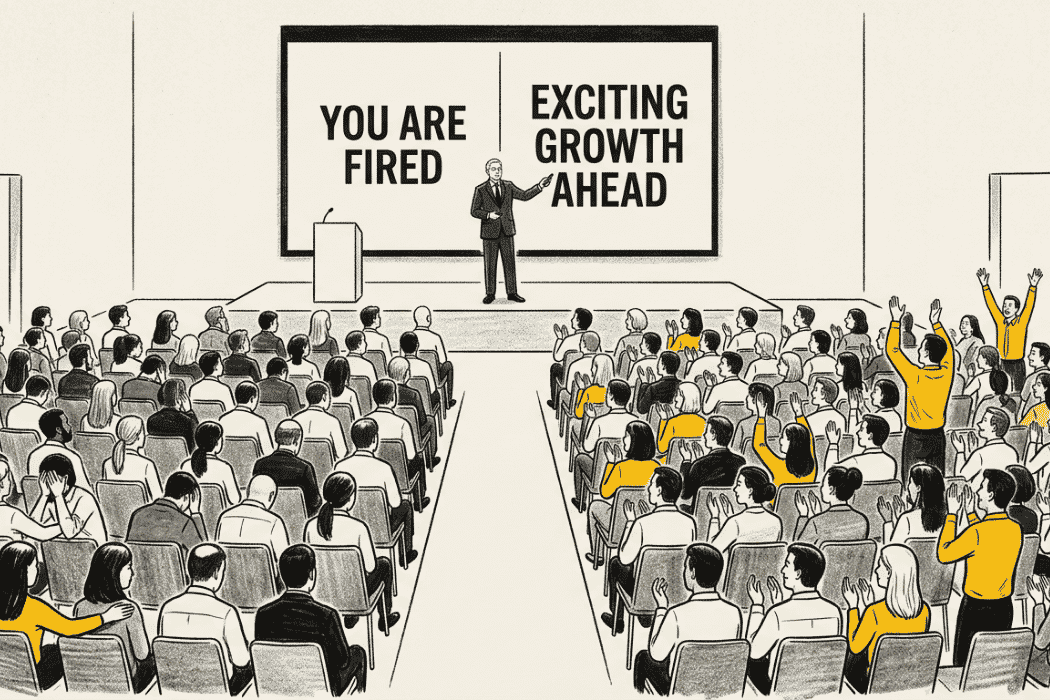
Fun at work is visible. It shows up in recruitment decks and Instagram reels. It is easy to manufacture, easy to photograph and easily seen in survey results. HR can measure it and get the Best Place To Work award. Leadership can point to it. And employees can perform it convincingly, for years, while feeling completely disconnected from everything they are actually doing.
Fun with work shows up differently. It shows up on the Sunday evening at home, on a Monday morning when you do not dread the day at work. It shows up in the hour that disappears because you were genuinely absorbed. It shows up in the tiredness at the end of a difficult day that still feels like it meant something. It shows up in the weekend that feels almost too long because you are looking forward to going back.
You can be laughing in the office and still feel hollow about the work itself. You can be serious most days and still deeply enjoy what you are building. The vibe and the substance are different things. And one cannot substitute for the other , no matter how good the coffee machine or cafeteria food is.
Why the atmosphere never fixes the weight ?
When work lacks autonomy, clarity, or meaning, no amount of manufactured fun offsets it. In fact, forced fun often makes the gap more obvious.
It creates a particular kind of pressure, one that turns inward.
If the office is this fun, why don't I feel good ?
That question does not lead people to examine the structure. It leads them to examine themselves. And so they conclude that the problem is them their attitude, their resilience, their inability to appreciate what they have. They work harder. They smile more convincingly. They tell themselves 'this too shall pass'.
This is not a small thing. It is one of the ways that unhealthy cultures sustain themselves by making the people inside them feel individually responsible for a collective design failure.
Three generations. Three versions of the same lesson.
GenX did not need work to entertain them. They needed it to respect their time, their intelligence, and their effort. They learned through decades of staying, adapting, and not personalising discomfort that loyalty was the price of security. Fun was not part of the negotiation. Meaning rarely was either. You did the work. You went home. You came back.
What they did not always see until much later was that the absence of genuine engagement was accumulating. A life lived largely in the margins of a career that consumed the centre.
Millennials inherited the hustle and were sold the culture. Open offices. Startup energy. Work hard, play hard. The fun was louder and so was the cost. They burned out in their thirties and wrote about it. They named the thing that GenX had lived without language for. And they discovered, painfully, that free snacks and a ping pong table are not a substitute for fair pay, clear boundaries, and a manager who treats you like an adult.
GenZ is watching both of these stories. They have grown up on the content, the burnout essays, the quiet quitting discourse, the LinkedIn posts about toxic culture. They arrived in the workforce already fluent in the gap between what organisations say and what they do. So when a company sells fun too loudly, GenZ reads it as deflection. Not because they are cynical but because they have done the reading.
What they are actually asking for is not playfulness, they are looking for alignment. Let the work make sense. Let the effort mean something. Let people leave with energy instead of guilt.
Does the Fun with work comes from control or perks ?
People tend to genuinely enjoy work when they have real ownership over outcomes when their effort connects to visible impact, when feedback is honest rather than performative, when growth is not dressed up as grind, when well-deserved recognition is not quietly redirected, when politics does not determine who gets seen.
None of this photographs well. It does not trend. It does not make a good reel. But it lasts. And the absence of it, no matter how many team lunches fill the gap — does not !
The truth
You do not need to love your job every day. You do not need work to feel like a hangout. You do not need fun to justify pressure or pressure to justify the absence of fun.
What people actually want across every generation, across every industry, across every office and hybrid arrangement, is to feel mentally present while they are working, and a sense of fulfillment at the end of the day.
That is fun with work. Everything else is just set dressing.
.jpg)

%20(1).png)
.png)