

.png)
It’s not just faster marketing. It’s different thinking.
Over the last few years, I have worked across product launches, performance campaigns, and digital growth systems. One thing is clear: AI has not just made marketing faster. It has changed how we think.
Decisions that once took days now take minutes.
- Which audience to target
- Which creative is likely to perform better
- Where to allocate budget
AI can answer these questions almost instantly.
But here is the uncomfortable truth: getting answers faster does not mean we are asking better questions.
And marketing has never really been about answers alone. It has always been about asking the right questions.
Why this audience?
Why this message?
Why now?
AI can optimize decisions, but it cannot define intent. That still sits with us.
When everything is easy to create, what actually matters?
One of the biggest changes we are seeing is in execution.
Things that once took teams, time, and effort, writing copy, designing variations, building journeys, can now be done in seconds. And for a while, that feels like a superpower.
Until you realize everyone else has it too.
When everyone can create, content increases, noise increases, and attention decreases.
So the game shifts.
It is no longer about who can create more. It is about who has something worth saying.
In my experience, whether it was scaling a game to millions of users or building marketing systems for brands, the hardest part was never execution. It was clarity.
- What are we really trying to say?
- What makes this different?
- Why should anyone care?
AI does not solve this. If anything, it exposes it.
Because if your thinking is average, AI will simply help you produce average work faster.
Creativity is not disappearing. It is being tested.
There is a common fear that AI will replace creativity in marketing.
I do not think that is true.
What it is doing is raising the bar.
AI can generate variations. It can remix ideas. It can follow patterns. But it does not understand context the way humans do.
It does not know:
- What a cultural moment actually feels like
- Why a message may land differently today than it would have a year ago
- When something is technically right but emotionally off
That is where human judgment comes in.
Creativity now is less about producing and more about directing. It is about knowing what to say, what to ignore, and when to push beyond what the data suggests.
The real gap is not tools. It is mindset.
A lot of organizations today are “using AI.”
They are generating content, automating workflows, and experimenting with tools. But very few are truly rethinking how marketing should work in an AI-first world.
Because the real shift is uncomfortable.
It challenges:
- How teams are structured
- What skills actually matter
- Where time should be spent
If execution becomes easier, strategy becomes harder.
If data becomes abundant, judgment becomes critical.
The organizations that will stand out are not the ones using AI the most. They are the ones rethinking their role because of it.
What remains human and becomes more valuable
As more parts of marketing get automated, the human parts do not disappear. They become more important.
Three things stand out to me:
Context
Understanding people, culture, and timing, the things data cannot fully capture.
Taste
Knowing what feels right for your brand, your audience, and your voice.
Intent
Being clear on why you are doing something, not just whether it will work.
These are not things you can outsource.
Ironically, the more AI you use, the more they matter.
For anyone starting in marketing today
If you are entering marketing right now, it can feel like everything is changing too fast.
And it is.
But the opportunity is also bigger than ever.
You do not need to spend years learning execution before you can contribute. Tools can help you get there faster.
So focus on what will not be automated easily:
- Learn how people think, not just how platforms work
- Understand products, not just campaigns
- Build opinions, not just outputs
- Stay curious about culture, not just trends
And most importantly, do not let AI do your thinking for you.
Use it. Push it. Experiment with it.
But stay in control of the direction.
The real shift
AI is not taking away marketing.
It is taking away the parts of marketing that were repetitive, predictable, and honestly, replaceable.
What is left is the harder part.
The part that requires clarity, perspective, and conviction.
The part that makes marketing feel less like a function and more like a craft.
And maybe that is the point.
Because in a world where machines can do almost everything, being human is no longer a limitation.
It is the advantage.
If you'd like, I can also turn this into a more polished web-article format with a headline, subhead, and section styling.
-- Ends --
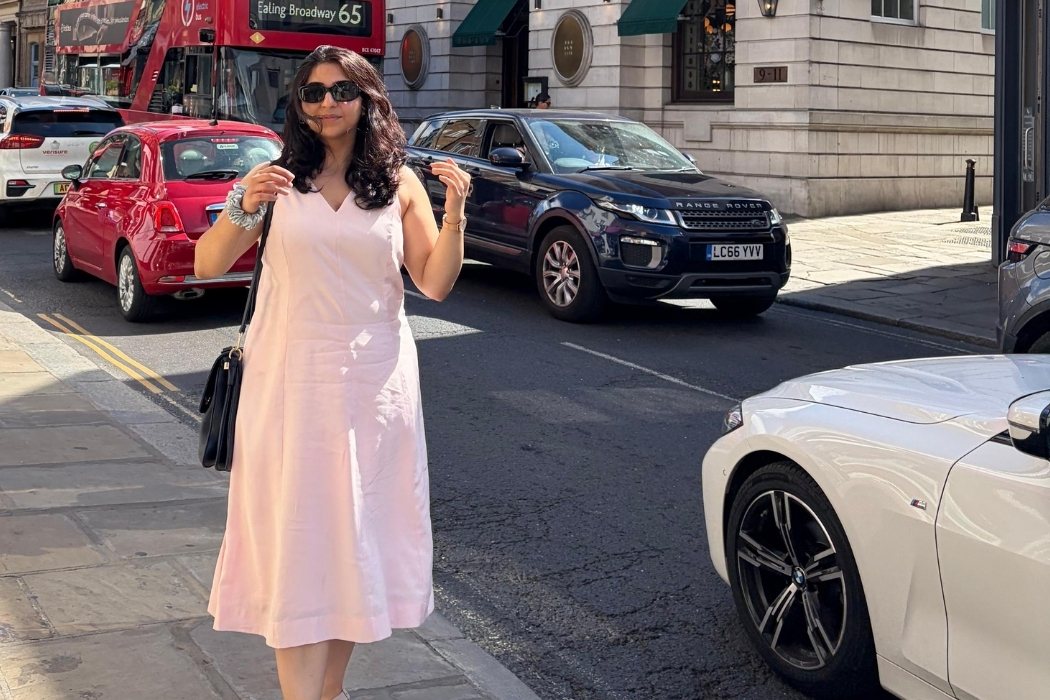
Anupama Pandey is Marketing leader with 11+ years of experience scaling brands across gaming, fintech, health-tech, and beyond, working at the intersection of product, performance, and growth to drive real business impact. A Kathak practitioner, cat mom, and mother to a 6-year-old, she brings equal passion to work and life. When she is not building brands, she is at the gym, traveling, or simply pausing, restarting, and enjoying life as it comes.
.png)
.jpg)
%20(1).png)
.png)